Digestive enzymes for bloating: what actually works
Enzyme choice and timing matter more than which supplement you buy, and matching the right one to the right meal is where most people go wrong.
What digestive enzymes actually do, and why bloating has more than one cause
Digestive enzymes for bloating work by finishing a job your gut already starts: breaking large food molecules into pieces small enough to absorb. Amylase, protease, and lipase come from your pancreas and handle carbohydrates, protein, and fat. When any of them falls short of what a meal demands, undigested material moves on to your colon, where gut bacteria ferment it into gas.
Most people searching for this topic want a product name, and that instinct makes sense, since the shelf of options is genuinely confusing. The more useful question comes first: which meal, and which trigger, are actually behind your bloating? The common triggers behind a bloating flare tend to fall into a short list, and the enzyme that helps depends entirely on which one applies to you.
Two completely different kinds of bloating
Bloating splits into two mechanically different problems, and mixing them up is the single biggest reason enzyme supplements get blamed for failing. One kind starts in your colon, where bacteria ferment fiber and resistant carbohydrates your gut never fully absorbed. The other starts earlier, in your small intestine, when a specific food arrives faster than the enzymes on hand can process it.
When bloating comes from your gut bacteria and fiber
Beans, onions, whole grains, and many vegetables carry fermentable fibers and oligosaccharides that pass largely untouched through the small intestine. Once they reach the colon, resident bacteria break them down and release hydrogen, methane, and carbon dioxide as byproducts. This kind of bloating tends to build slowly across the day, often peaks in the evening, and responds far more to changes in your gut microbiome and fiber load than to a pancreatic enzyme capsule.
When bloating comes from food that outpaces your enzymes
Dairy, a heavy protein serving, or a plate of pasta can bring on bloating within an hour, because the problem sits earlier in digestion, closer to a shortage of one specific enzyme than to your colon's bacteria. Someone with low lactase feels a milkshake quickly, and a small pancreas working through a steak dinner shows up fast too, usually higher in the abdomen and sooner after the meal. This is the category where a matched digestive enzyme supplement tends to earn its keep. This overlap is exactly why enzyme deficiencies that get mistaken for IBS matter so much for an accurate diagnosis.
Animal-derived vs plant-derived digestive enzymes
Animal-derived digestive enzymes, usually pancreatin from pork, work best at the near-neutral pH your small intestine maintains after a meal, which is exactly where your own pancreatic enzymes operate. Plant- and microbe-derived enzymes, like the fungal proteases and amylases in many over-the-counter blends, tolerate a much wider pH range and stay active from the stomach onward, which helps when a meal is heavy or gastric emptying runs slow.
Neither category beats the other across the board. Pancreatin-based products carry the strongest evidence for genuine pancreatic shortfalls, while broader plant and fungal blends often add extras like alpha-galactosidase or cellulase that a pancreatin capsule on its own leaves out. A multicenter crossover trial in China found that a combined protease, amylase, and cellulase preparation eased bloating and related dyspepsia symptoms better than placebo, a reasonable case for a broader blend when several foods are in play at once.
Best digestive enzymes for bloating: a food-by-food guide
The fastest way to a useful digestive enzyme is working backward from the meal that set off your bloating. Below is a food-by-food guide, followed by the specific enzyme worth trying first for each one.
STUDY In a placebo-controlled trial in children with recurrent gas symptoms, alpha-galactosidase meaningfully reduced the number of days with moderate to severe bloating and lowered how many children reported flatulence. Di Nardo et al., 2013, Efficacy and tolerability of alpha-galactosidase in treating gas-related symptoms in children, BMC Gastroenterology.
Milk, ice cream, soft cheese, or other dairy
Try lactase. It breaks down lactose, the sugar in dairy, before it reaches your colon undigested. Without enough of it, that sugar ferments quickly and pulls water into the bowel, which is why the bloating often shows up within an hour of a milky breakfast or dessert.
Beans, lentils, chickpeas, or other legumes
Try alpha-galactosidase. Legumes carry raffinose-family oligosaccharides that the small intestine has no enzyme for on its own, so they travel intact to the colon and get fermented by resident bacteria into hydrogen and methane gas.
Fried food, cream sauces, or other fatty, rich meals
Try lipase. It splits dietary fat into fatty acids and glycerol so your intestine can absorb it efficiently. A fat-heavy meal that sits in the stomach and small intestine longer than usual is a common reason fullness and bloating peak an hour or two after a rich dinner.
Steak, eggs, protein shakes, or other protein-heavy meals
Try protease. It breaks proteins down into the peptides and amino acids your body absorbs. A large, dense serving of protein can outpace what your stomach and pancreas produce on their own, leaving some of it to ferment further down the tract.
Bread, pasta, rice, potatoes, or other starchy foods
Try amylase. It cuts long starch chains into simpler sugars your small intestine absorbs early, before bacteria further down get the chance to ferment the leftovers.
Cane sugar desserts, sweetened drinks, or table sugar
Try invertase, also known as sucrase. It splits sucrose into glucose and fructose right away. Sucrose that moves through slowly behaves like other unabsorbed sugars further down the gut: fermentation, gas, and bloating soon follow a sweet dessert.
Raw vegetables, fruit skins, or high-fiber salads
Try cellulase. Human digestion carries no native enzyme for plant cell walls, so raw, fibrous vegetables often pass through largely intact until gut bacteria take over the job, which is exactly where the gas comes from.
None of these enzymes need a prescription, and most combination products on the shelf already blend two or three of them. The dose on the label matters just as much as which enzyme you pick, which is the next thing worth getting right.
Why dosage matters more than the enzyme you pick
The dose printed on a bottle can vary by a factor of ten between brands claiming to treat the same thing, and a low dose against a rich meal usually explains why an enzyme supplement got tried once and quietly shelved. Lactase products are measured in FCC units, and doses in the range of 6,000 to 9,000 units have shown consistent symptom reduction for a typical glass of milk. A larger dairy portion, like a bowl of ice cream or a cream sauce, simply calls for scaling up the dose of that same enzyme to match the bigger lactose load.
Pancreatic enzyme products follow the same logic on a bigger scale, dosed in lipase units matched to body weight and how much fat sits in the meal. Undersized doses are the most common reason a pancreatic enzyme blend gets written off early, well before the enzyme itself gets a fair test. A two-month randomized trial found that a daily multi-enzyme blend meaningfully improved quality of life scores tied to indigestion, at a dose taken consistently rather than occasionally.
When you take digestive enzymes changes whether they work
Best timing relative to meals, based on the research
Enzymes work by contacting food, so timing them apart from a meal wastes most of the dose. Research on pancreatic enzyme replacement therapy found close to equal results whether the dose landed right before, during, or right after a meal, as long as it stayed close to the first bite and finished before the last one. A similar pattern shows up with fat: healthy volunteers who took lipase ahead of a high-fat meal reported a clear drop in how full and heavy they felt afterward, an effect tied closely to getting the enzyme in before the fat did.
STUDY Across 17 randomized trials in chronic pancreatitis, pancreatic enzyme replacement raised the coefficient of fat absorption from roughly 63% to 84%, with the strongest results when the enzyme reached the gut alongside the meal itself. de la Iglesia-Garcia et al., 2017, Efficacy of pancreatic enzyme replacement therapy in chronic pancreatitis: systematic review and meta-analysis, Gut.
Why people give up on enzymes before finding what works
In my own experience working through bloating cases, the enzyme itself is rarely the actual problem. Far more often, someone takes a single capsule after finishing a big meal, tries it once, and moves on within a week. A fair trial means the right enzyme, a strong enough dose for the meal size, taken at the right moment relative to the first bite, for at least a week or two of consistent use before judging whether it helped.
Guessing gets expensive. A framework pays off.
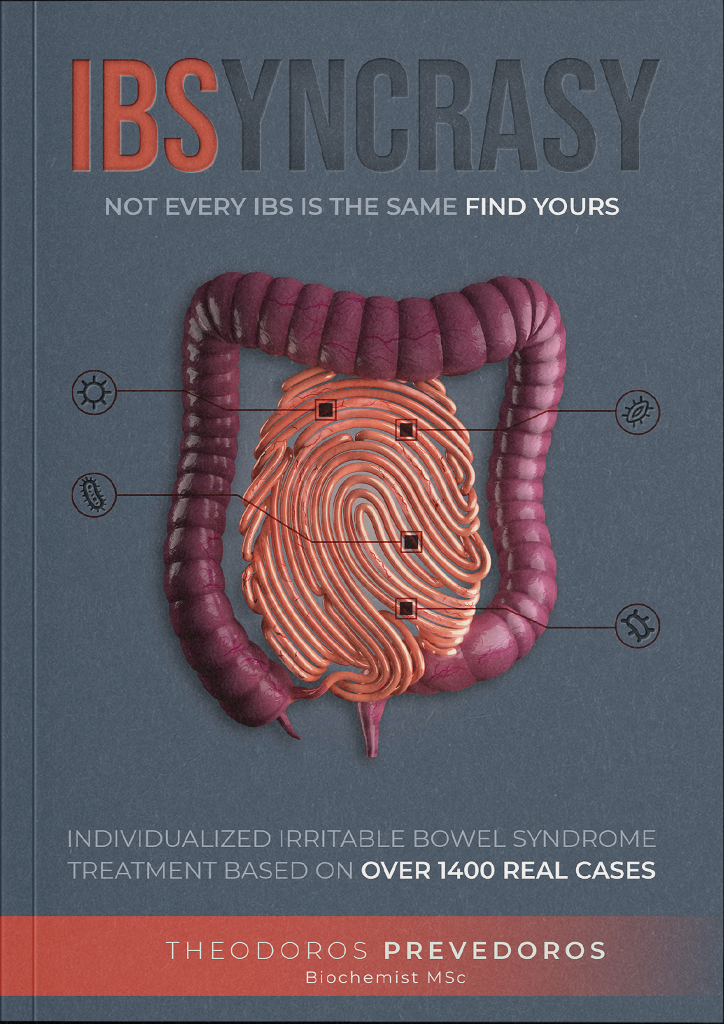
IBSyncrasy walks through exactly how to map your own bloating triggers, choose the right enzyme and dose, and build a plan that fits your own gut specifically. Buy IBSyncrasyIf you've had your gallbladder removed, your enzyme needs change
A gallbladder holds and concentrates bile between meals, and losing it changes more than bile flow. After cholecystectomy, meal-stimulated cholecystokinin levels run noticeably higher than in people with an intact gallbladder, and cholecystokinin is the same hormone that tells your pancreas to release its own digestive enzymes.
STUDY In patients who had a gallbladder removed, meal-stimulated cholecystokinin levels came back roughly 50% higher than in people with an intact gallbladder, a shift that changes how strongly the pancreas gets signaled to release its own enzymes. McDonnell et al., 2002, The effect of cholecystectomy on plasma cholecystokinin, American Journal of Gastroenterology.
Over months and years, that altered signaling pattern can wear down pancreatic output, and exocrine pancreatic insufficiency shows up in a meaningful share of people well after their surgery has healed. A systematic review pulling together the post-surgery research found that gallbladder removal reshapes the gut microbiome in a fairly consistent pattern across studies, on top of the change in enzyme output, which is why bloating after cholecystectomy so often needs more than a single fix.
I've documented this exact pattern in a post-cholecystectomy IBS case: symptoms that trace back to gallbladder removal but get treated as ordinary IBS for years before anyone connects the two. Pancreatic enzyme support, dosed for the size of the meal and matched to fat content in particular, is usually one part of the answer, alongside rebuilding the gut environment bile changes disrupted.
Digestive enzymes and probiotics target different problems
Digestive enzymes and probiotics work on two separate ends of the same tube. Enzymes act early, in the stomach and small intestine, breaking food down before it reaches your colon. Probiotics work downstream, shaping which bacteria dominate the fermentation that happens once food, or what's left of it, gets there. Reaching for one when the problem sits with the other is a common reason bloating treatment stalls.
No two guts run the same mix of bacteria, and matching a fix at random usually goes nowhere. The two make the most sense together once you actually know which mechanism is driving your particular case: a probiotic strain chosen for dysbiosis, alongside an enzyme matched to a specific food, addresses two separate mechanisms at once, which covers far more ground than either one working alone.
Low-FODMAP helps, but it works best as a short, structured phase
A low-FODMAP diet earns its reputation honestly: symptom relief shows up in a majority of people with IBS, often within a few weeks. It works by cutting fermentable carbohydrates that feed colon bacteria, the same fermentation process behind the microbiome-driven bloating described earlier. The catch sits in what happens after the relief starts.
The diet is built as a three-phase process: strict restriction, then systematic reintroduction, then a personalized long-term pattern, and the middle phase is where most of the actual value lives. A review of the diet's open questions found that the evidence behind prolonged, unsupervised use remains considerably thinner than its popularity suggests.
STUDY Extended FODMAP restriction has been shown to noticeably lower luminal Bifidobacterium levels and reduce total bacterial counts, alongside a drop in the share of patients meeting recommended calcium intake. Staudacher, 2017, Nutritional, microbiological and psychosocial implications of the low FODMAP diet, Journal of Gastroenterology and Hepatology.
This is exactly why I treat a low-FODMAP diet as a temporary diagnostic tool, with a firm end date built in from day one. Years of strict restriction without a reintroduction phase tend to shrink the range of foods someone comfortably tolerates over time, and that pattern is well documented in the research above.
The real decision path for fixing your bloating
Start with the meal that triggers it, before reaching for any bottle. Notice the timing, the specific food, and how quickly the bloating shows up, since those three details point toward which mechanism is actually in play: bacterial fermentation, a specific enzyme shortfall, pancreatic output after surgery, or some combination of the three.
From there, match the enzyme to the trigger, get the dose right for the meal size, and take it right at the start of eating, giving it a real two-week trial before deciding whether it earns a permanent spot in your routine. Digestive enzymes for bloating genuinely help most people who take this approach, and the pattern holds whether the underlying story is a simple lactose mismatch or something more layered like post-surgical pancreatic changes.
Ready to stop guessing and start matching?
IBSyncrasy lays out the complete framework for finding your own bloating triggers and building an enzyme, diet, and gut-repair plan around them.
Frequently asked questions
Yes, when they're matched correctly to the cause of your bloating and taken at a dose and timing that fits the meal. Every gut runs differently, and generic advice from the internet often falls apart in practice. What works well for one person frequently does very little for the next, which is why matching the enzyme to the actual trigger matters so much.
The honest answer depends entirely on what's driving your IBS. Every gut carries a different mix of bacteria, and matching a treatment at random usually goes nowhere. Digestive enzymes address a mechanical problem in the small intestine, while probiotics work further downstream in the colon, so the two make the most sense together once you know which mechanism is actually behind your symptoms.
Take them right at the start of the meal, with the first bite. Timing matters because the enzyme needs to reach the small intestine at roughly the same moment as the food it's meant to help break down, and taking it too early or too late wastes much of the dose.
The three core digestive enzymes are amylase for carbohydrates, protease for protein, and lipase for fat, all produced naturally by the pancreas. Specialty enzymes like lactase, alpha-galactosidase, and invertase target specific sugars that the core three leave largely untouched.