Bloating and gas after eating thoroughly explained
Bloating and gas after eating follows involves a mixture of processes, all the way from your stomach to your colon through nerves, hormones and gut bacteria, well before the food itself has traveled far.
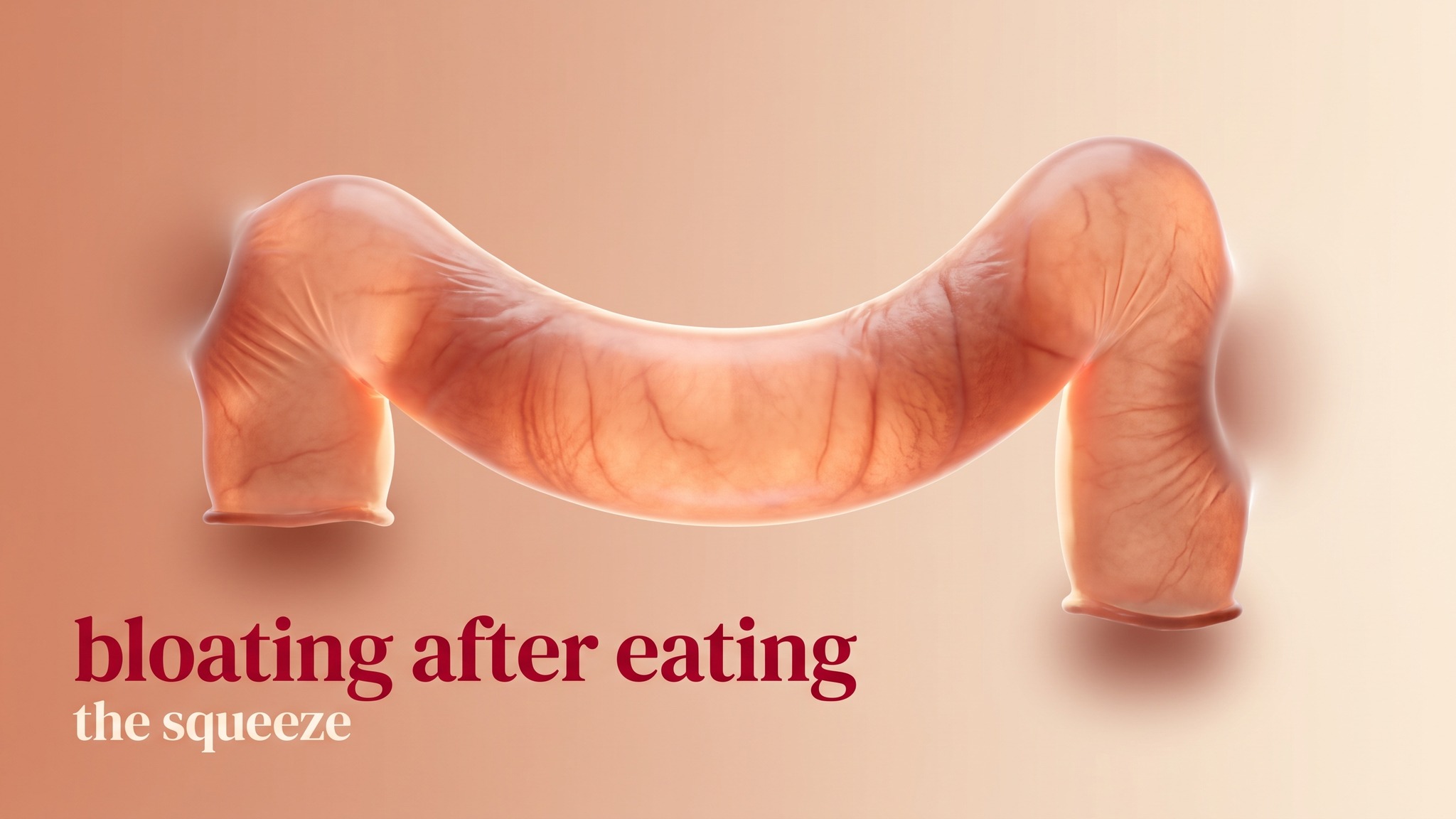
Why does bloating and gas after eating start within minutes?
Bloating and gas after eating can start before your fork is even back on the plate, and that timing alone tells you something useful. The food you just swallowed is still sitting in your stomach, nowhere near the part of your gut that produces most intestinal gas. An adult gastrointestinal tract runs roughly 7.5 meters from mouth to the far end of the colon, and the small intestine alone takes up six to seven of those meters. Whatever you ate ten minutes ago is still making its way through that first stretch, hours away from the bacteria that ferment leftover fiber and sugar into gas.
That tight sense of abdominal bloating and fullness arriving almost immediately comes from a nerve and muscle reflex reacting to the meal's arrival, working alongside a microbiome already busy with food from earlier in the day. Two separate systems drive bloating and gas after eating, one fast and mechanical, one slower and bacterial, and untangling them is the first step toward understanding your own digestive system and finding relief.
What actually triggers the gastrocolic reflex?
The gastrocolic reflex is the direct trigger behind most of that quick post-meal tightness. Stretch receptors in the stomach wall sense the incoming meal and send a signal up the vagus nerve, which answers back with a wave of contractions rolling down through the small intestine and into the colon. Researchers first measure this response within one to three minutes of eating, and it can keep the colon busier for up to an hour, with some effects lingering for up to three hours.
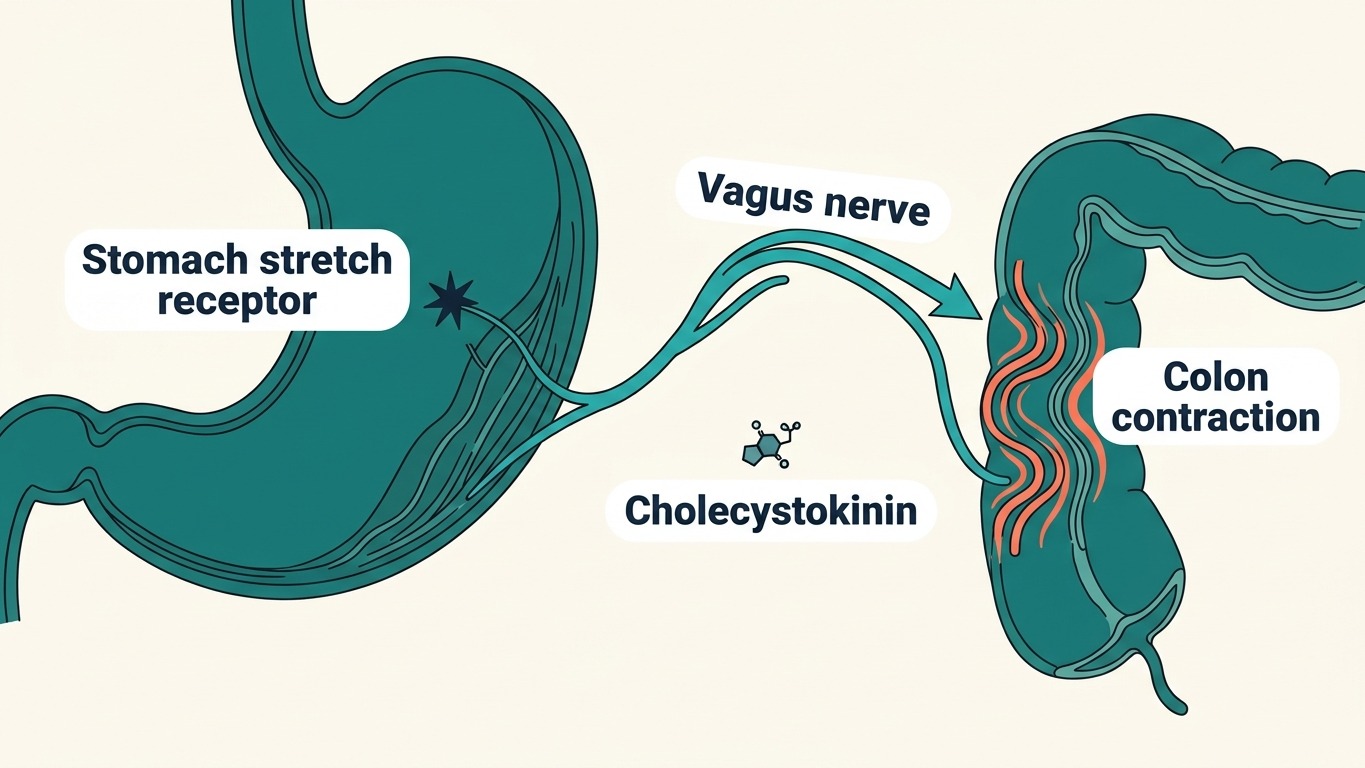
Meal-related hormones add another layer to that signal. Cholecystokinin, released as fat and calories arrive in the small intestine, backs up the vagal push, so a heavier or fattier plate produces a stronger response than a light one.
Which foods turn up the reflex the most?
Fat and total calories are the two biggest amplifiers of the gastrocolic reflex. A meal loaded with fat drives a slower, second wave of colonic activity that builds for over an hour after the fat has cleared the stomach, layered on top of the fast wave every meal produces. Protein has a calming effect on colonic activity, which is one reason a protein-heavy plate often feels gentler than a carb-and-fat-heavy one.
STUDY The gastrocolonic response typically appears within one to three minutes of eating and can continue for up to three hours, driven by the vagus nerve and meal-related hormones. Dorfman et al., 2022, Gastrocolonic Response, Current Gastroenterology Reports.
STUDY In a fat-versus-standard-meal comparison, colonic activity settled back to fasting levels within 50 minutes of either meal, then rose again 70 minutes after the fat specifically, revealing a second, slower wave unique to the fat-containing meal. Snape et al., 1979, The gastrocolic response, evidence for a neural mechanism, Gastroenterology.
How gas gets trapped between your colon's two curves
Gas collects at your colon's two sharpest bends, the hepatic flexure under the right ribs and the splenic flexure under the left, because that is where the tube changes direction and slows the flow of contents. Every wave of contraction set off by the gastrocolic reflex pushes existing colonic gas along, and at these two corners, it tends to pool rather than pass straight through.
This can happen while your last meal is still sitting in your stomach, since the reflex reacts to arrival, well before digestion finishes. The ache you feel under one rib cage after a filling lunch is frequently this exact mechanical squeeze, gas meeting a bend that slows its path.
That squeeze settles low in the abdomen and shows up differently from person to person, sometimes as a mild sense of fullness and sometimes as real abdominal discomfort under one rib cage, depending on which flexure is holding the gas that day.
Why stress, breathing and hormones change how you bloat
Stress hormones sit right on top of the gastrocolic reflex and can turn up its intensity. Corticotropin-releasing hormone, the signal your brain releases under stress, drives measurably stronger colonic motility in men with IBS and shifts the balance of the autonomic nervous system in women with IBS, both changes that make an ordinary meal feel more dramatic.
How the vagus nerve and slow breathing calm the reflex
The vagus nerve carries both sides of this conversation, the signal that starts the gastrocolic reflex and the calming signal that can turn its intensity back down. People with lower resting vagal tone tend to run higher cortisol and a more reactive gut, which is part of why the exact same lunch can feel routine on a calm day and uncomfortable on a chaotic one. Slow, diaphragmatic breathing raises vagal activity directly, offering a genuine lever on the intensity of a meal's reflex response. Thyroid hormones and other everyday hormone shifts feed into the same motility pathways, which is one more reason two people can eat the identical plate and end up in very different places.
STUDY Corticotropin-releasing hormone produced measurably greater colonic motility in men with IBS and a shifted autonomic balance in women with IBS, compared with healthy controls. Kano et al., 2017, Altered brain and gut responses to corticotropin-releasing hormone in patients with irritable bowel syndrome, Scientific Reports.
STUDY Lower resting vagal tone tracked with higher cortisol and stronger negative affect in people with Crohn's disease and IBS, linking day-to-day nervous system balance directly to gut symptom intensity. Pellissier et al., 2014, Relationship between vagal tone, cortisol, TNF-alpha, epinephrine and negative affects in Crohn's disease and irritable bowel syndrome, PLoS ONE.
How an overgrown microbiome turns the same meal into more gas
An overgrown population of gas-producing microbes can turn one ordinary portion of carbohydrate, whether it comes from beans, broccoli or a slice of bread, into a far bigger gas load than the same food would produce in a balanced gut. Hydrogen producers such as Klebsiella, Escherichia coli and Enterococcus, and methane-producing archaea such as Methanobrevibacter smithii, all show up in greater numbers in people with small intestinal bacterial overgrowth and related dysbiosis.
Which bacteria are usually behind it
Symptom profile of intestinal methanogen overgrowth
Mehravar et al., 2024, Clinical Gastroenterology and Hepatology. Pooled prevalence of symptoms in 1,293 patients with intestinal methanogen overgrowth across 19 studies, percent of patients reporting each symptom.
Methanobrevibacter smithii deserves particular attention, since it converts hydrogen made by other fermenting microbes into methane, and methane itself slows colonic transit, giving gas more time to build up and stretch the bowel before it clears. People with this kind of overgrowth report bloating, abdominal pain and constipation at rates several times higher than the general population, all from processing meals that would sit fine in someone with a leaner microbial load. Addressing the overgrowth itself is often where lasting relief actually starts, more so than chasing trigger foods one at a time. A probiotic aimed at the right specific strains can help shift that balance over time, though testing first usually beats guessing which one to try.
STUDY Enterococcus, Escherichia coli and Klebsiella all turn up in greater numbers in people with small intestinal bacterial overgrowth and IBS, alongside Methanobrevibacter smithii as the organism behind a positive methane breath test. Takakura and Pimentel, 2020, Small intestinal bacterial overgrowth and irritable bowel syndrome, an update, Frontiers in Psychiatry.
So is your bloating nerves, hormones or bacteria?
Most bloating and gas after eating comes from two systems working together at once. The neurohormonal side, the gastrocolic reflex plus stress hormones and vagal tone, decides how hard and how fast your gut contracts after a meal. The microbiome side decides how much gas a given amount of food actually generates once it reaches the bacteria that ferment it. A stressful, fast-eaten, high-fat lunch on top of an overgrown microbiome stacks both systems at their most reactive, which is exactly the kind of day that can cause bloating severe enough to reshape how the rest of the day feels.
The numbers back up how much the microbiome side can swing outcomes for the same underlying meal.
GI symptom associations with intestinal methanogen overgrowth
Mehravar et al., 2024, Clinical Gastroenterology and Hepatology. Odds ratios with 95% confidence intervals for symptom prevalence in intestinal methanogen overgrowth versus controls, reference line at OR 1.
This split between motility and microbiology is exactly the axis explored in a related case of IBS and Hashimoto's disease, where the same fasting-state housekeeping system that runs the migrating motor complex also sets how hard the fed-state gastrocolic reflex fires.
Ready to see your own two-system picture?
IBSyncrasy walks through exactly this kind of two-system case, matching the motility side and the microbiome side to one individualized plan, built around your own results. Buy IBSyncrasyBloating in 10 minutes vs bloating two hours later, is it the same thing?
Bloating in the first ten minutes and bloating two hours later usually trace back to different mechanisms, even though they can feel identical from the inside. Fast bloating tends to be reflex and osmotic, driven by stomach stretch and by sugars pulling water into the small intestine. Slow bloating tends to be fermentative, building as carbohydrate that escaped digestion reaches the colon and meets its bacteria.
An MRI study comparing glucose, fructose and inulin drinks showed exactly this split. Fructose swelled the small intestine with water on a fast timescale, inulin produced far more colonic gas on a slower one, and glucose did comparatively little on either front.
Glucose, fructose and inulin, two different timelines
Murray et al., 2014, Am J Gastroenterol (small-bowel water AUC and breath hydrogen response, 16 healthy volunteers) and Major et al., 2017, Gastroenterology (symptom response within 300 minutes in 29 IBS patients, 40g carbohydrate challenge).
That timing difference matters for figuring out what is actually going on. A tight, early feeling points toward stomach stretch, a fast-eaten meal or an osmotic sugar, while a slow build over one to two hours points toward fermentation and the state of your microbiome.
The five biggest everyday drivers of gas and bloating
Five everyday habits explain most of the gas and bloating that shows up outside of any underlying condition. People who eat quickly or talk through a meal tend to swallow air with each bite, and sparkling water or other carbonate-heavy drinks add their own quick burst of gas high in the stomach. Both shape what happens in the small intestine and end in a quick burp far more than they shape what collects in the colon, which is why they sit beside the five core drivers below as smaller, upper-GI contributors.
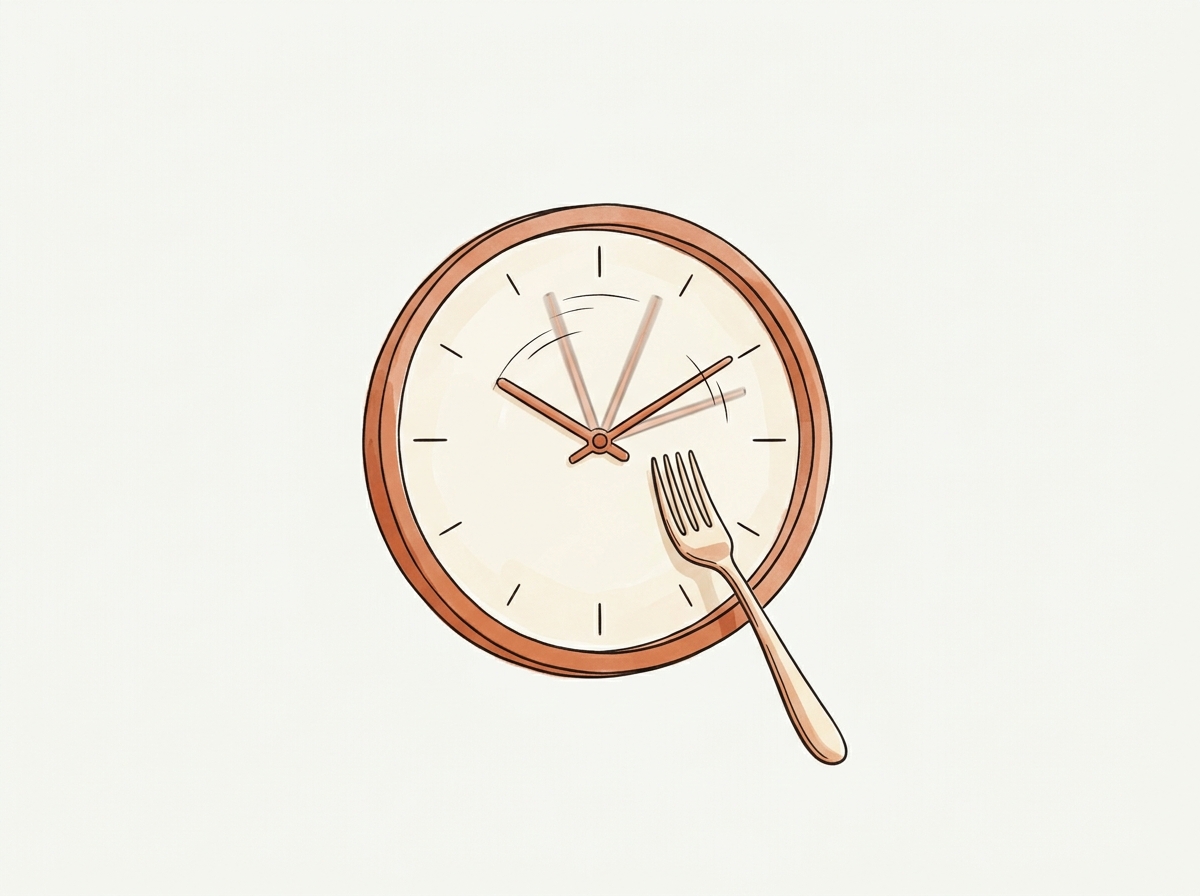
Eating too fast
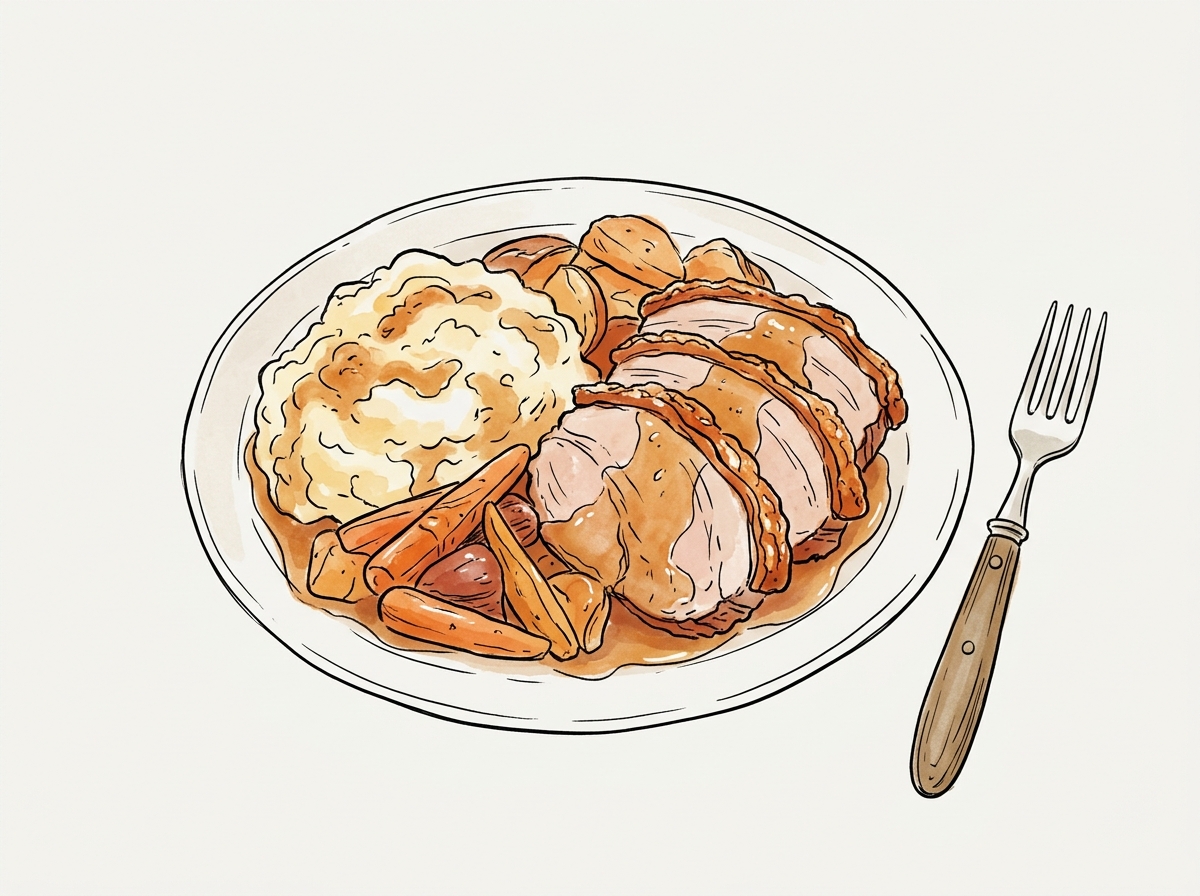
High-fat, high-calorie meals
Fermentable carbs meeting an overgrown microbiome
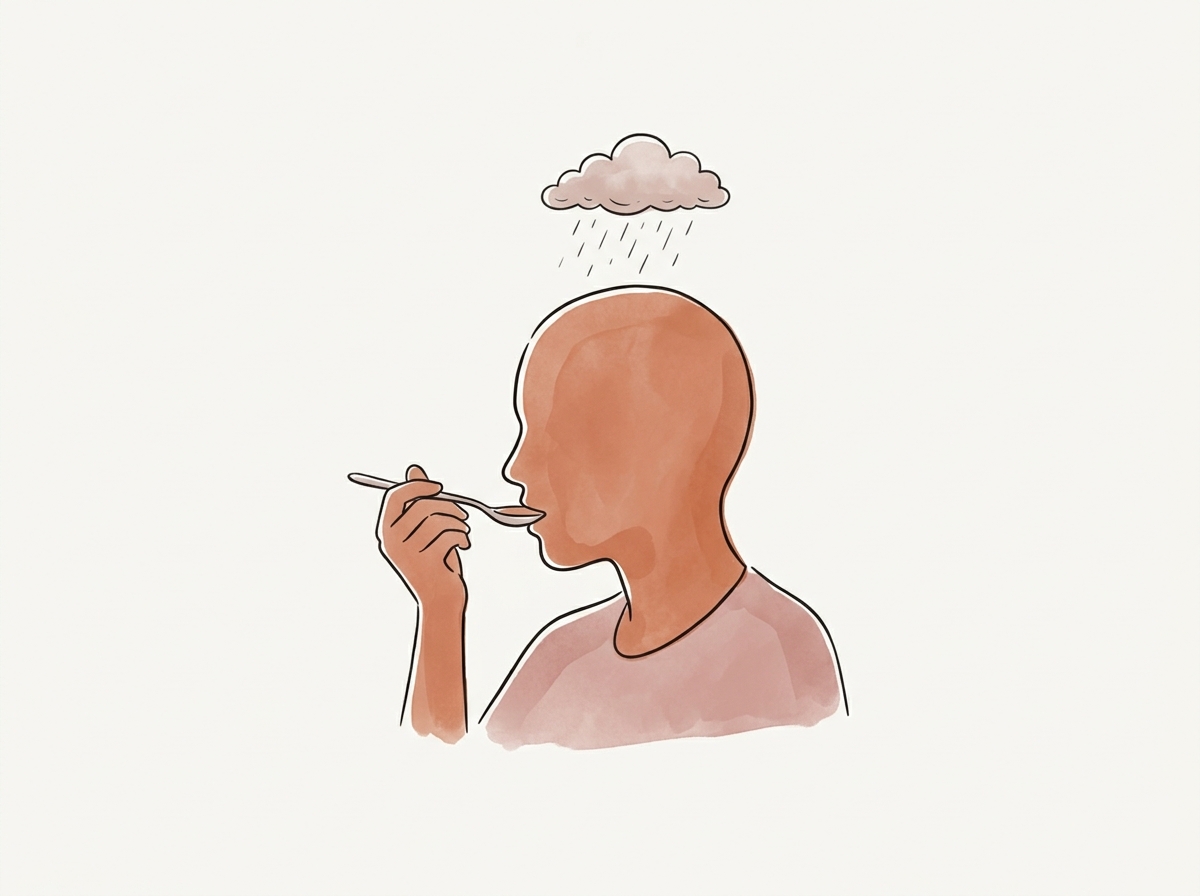
Eating while stressed or distracted
Chewing gum
Two of these five, eating too fast and chewing gum, share the same root cause, a weak or mistimed cephalic phase of digestion, the wave of saliva, acid and motility your body is supposed to release before food even reaches your stomach. Getting that opening stage right often helps more than any single food swap.
Finding relief without guessing
None of this has to stay a mystery meal to meal. Once you can tell a fast, stretch-and-stress pattern apart from a slow, fermentation-driven one, the next steps, a calmer way of eating, a look at meal composition, or a proper microbiome workup, start pointing in a specific, useful direction.
Ready to stop guessing at your own bloating pattern?
IBSyncrasy walks through the motility side and the microbiome side together, so your plan matches your own gastrocolic reflex, hormones and gut bacteria, built around your specific results.
Frequently asked questions
A few behavioral shifts help quickly: chewing thoroughly so digestion starts properly, keeping an upright posture while eating, and taking a few slow breaths before the meal to settle your nervous system. Lasting relief needs an individualized look, since your reflex, hormone and microbiome pattern differs from person to person.
The core causes trace back to behavior and the gastrocolic reflex itself: high-fat or large meals, eating too fast with little chewing, eating while stressed or distracted, and drinking a large amount of water right after a meal, all of which intensify how hard your gut contracts after eating.
Bloating with unintentional weight loss, blood in the stool, persistent vomiting, fever, or pain severe enough to wake you deserves medical attention from a doctor or gastroenterologist. The same applies to sudden bloating after age 50, a family history of colon or ovarian cancer, or symptoms persisting despite dietary changes.