Cephalic phase of digestion: why IBS starts before you eat
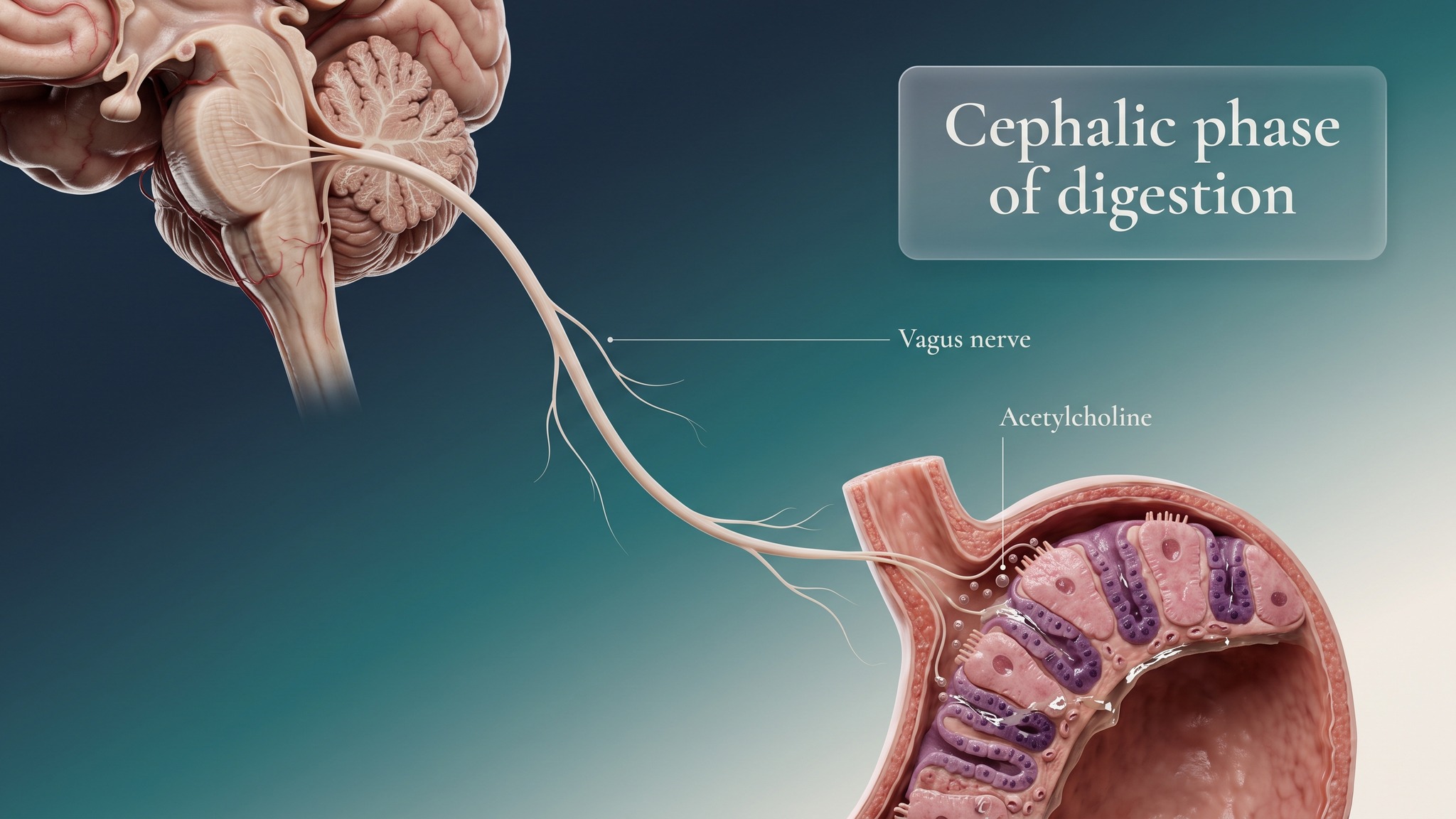
The cephalic phase of digestion begins before food enters the stomach. When sight, smell and expectation fail to activate gastric secretion and vagal preparation, IBS symptoms often start earlier than the plate itself.
The everyday setup: eating fast in front of a screen
This pattern is more common than people realize. The meal starts with a laptop open, one eye on a notification, a few fast bites and barely a second spent looking at the food. There is little smell, little anticipation and almost no pause for the digestive system to register that food is about to arrive.
In that moment, digestion becomes mechanical. Food enters the mouth while the nervous system is still shifting toward a parasympathetic, meal-ready mode. You may still chew, swallow and finish the plate, yet the body begins the meal underprepared. For a person with IBS, that missing setup can shape the whole post-meal experience.
You can eat a nutritionally correct meal while your nervous system is still inside the screen. In that setting, symptoms often begin with the way the meal starts and then travel with the food itself.
This is why I keep returning to the opening minutes of a meal in practice. Many patients assume the problem starts only after food reaches the intestine. The daily scene often tells a different story. The reflexes that prepare gastric function may already be weak before the first bite.
What happens in the cephalic phase of digestion?
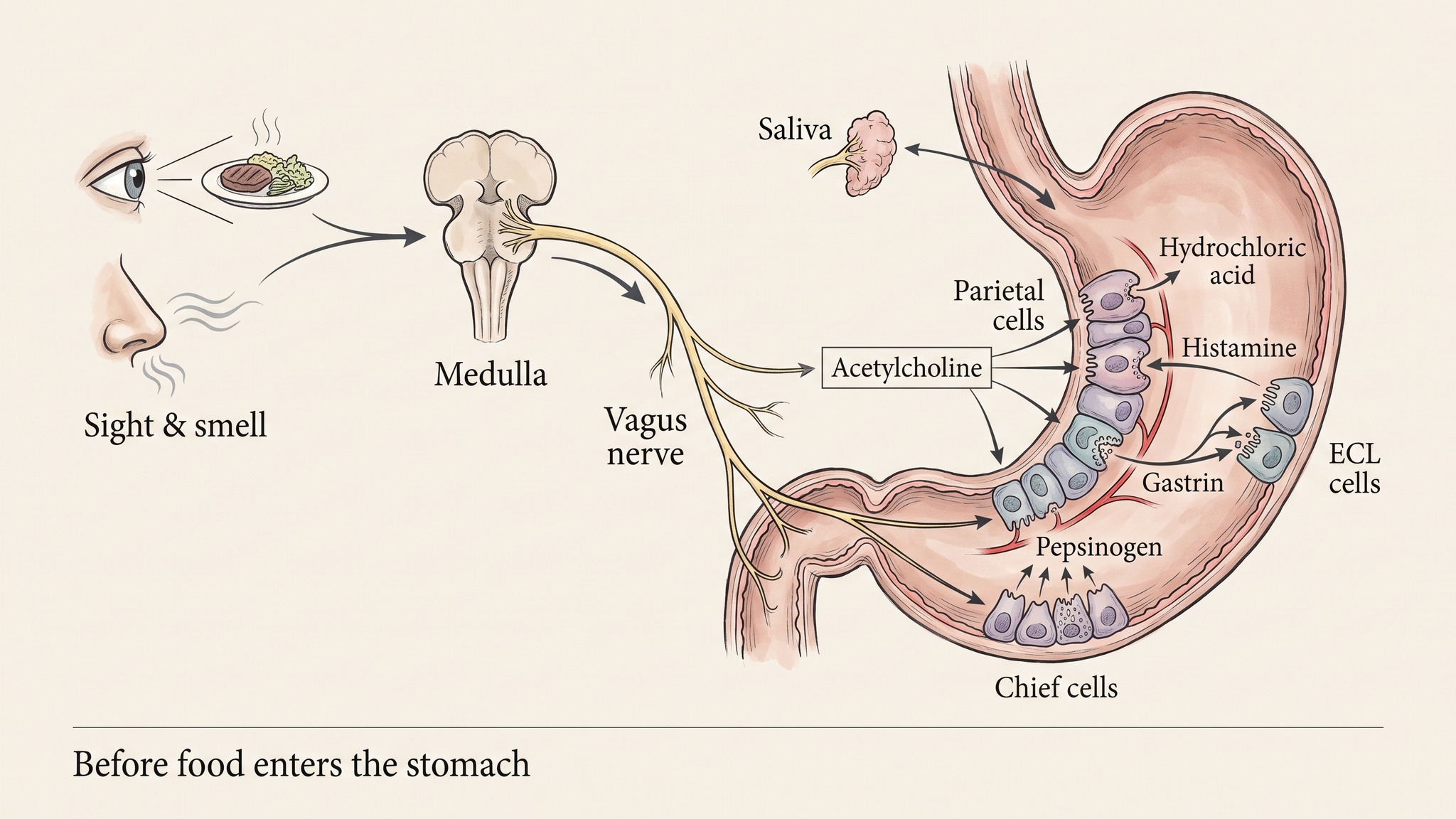
This first digestive phase begins when the brain detects food through sight, smell, taste, memory or expectation, before food enters the stomach. In practical terms, the nervous system starts preparing the stomach for work before the meal physically arrives.
That preparation is largely vagal and parasympathetic. The medulla and the vagus nerve activate a reflex that increases salivary secretion, stimulates gastric secretion and primes gastric motility. Acetylcholine reaches gastric tissues directly. G cells release gastrin. Histamine then helps stimulate parietal cells, while chief cells prepare pepsinogen and the stomach moves closer to a state of digestive readiness.
What happens when this phase is skipped?
When the cephalic response is weak, gastric preparation starts late and with less coordination. Food reaches the stomach while gastric acid secretion, gastric juice output and early motility rise with less efficiency. Functionally, this can resemble hypochlorhydria even in a person who has never taken an acid-suppressing drug.
The stomach works as a secretory and defensive organ. Its acid secretion helps unfold proteins, activate pepsinogen, limit microbial survival and organize the next phase of digestion. When the first signal is blunted, people often feel the downstream version of that story as heaviness, belching, bloating, slow digestion or a meal that simply seems to sit there.
- 1
The habit
The meal begins with distraction, speed and little sensory contact.
- 2
A weak reflex
The vagus nerve receives a weaker anticipatory signal, so the cephalic response stays shallow.
- 3
Lower secretory readiness
Saliva, gastrin, histamine-linked signaling and gastric secretion rise less efficiently.
- 4
Functional hypochlorhydria
The stomach behaves as if acid defense has been dialed down, even without medication.
- 5
The symptom pattern
Bloating, belching, pressure and bowel changes appear after meals that seemed harmless on paper.
CLINICAL CONTEXT In the SIBO literature, long-term proton pump inhibitor exposure is repeatedly linked with more overgrowth, which helps clarify why a weaker gastric barrier matters biologically. See Khurmatullina et al., 2025, Pimentel et al., 2020 and Kashyap et al., 2024.
Why does this matter especially in IBS?
IBS is rarely only a colon story. The same autonomic tone that shapes sensation also shapes gastric function, small-bowel motility and the quality of the meal response. If the early digestive response is weak, the person reaches the gastric phase with less readiness, then reaches the intestine with less efficient upstream digestion. That is one way symptoms can begin before the colon ever enters the conversation.
This is also where the overlap with SIBO becomes more interesting. A weaker gastric barrier can leave more microbes alive as food enters the stomach, while impaired vagal tone and altered motility can make the small intestine a friendlier place for microbial persistence. The same gut-brain logic also appears in our article on oregano for SIBO, the article on identifying the bacteria behind SIBO and the article on migraine and IBS.
| Normal meal physiology | Weakened cephalic response |
|---|---|
| Vagus nerve signaling | A normal meal begins with a strong parasympathetic reflex. A rushed, screen-based meal often starts with weaker vagal stimulation. |
| Gastric secretion | A ready stomach begins secreting early. A weak response delays or reduces acid secretion and gastric juice. |
| Motility | The normal sequence supports coordinated gastric secretion and motility. A weaker start favors heaviness and a slower digestive feel. |
| Microbial defense | Normal acid limits survival of swallowed microbes. Reduced functional acidity can leave a more permissive environment. |
| Symptoms | Bloating, belching, pressure, distension or unpredictable bowel function may appear despite familiar foods. |
IBS AND AUTONOMIC TONE A study comparing 41 people with IBS and 42 controls found lower heart-rate variability and altered autonomic indices in the IBS group, consistent with different autonomic regulation. See Salvioli et al., 2015. Broader microbiome reviews reinforce how IBS symptoms overlap with microbial disturbance, as shown in Pittayanon et al., 2019 and Rajilić-Stojanović et al., 2011.
What George’s case reveals about functional hypochlorhydria
George’s case is useful because it shows the same downstream pattern from a different entry point. In his story, chronic PPI exposure was the main pressure. Once the gastric barrier is chronically weakened, people can move toward bloating, dyspepsia and IBS-like instability through a chain that starts much earlier than the colon.
That is why I often describe the cephalic phase as the body’s internal primer. When it is repeatedly absent, patients can drift toward a physiology that resembles the end result of acid suppression, even when they have never taken a drug. George’s case makes the comparison tangible and shows why root-cause thinking matters more than chasing one isolated symptom at a time.
George and the familiar IBS pattern
Longstanding upper-gut discomfort, bloating and a symptom pattern that kept returning to the same physiological bottleneck.
The upstream driver
Chronic PPI exposure weakened acid defense and set the stage for a broader digestive problem.
What the pattern pointed to
Functional hypochlorhydria, altered upper-gut ecology and a downstream clinical picture that looked very much like IBS.
What changed the trajectory
Once the sequence was understood and treated as a connected system, the case moved toward recovery and more durable symptom control.
Case-series success rate from the same case-study framework
Source: George’s PPI-related IBS case study.
How can you reactivate the cephalic phase?
A simple protocol can improve the first minutes of digestion. The goal is to create a stronger opening signal, stimulate the cephalic response, increase vagal readiness and let gastric secretion start on time.
- Mechanism: Visual and olfactory exposure helps activate the medulla-vagus reflex before food enters the stomach.
Practice: Spend 20 to 30 seconds looking at the meal and breathing in its smell before the first bite. - Mechanism: Slow chewing extends oral stimulation, supports saliva and sustains the early reflex that feeds gastric secretion.
Practice: Make the first three bites deliberately slow, and chew until the texture is fully broken down before swallowing. - Mechanism: Reducing competing cognitive load helps the parasympathetic nervous system dominate the start of the meal.
Practice: Begin the meal without a phone or laptop in front of you, even if the rest of the meal later becomes less controlled.
See how the full chain is treated in practice
IBSyncrasy walks through real IBS cases from upstream physiology to treatment sequence, including the cause-and-effect reasoning behind George’s case. Buy IBSyncrasy
IBSyncrasy
IBSyncrasy is built for readers who see IBS as a pattern with several possible triggers. The book follows real cases and explains the logic behind upstream problems such as gastric acid suppression, altered motility and microbial imbalance, so the treatment path feels coherent and clinically grounded.
Buy IBSyncrasyFrequently asked questions
It is the first digestive response to a meal. The brain detects food through sight, smell, taste or expectation and activates vagal and hormonal signals before food enters the stomach.
It is brief and overlaps with the opening moments of a meal. It covers the anticipatory period and the first moments before and around swallowing, then hands the sequence over to the gastric and intestinal phases.
The nervous system begins the process through the medulla, the vagus nerve and acetylcholine. Gastrin and histamine-linked signaling then amplify gastric secretion and prepare parietal and chief cells for the meal.