Symptoms of fat malabsorption you shouldn't ignore
Feeling full after a few bites, greasy stool, weight that keeps dropping without trying. Together, they're one signal: your gut is struggling to break down fat, and the fat-soluble vitamins that travel with it are going missing too.
What is fat malabsorption, exactly
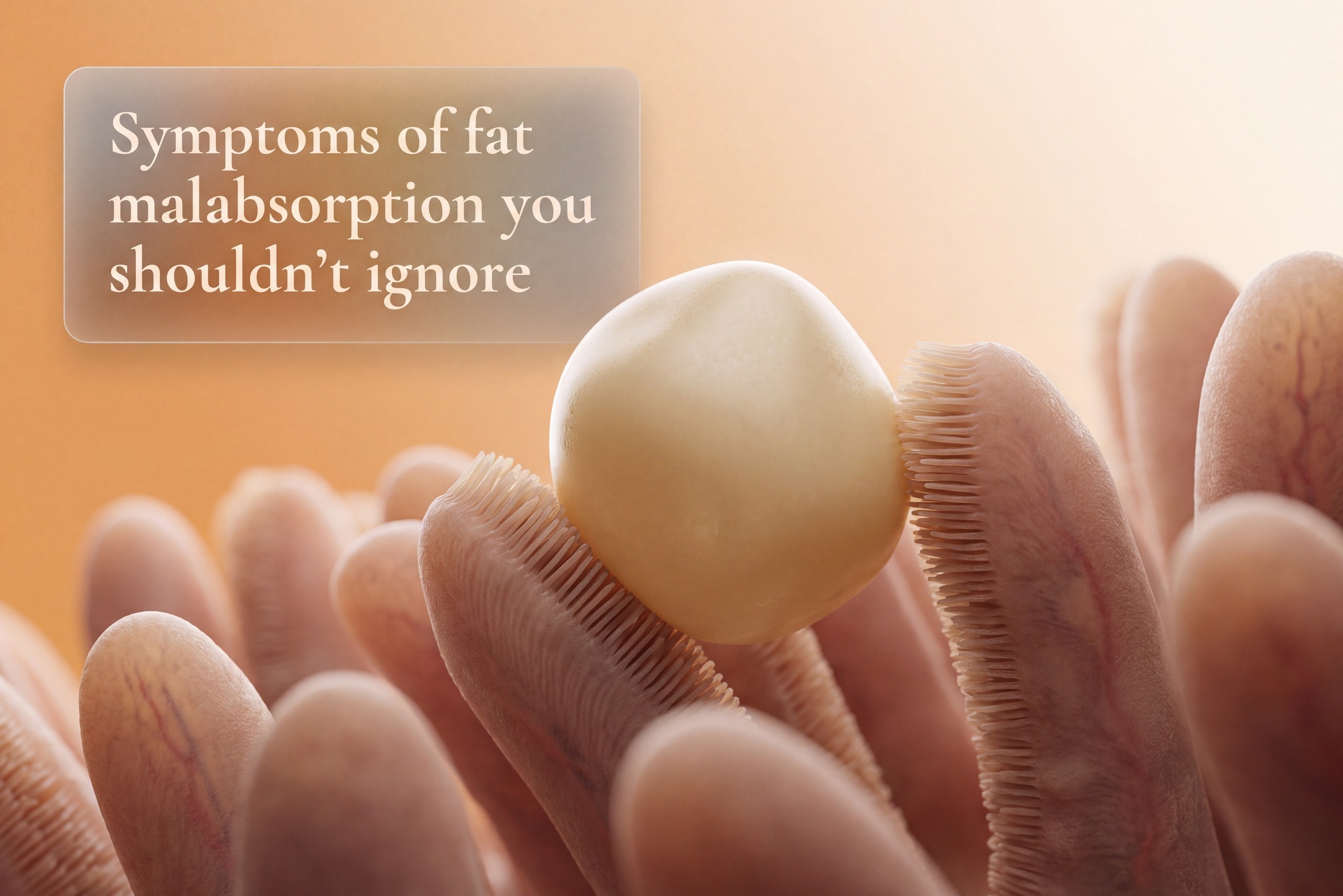
This shows up when your digestive system struggles to break down and absorb dietary fat, so it passes through your gut mostly intact, missing its chance to fuel your body or carry fat-soluble vitamins into your bloodstream. Think of it as a pattern more than a single diagnosis, usually driven by low digestive enzyme output, limited bile, or gut inflammation that blocks absorption at the intestinal wall. Once fat absorption drops, everything downstream shifts: stool, appetite, weight, and eventually nutrient levels that quietly slip below where they should be.
The symptoms of fat malabsorption
These symptoms fall into two groups, and most people only ever hear about the first one.
Digestive symptoms
The clearest sign is steatorrhea, stool that looks pale, greasy and bulky, often floats, and is hard to flush. Bloating, excess gas and cramping after meals are common, especially after anything fatty, and stool frequency often increases even without classic watery diarrhea. Weight loss despite a normal or even increased appetite is the pattern that tends to get people taken seriously, because it resists a simple explanation.
ok this might be tmi but I get full after like 5-6 bites now, especially with meat or anything oily. started maybe 4 months ago. dropped almost 8 lbs without trying. doctor already checked my thyroid, came back normal. what else even causes this??
Getting full after just a few bites, especially with meat or oil, plus dropping weight without trying, is one of the clearest patterns of fat malabsorption, where your gut struggles to break dietary fat down before it can be absorbed. A normal thyroid result still leaves your pancreas and gut on the list, since fullness and weight loss like this often trace back there instead. The test that actually checks for it is called fecal elastase, and it's worth asking your doctor for by name.
The fat-soluble vitamin symptoms nobody connects to digestion
Vitamins A, D, E and K only get absorbed alongside dietary fat, so when fat malabsorption sets in, these four go missing together. Vitamin A loss can show up as dry skin or trouble seeing in dim light. Low vitamin D means bone or muscle pain that gets written off as ordinary aches. Vitamin E deficiency can bring numbness or balance problems. Vitamin K is the one people notice fastest, because it's needed for normal blood clotting, so bruising easily or bleeding gums can appear alongside stool changes that seem unrelated.
STUDY In one review of exocrine pancreatic insufficiency, deficiency of the fat-soluble vitamins A, D, E and K is listed as a direct, expected consequence of the same malabsorption that causes steatorrhea and weight loss. NIDDK, Symptoms & Causes of Exocrine Pancreatic Insufficiency.
not sure if this is tmi but my poop has been really pale and greasy for like 2 months, it floats and i have to flush like 3 times. no real diarrhea, just this. also been bruising super easily out of nowhere, is that even related??
Yes, that's a sharp connection to make. Greasy, floating stool is a classic sign of fat malabsorption, and the fat-soluble vitamins that travel through your gut alongside dietary fat, especially vitamin K, tend to go missing right along with it. Easy bruising and greasy stool are really the same underlying problem showing up in two completely different places, so it's worth asking your doctor to check your fat-soluble vitamin levels directly.
One symptom, two places it shows up
IBSyncrasy traces exactly this pattern in a real patient, from stool changes to a fat-soluble vitamin deficiency nobody had tested for. Buy IBSyncrasyWhat's actually causing it
A short list of conditions accounts for most cases of fat malabsorption: low pancreatic enzyme output, limited bile reaching the gut, or damage to the intestinal lining itself. Exocrine pancreatic insufficiency, a drop in pancreatic enzyme output, is the most common and most overlooked of the three, because its symptoms look so much like ordinary IBS.
- Exocrine pancreatic insufficiency (EPI)
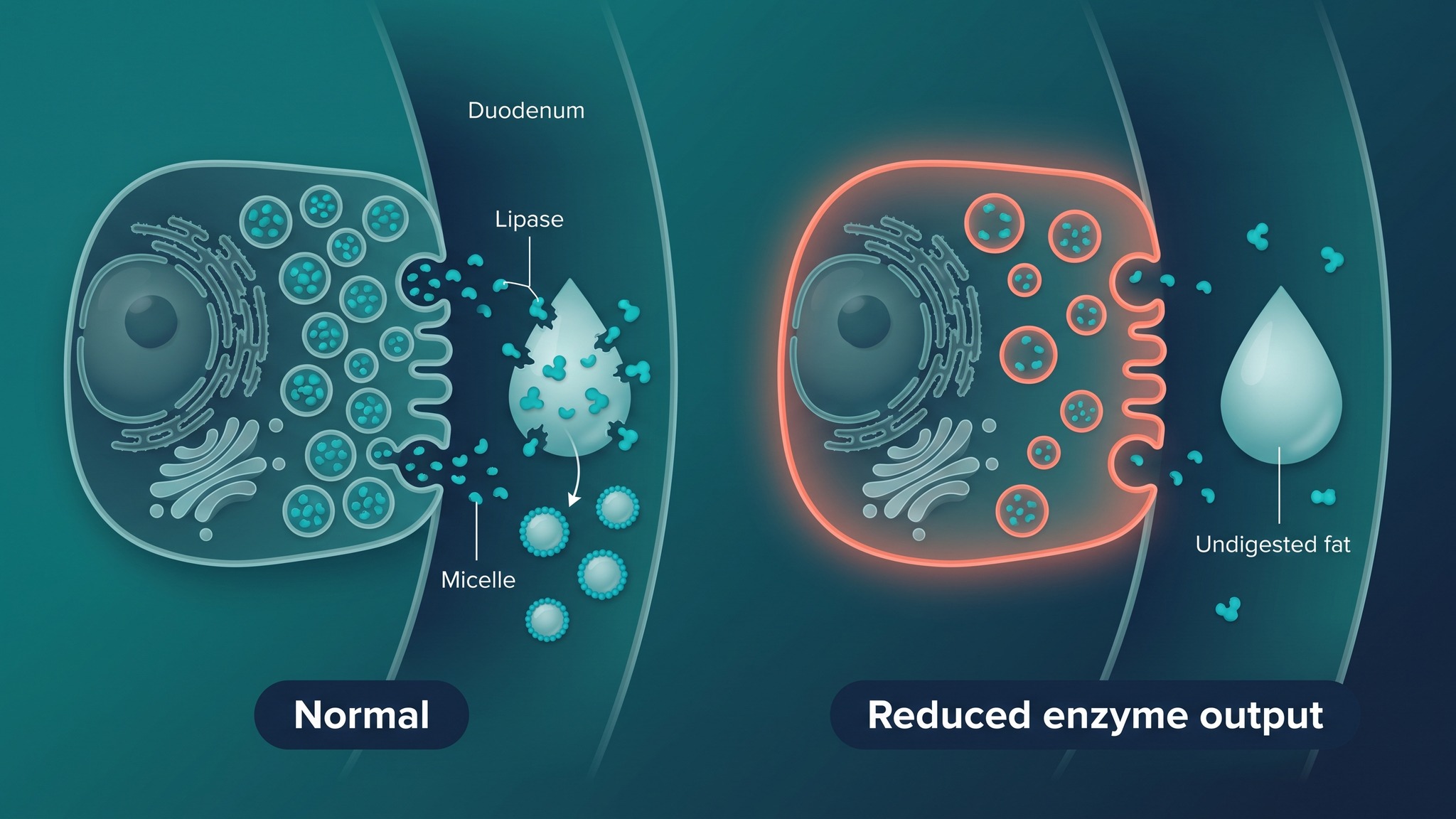
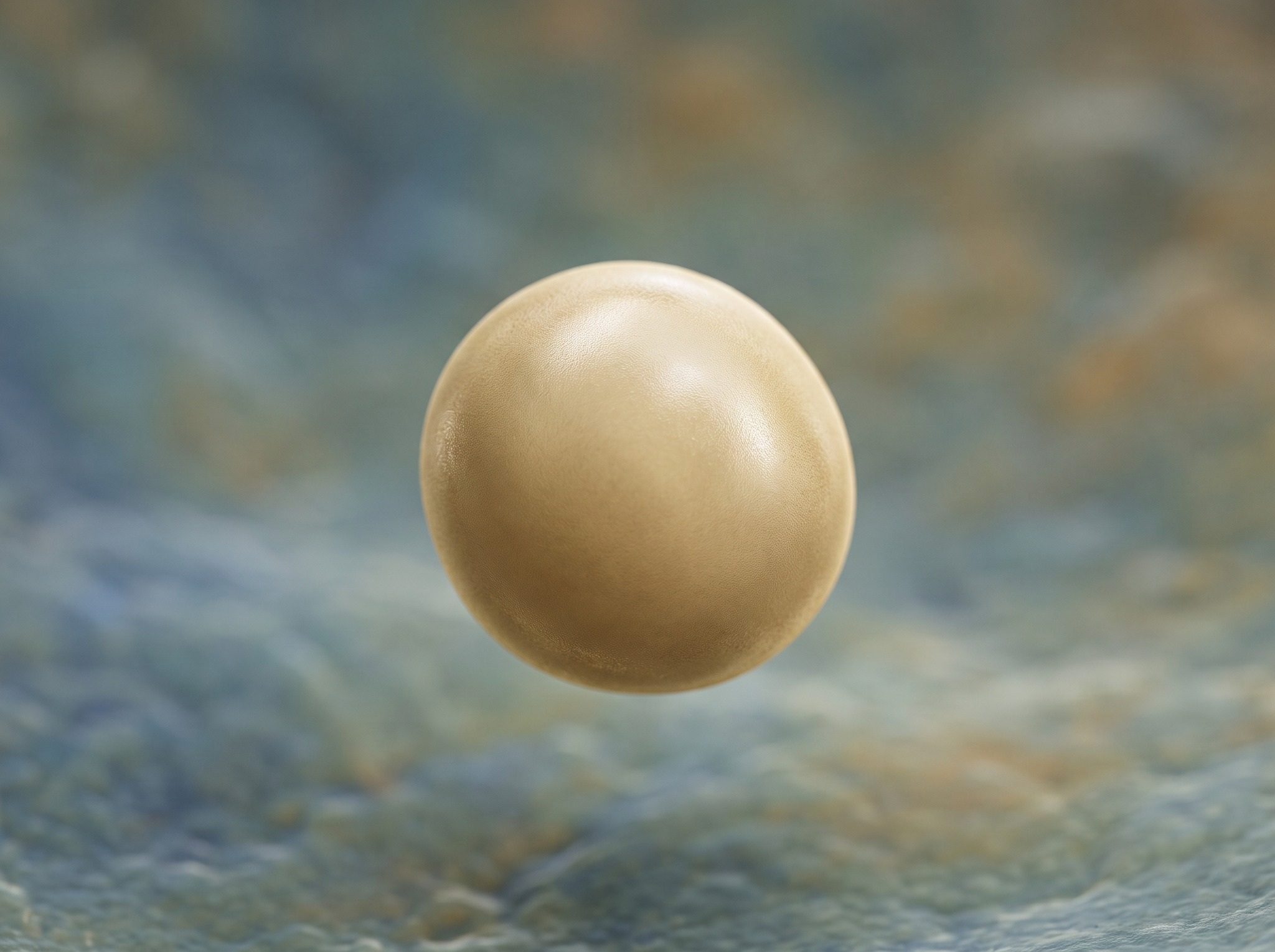
- A drop in the digestive enzymes the pancreas releases into the small intestine, most often from chronic pancreatitis, diabetes, cystic fibrosis, or after pancreatic or gallbladder surgery. With reduced enzyme levels, fat, protein and starch all pass through partly undigested, though fat is usually what causes symptoms first.
Bile acid problems, most often after gallbladder removal, can produce the same greasy stool through a different route: with limited bile reaching the gut at the right moment, fat stays in droplets too large for the body to absorb efficiently. Celiac disease and small intestinal bacterial overgrowth (SIBO) damage or crowd the absorptive lining itself, which affects fat along with other nutrients.
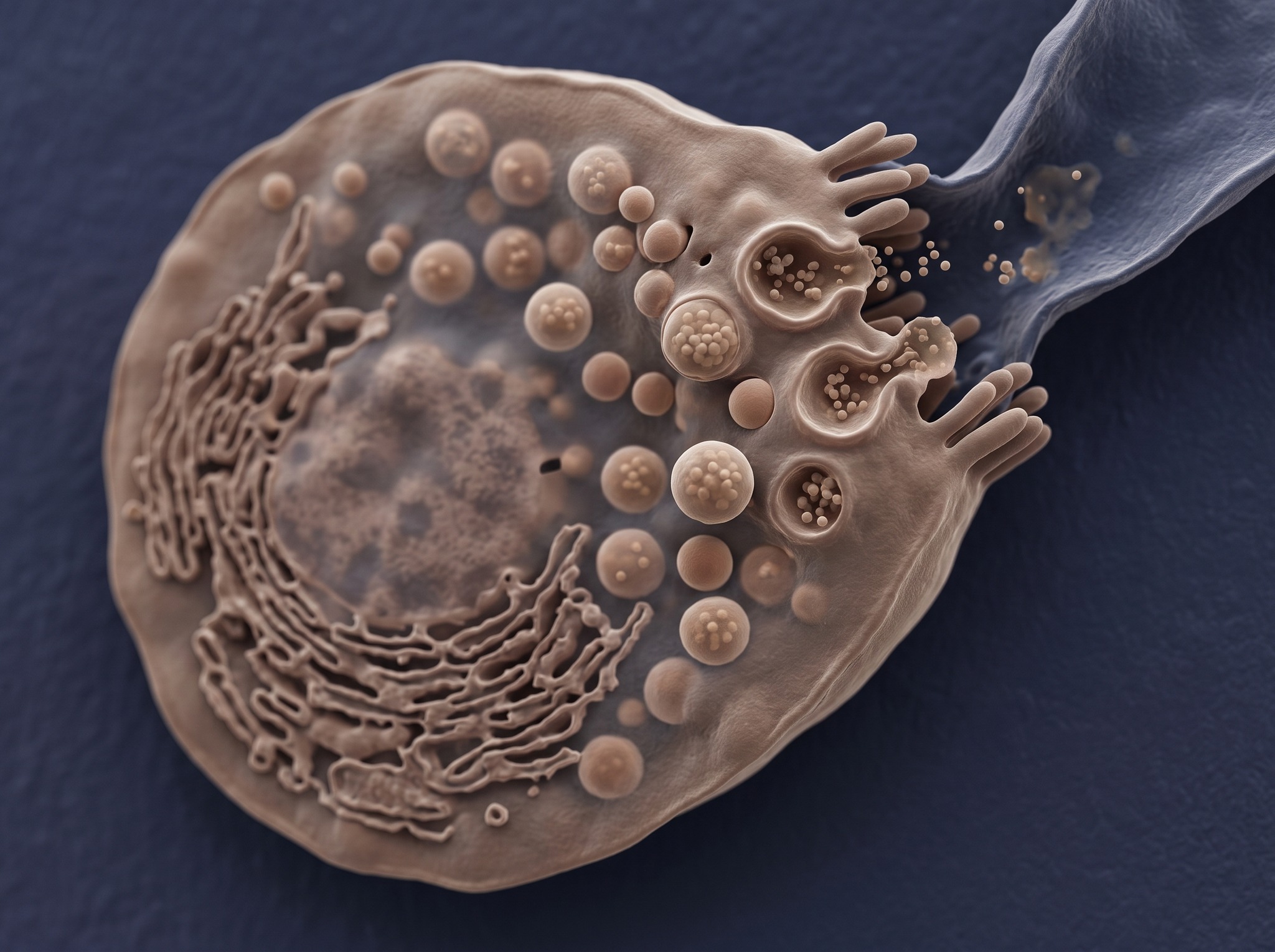
Fat that never got broken down
Where the enzymes come from
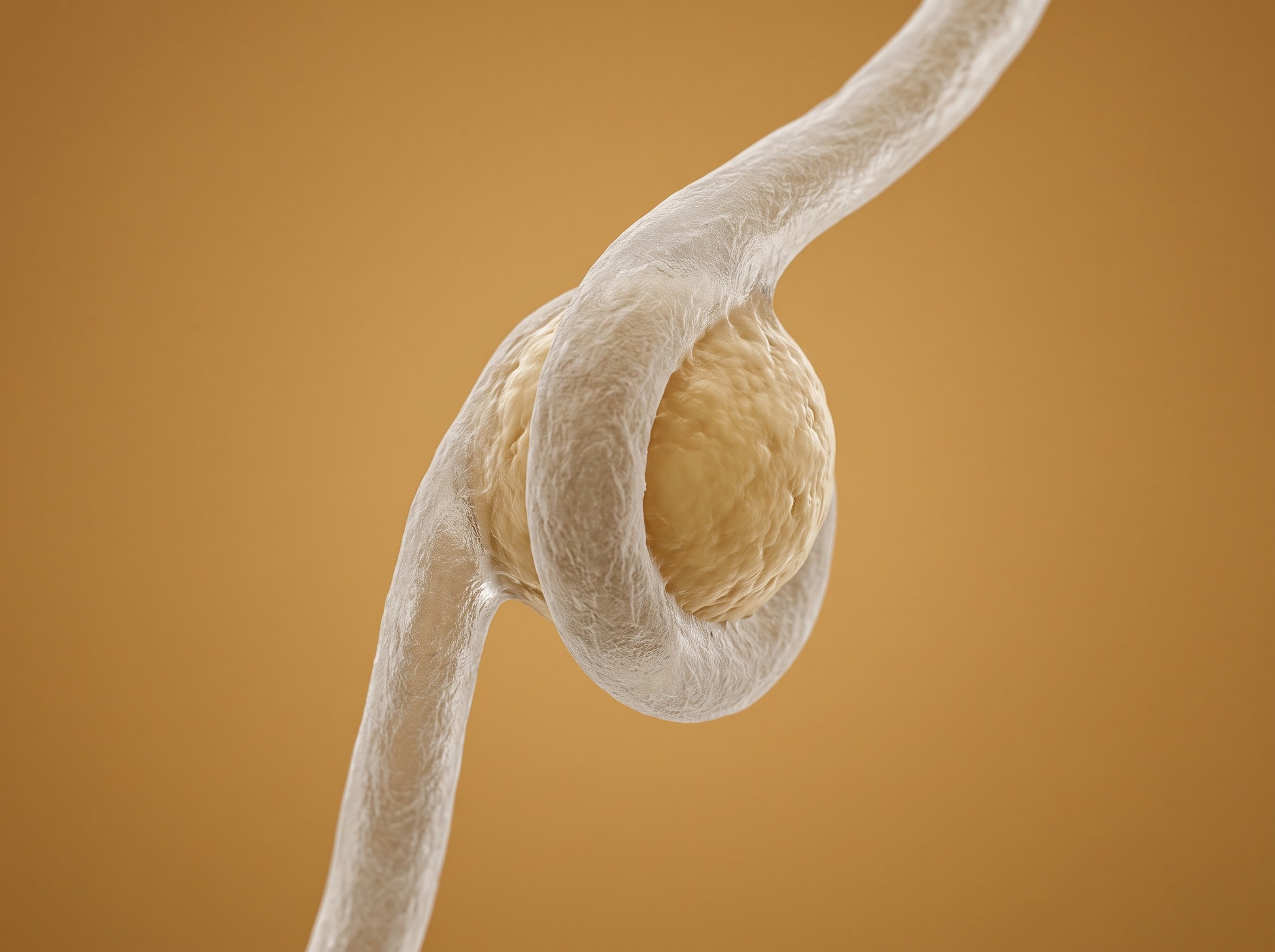
One way to help
Is it IBS, or is it EPI
Exocrine pancreatic insufficiency gets missed constantly because its symptoms overlap almost completely with irritable bowel syndrome. A few clues tend to point away from a simple IBS diagnosis.
| Looks like IBS-D | Might actually be EPI |
|---|---|
| Loose, frequent stool | Stool is specifically greasy, pale and floats, well beyond simply loose |
| Bloating after meals | Bloating is worst after fatty or protein-heavy meals specifically |
| Weight stays stable | Weight drops despite eating normally or more |
| No nutrient signs | Bruising, bone pain or vision changes appear alongside gut symptoms |
STUDY In a prospective study of 140 patients with diarrhea-predominant IBS, 7 patients, 5%, had fecal elastase results low enough to suggest undiagnosed exocrine pancreatic insufficiency, and that subgroup also had lower blood levels of vitamins A and E. Lee and McNabb-Baltar, Digestive Diseases and Sciences, 2022.
How doctors confirm fat malabsorption
The test that actually confirms fat malabsorption is a stool test. Fecal elastase-1 measures how much active pancreatic enzyme is reaching your stool. Results under roughly 200 micrograms per gram suggest reduced pancreatic function, and results under 100 suggest a more severe drop. Some clinics also use a 72-hour stool fat collection, though it has become less common today given how inconvenient it is for the patient. Fat-soluble vitamin levels, A, D, E and K, are usually checked at the same time, since a deficiency there supports the diagnosis even before the root cause is confirmed.
The diabetes connection nobody checks for
If you have diabetes and any of these gut symptoms, it's worth asking your endocrinologist to look at your pancreas alongside your blood sugar.
How common is reduced pancreatic enzyme output in diabetes
Moderate + severe exocrine pancreatic insufficiency combined, Capurso et al., Clinical and Experimental Gastroenterology, 2019
The severity breakdown behind that number
Capurso et al., Clinical and Experimental Gastroenterology, 2019, doi:10.2147/CEG.S168266
STUDY Insulin requirement, poor glycemic control, and long disease duration have all been associated with reduced exocrine pancreatic function in diabetes. Capurso et al., Clinical and Experimental Gastroenterology, 2019.
The exocrine pancreatic secretion is the link between IBS and diabetes.
Michael, 56, bus driver
Developed type 2 diabetes at 49, then years later started getting diarrhea, bloating and abdominal pain that no one connected to his blood sugar.
What the testing showed
Fecal elastase came back virtually undetectable, alongside steatorrhea and malabsorption of fat-soluble nutrients.
Beyond metformin
Enzyme supplementation, a low-FODMAP diet and intermittent fasting, built around his irregular work schedule.
Six weeks in, six months on
An 80% improvement in symptoms within six weeks, and his daily insulin dose dropped from 24 to 16 units over the following six months.
Michael's insulin dose, before and after treating EPI
medcasestudies.com case study, "IBS and diabetes", daily insulin units
Read the full case, how Michael's gut symptoms turned out to be tied to his pancreas, for the complete testing and treatment timeline.
I've had type 2 diabetes for about 6 years, sugars have been fine per my last A1c. but the last couple months my poop is really greasy and floats, and I've lost weight without trying. is this even related to the diabetes or is it something totally separate?
Yeah, it can be related. Your pancreas makes the enzymes that digest fat in addition to insulin, and diabetes can wear that enzyme output down over time. Greasy, floating stool plus weight loss even with a normal A1c is a classic sign of fat malabsorption. Ask for a fecal elastase test to check it directly, since a normal A1c on its own still leaves that connection open.
Could your diabetes and your gut symptoms share the same root cause
IBSyncrasy walks through Michael's exact case, and how to bring it up with your own doctor. Buy IBSyncrasyFour ways to help your gut handle fat again
None of these fix the underlying cause on their own, but they reduce the daily symptom load while you and your doctor work on that.
- Include fat at every meal, in a smaller amount. Cutting fat out completely isn't the goal, matching the portion to what your current enzyme output can actually process is. A modest amount of fat at each meal keeps fat-soluble vitamin absorption going without overwhelming a pancreas that's already under-secreting lipase.
- Move dinner earlier. Enzyme secretion and gut motility both slow down as the evening goes on, so the same fat load sits longer and malabsorbs more when eaten late.
- Add soluble fiber to every meal that contains fat. A viscous fiber can help bind excess fat and bile acids on their way through, easing some of the downstream bloating and loose stool.
- Take fat-soluble vitamins in a water-miscible form. Standard oil-based vitamin A, D, E and K capsules need the very fat-digestion capacity that's already impaired. A water-miscible or micellized formulation, taken with your enzyme-covered meal, absorbs far more reliably.
STUDY Viscous, gel-forming, minimally fermented fibers like psyllium behave very differently in the gut than highly fermentable fibers, with far less gas production for a comparable dose. McRorie and McKeown, Journal of the Academy of Nutrition and Dietetics, 2017.
When to get help immediately
Together, and especially alongside diabetes or unexplained weight loss, these are the symptoms of fat malabsorption worth taking straight to a fecal elastase test before another round of guessing. Getting the right test early is usually faster, and cheaper, than months of elimination diets that were never going to fix an enzyme problem.
Still guessing why fat-heavy meals hit you so hard?
IBSyncrasy walks through real cases like this, from the symptom nobody could explain to the root cause and the protocol that fixed it.
Frequently asked questions
Most people notice bloating and cramping after fatty meals, stool that looks greasy or floats, and weight loss that keeps happening even when appetite stays normal or increases. Fatigue is common too, since fewer calories and nutrients are actually being absorbed.
Typically pale, bulky and greasy, sometimes described as oily or foamy, and it often floats or is hard to flush completely.
Often, yes, once the underlying cause is treated. Enzyme replacement for exocrine pancreatic insufficiency, or addressing bile acid issues or gut inflammation, usually improves fat absorption within weeks.
The main test is fecal elastase-1, a stool sample that measures active pancreatic enzyme levels. Fat-soluble vitamin blood levels are often checked alongside it.