Antonis is 39 years old and had a two-year history of blood in the stool, at first put down to hemorrhoids. Over time his bowel movements increased to four or five a day, with blood appearing after the fourth movement and occasional mucus in the stool. A colonoscopy confirmed chronic proctitis, a diagnosis that is uncommon at his age. His history included a steady, nightly habit of ultra-processed and fried food (junk food), along with excess body weight. In the evaluation, we decided to look at what was driving the inflammation with a full molecular stool test. The test revealed a reduced gut microbiome, low Akkermansia muciniphila, and raised fecal calprotectin, an inflammation marker that stayed hidden on routine bloodwork. This proctitis diet case describes how his diet and his lab results came together, and why cutting junk food became the first step in his plan.
The thinking behind the case
At IBSyncrasy we describe how chronic poor diet keeps gut inflammation going in cases like Antonis's, and which changes are worth trying first. Buy IBSyncrasyProctitis diet case, who is Antonis and what symptoms did he have
Antonis, 39 years old
Antonis is 39 years old and has a two-year history of blood in the stool. At first the symptom was put down to hemorrhoids. As the bleeding continued, a colonoscopy found chronic proctitis, a diagnosis that at this age led us to look deeper for a cause.
Four to five bowel movements a day
His bowel movements reached four to five a day, with blood appearing consistently after the fourth movement and occasional mucus in the stool. He also reported bloating after meals, two episodes of hives, and frequent nasal congestion, findings that seemed unrelated to each other at first glance.
A routine built around junk food
He woke at 4:30am and trained on an empty stomach, ate a salad for lunch and a light meal in the afternoon, but dinner was consistently ultra-processed and fried food (junk food), almost every night, before going to sleep around 9pm. This steady, daily exposure to junk food stood out immediately in his history.
Weight, medication, and family history
His body mass index was around 30.5, at the edge of obesity. He was on long-term finasteride and minoxidil, had a family history of gastric ulcer, and was already being treated with Salofalk and a probiotic formula (Bacteflora). None of these factors on their own explained why proctitis appeared so early.
What caught our attention about proctitis this early
What caught our attention in Antonis's case was his age. Chronic proctitis is more common in older patients or in people with an already known inflammatory bowel disease. At 39, with no prior history of bowel disease, this inflammation led us to look for what might be keeping it active for so long.
His diet history stood out
His history stood out for a steady, nightly habit of junk food, combined with excess body weight. Research links regular consumption of processed food with a higher risk of inflammatory bowel disease, through mechanisms tied to both the food's components and how it's processed.[1] This led us to treat his diet as a likely driver of the inflammation.
Looking beyond routine bloodwork
The next step was to look past routine bloodwork, which often stays normal even when the gut is actively inflamed. We recommended a full molecular stool test, with gut microbiome markers and mucosal markers such as fecal calprotectin and secretory IgA, to see what was behind the proctitis diagnosis.
Can junk food cause proctitis on its own?
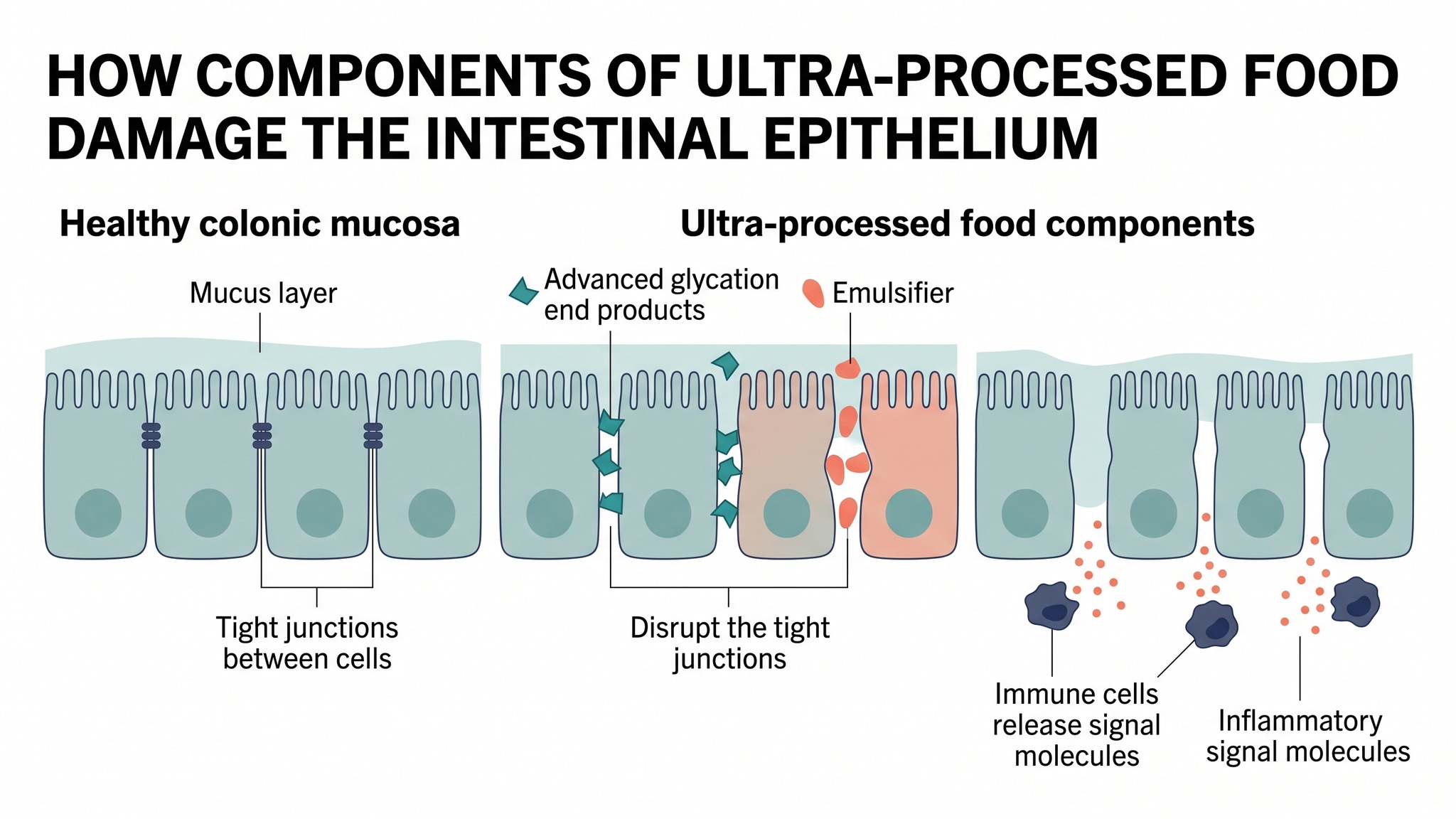
In the relationship between proctitis and diet, junk food places a burden on the intestinal lining through advanced glycation end products, emulsifiers, and high sugar content, factors that have been linked to increased gut permeability and low-grade inflammation. In a gut already under strain from other factors, a steady diet of junk food can act as an accelerant for inflammation.
Which first steps we recommended and why
Before the stool test results came back, Antonis's history already gave us enough to recommend immediate changes. Our thinking rested on how chronic junk food intake affects the intestinal lining, independent of the findings that would come later.
Junk food as the main direction
We recommended cutting back on junk food as the first priority. Fried and ultra-processed foods contain advanced glycation end products (AGEs) and polycyclic aromatic hydrocarbons (PAHs) formed during high-heat frying, monosodium glutamate (MSG), and emulsifiers widely used in industrial food processing, along with high sugar content. In large studies, regularly eating this type of food has been linked to a significantly higher risk of inflammatory bowel disease.[1]
Ultra-processed food intake and inflammatory bowel disease risk
Narula et al. 2021, BMJ 374,n1554, compared with less than 1 serving a day
These figures reflect overall inflammatory bowel disease risk in a large sample, and they showed us why his daily exposure to junk food needed to be treated as a central part of his history.
Why we singled out emulsifiers
One ingredient we singled out was polysorbate-80, an emulsifier commonly used in processed food. In a study of Crohn's disease patients, those who consumed more polysorbate-80 and other food additives scored significantly higher on a dietary inflammatory index than healthy controls.[2]
Dietary inflammatory index score in Crohn's disease patients
Trakman et al. 2022, Nutrients 14(17),3627, ENIGMA study, p=0.011
The mechanism behind this difference involves how polysorbate-80 is metabolized in the gut and how that metabolism affects intestinal barrier permeability, a topic we cover in more detail in this post.
The rest of the initial plan
Alongside cutting junk food, we recommended gradual weight loss of at least 10kg, reducing alcohol intake, and avoiding exhausting workouts on an empty stomach, since intense physical strain without enough fuel can add further strain to the digestive system. We recommended regular, measured meals at consistent times, seasonal vegetables, soup two to three times a week, and a 1200mg daily sodium butyrate supplement, a substance that directly feeds colon cells.
A possible shared starting point with the hives
We also singled out the two hives episodes in his history. Hives and gut inflammation share, in some cases, a common immune background, a point that led us to view the skin and the gut as two expressions of one broader inflammatory picture.
What the full stool test showed
The stool test came back to explain why the inflammation stayed active despite treatment with Salofalk. The findings combined reduced beneficial bacteria, signs of gut dysbiosis, and mucosal inflammation markers that earlier bloodwork hadn't picked up.
What does low Akkermansia muciniphila mean on a stool test?
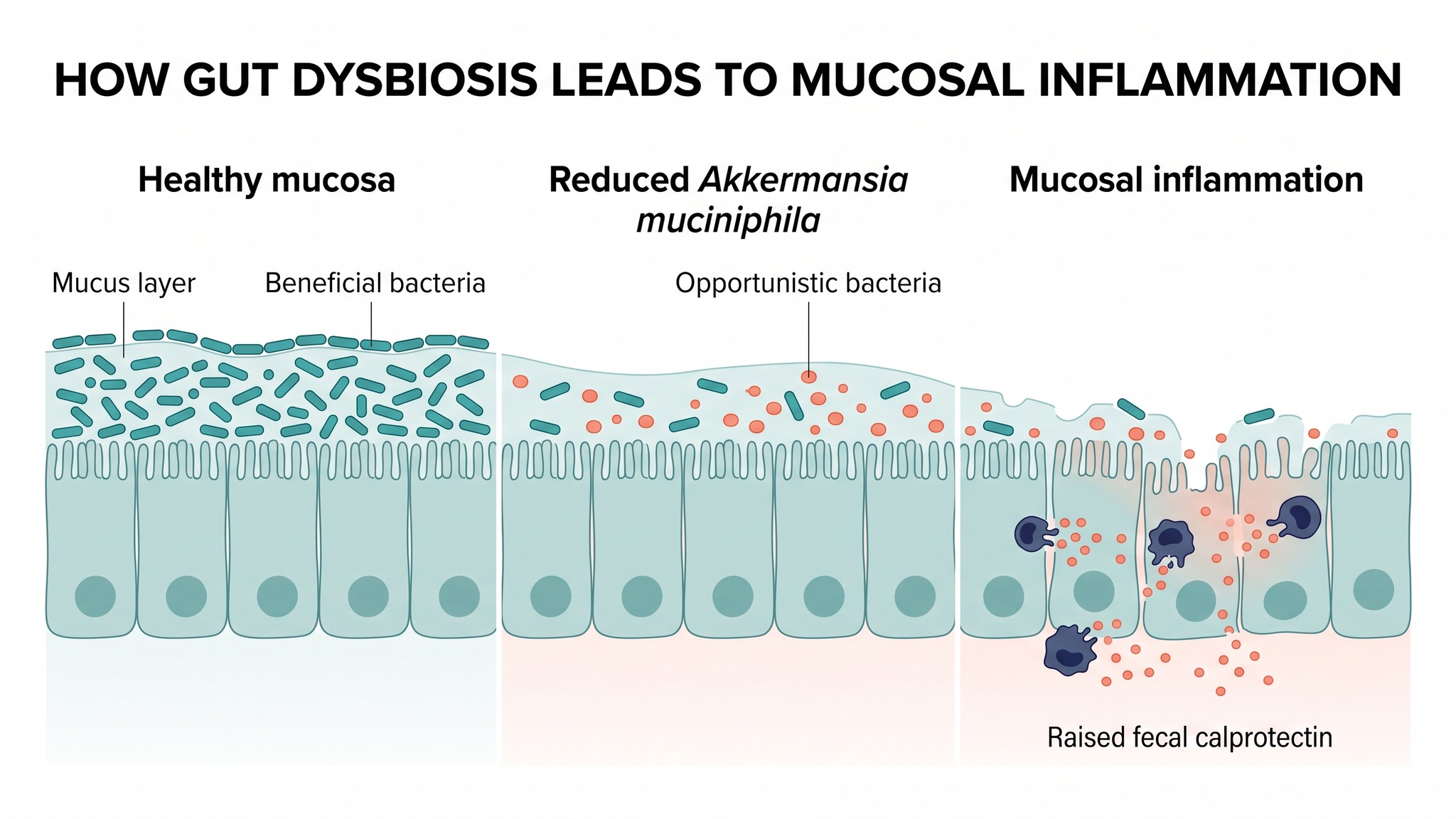
Akkermansia muciniphila is one of the main bacteria that colonize the mucus layer of the colon and help maintain a healthy mucosal lining. Low levels of this species have been linked in studies to a thinner mucus layer and greater vulnerability of the intestinal epithelium to inflammation. In the relationship between proctitis and diet, finding it at low levels adds to the picture of inflammation when it appears alongside other mucosal markers, such as fecal calprotectin.
How the findings connect to his diet
These findings match Antonis's diet history. A steady diet of junk food, low in fiber and high in processed ingredients, creates a gut environment that favors opportunistic bacteria over species like Akkermansia, while keeping mucosal inflammation active. The reduced gut microbiome and raised fecal calprotectin gave us a specific explanation for why the proctitis appeared so early and why it persisted.
| Intervention | Which finding it targets and why |
|---|---|
| Sodium butyrate, 1200mg a day (a short-chain fatty acid supplement) | For the low Akkermansia muciniphila and reduced gut microbiome. It directly feeds colon cells and supports the integrity of the mucosal lining.[3] |
| A broad-spectrum herbal antimicrobial blend (goldenseal, garlic, tea tree, and oregano extracts) | For the Enterobacter spp. overgrowth on the dysbiosis panel. It targets opportunistic bacteria without the broad effect of an antibiotic. |
| A modified, lower-gluten diet (a Mediterranean pattern with fewer gluten-containing grains) | For the raised anti-gliadin antibodies. It reduces a possible dietary trigger for the mucosa without requiring a full gluten exclusion. |
| Cutting junk food and replacing it with seasonal vegetables and soup | For the raised fecal calprotectin and low sIgA. It reduces exposure to advanced glycation end products, emulsifiers, and sugar that place a burden on the epithelium.[1] |
| Gradual weight loss of at least 10kg and reduced alcohol intake | For the raised body mass index and strained metabolic profile, factors that keep low-grade inflammation active throughout the body. |
What Antonis's case taught us about proctitis and diet
Antonis's case showed how a steady junk food habit can be linked to chronic proctitis at a young age, with no other obvious cause. The full stool test gave us the connection that routine bloodwork missed, with reduced Akkermansia muciniphila, gut dysbiosis, low sIgA, and raised fecal calprotectin.
Next steps
We recommended repeating fecal calprotectin two months after starting the intervention, to see whether mucosal inflammation eases alongside the dietary changes. We also recommended a full follow-up with his gastroenterologist and age-appropriate preventive screening, since the family history of gastric ulcer keeps the broader digestive picture worth watching.
In Antonis's case, diet stood out as the starting point for understanding why the proctitis appeared so early, and how it could be addressed at the root.
Your history might be hiding a dietary cause
In our evaluation we look at your gut together with your eating habits, the way we did in Antonis's case.
Frequently asked questions
Chronic proctitis is a prolonged inflammation of the lining of the final section of the colon, often causing blood in the stool, mucus, and more frequent bowel movements. It can be linked to inflammatory bowel disease, infection, or dietary factors, and is often first mistaken for hemorrhoids because of the similar bleeding pattern.
Diet is often one factor among several, and regularly eating processed food has been linked in studies to a higher risk of inflammatory bowel disease, even in younger adults with no other predisposing factors. The mechanism involves added strain on the intestinal epithelium and disruption of the gut microbiome.
Beyond the colonoscopy that confirms the diagnosis, a molecular stool test adds information about the gut microbiome, dysbiosis, and mucosal inflammation markers such as fecal calprotectin, details that routine bloodwork usually leaves out.
References
- Narula N, Wong ECL, Dehghan M, et al. Association of ultra-processed food intake with risk of inflammatory bowel disease, prospective cohort study. BMJ. 2021,374,n1554.
- Trakman GL, Fehily S, Basnayake C, et al. Processed food as a risk factor for the development and perpetuation of Crohn's disease, the ENIGMA study. Nutrients. 2022,14(17),3627.
- Earley H, Lennon G, Balfe Á, Coffey JC, Winter DC, O'Connell PR. The abundance of Akkermansia muciniphila and its relationship with sulphated colonic mucins in health and ulcerative colitis. Scientific Reports. 2019,9,15683.
- Lin R, Chen H, Shu W, et al. Clinical significance of soluble immunoglobulins A and G and their coated bacteria in feces of patients with inflammatory bowel disease. Journal of Translational Medicine. 2018,16,1-15.
- Rokkas T, Portincasa P, Koutroubakis IE. Fecal calprotectin in assessing inflammatory bowel disease endoscopic activity, a diagnostic accuracy meta-analysis. Journal of Gastrointestinal and Liver Diseases. 2018,27(3),299-306.
- Frehn L, Jansen A, Bennek E, et al. Distinct patterns of IgG and IgA against food and microbial antigens in serum and feces of patients with inflammatory bowel diseases. PLoS ONE. 2014,9(9),e106750.