Fusobacterium endometriosis: what the evidence shows now
The Fusobacterium endometriosis connection offers a plausible explanation for how microbial exposure, immune signaling and tissue behavior may meet in a susceptible pelvis. The evidence now includes a detailed mechanism, an oral microbiome signal and a human replication study with a conflicting result. Together, these findings support a root-cause investigation that places one organism inside a complex disease process.
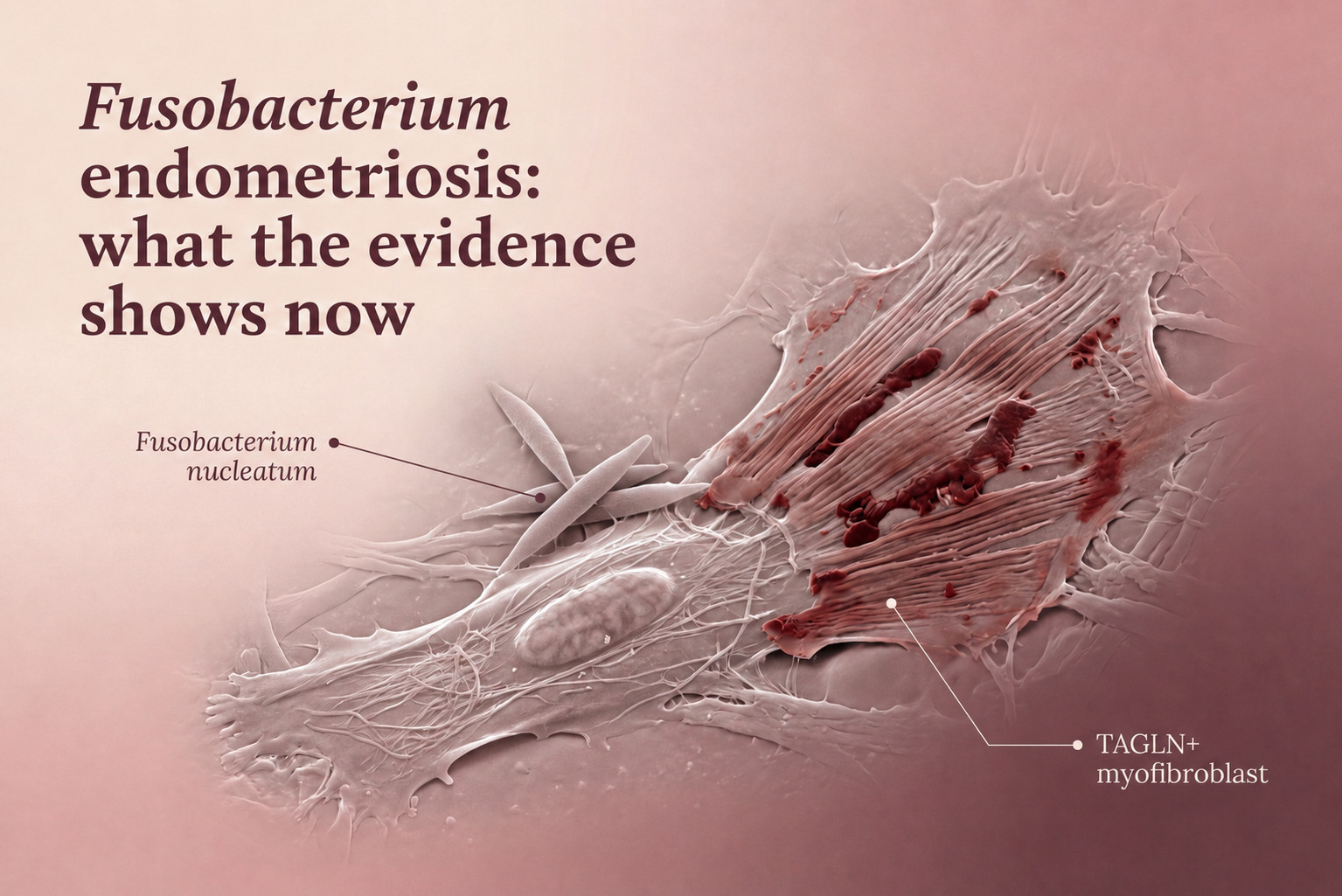
What is the connection between Fusobacterium and endometriosis?
The connection is biologically plausible and clinically unsettled. Suzuki, Hamaguchi, Kajiyama and colleagues reported in Science Translational Medicine that the organism was present in tissue from 27 of 42 women with ovarian disease and 3 of 42 controls. The control indications included leiomyoma and cervical dysplasia. Detection was 64.3% versus 7.1%. The study then tested how exposure changed immune and stromal behavior.
Detection in the 2023 tissue cohort
Muraoka et al., 2023, Sci Transl Med. DOI 10.1126/scitranslmed.add1531.
TRANSLATIONAL STUDY The paper titled Fusobacterium infection facilitates the development of endometriosis through the phenotypic transition of endometrial fibroblasts combined human tissue, cell experiments and a mouse model. Inoculation increased the number and weight of each lesion, while treatment reduced both outcomes.
“Our data support a mechanism for the pathogenesis of endometriosis via Fusobacterium infection.”
The 2025 replication changed the interpretation
Graciano-España and colleagues tested eutopic tissue from 55 patients with endometriosis and 37 women without endometriosis. Quantitative PCR found similar abundance at genus level, P = .258, and for F. nucleatum, P = .738. Disease-severity subgroups were also similar. Differences in age, tissue collection, laboratory extraction, case phenotype and low-biomass contamination control may help explain why the studies diverged. The result places the microbe among candidate modifiers with limited value as a diagnostic marker.
“Limited diagnostic or prognostic value in endometriosis.”
Why does retrograde menstruation lead to endometriosis in some women?
During this backward flow, part of the menstrual fluid travels through the fallopian tubes into the pelvic cavity. The remaining flow exits through the cervix and vagina. Fluid entering the pelvis can carry viable cells from the lining into contact with the ovaries, pelvic peritoneum and nearby organs. The phenomenon is common, while persistent disease affects a smaller proportion of women.
The gap between common cell transport and less common lesion establishment is where immune surveillance, estrogen signaling, genetics, fibrosis and local microbiota become relevant. A cell arriving in the pelvis still needs to adhere, obtain a blood supply, resist immune clearance and respond to the hormonal cycle. The 2023 mechanism offers one possible contribution to that sequence. A growth factor released in an immune-cell-rich environment increased the protein called transgelin. TAGLN-positive myofibroblasts then showed greater proliferation, adhesion and migration.
This model gives backward menstrual flow a tissue-context explanation. Similar menstrual material may meet very different immune and microbial conditions in two women. One pelvis clears the displaced cells. Another contains inflammatory, hormonal and fibrotic signals that improve their chance of persistence.
How could the organism reach the womb lining and start inflammation?
Two routes are under investigation. An ascending route would begin in the lower reproductive system and move through the cervix toward the uterus. A hematogenous route would carry an oral organism through the bloodstream after disruption of gum tissue. The 2023 cohort also found a higher signal in a vaginal swab from affected participants, which supports further study of the ascending route. Direction and timing remain unresolved.
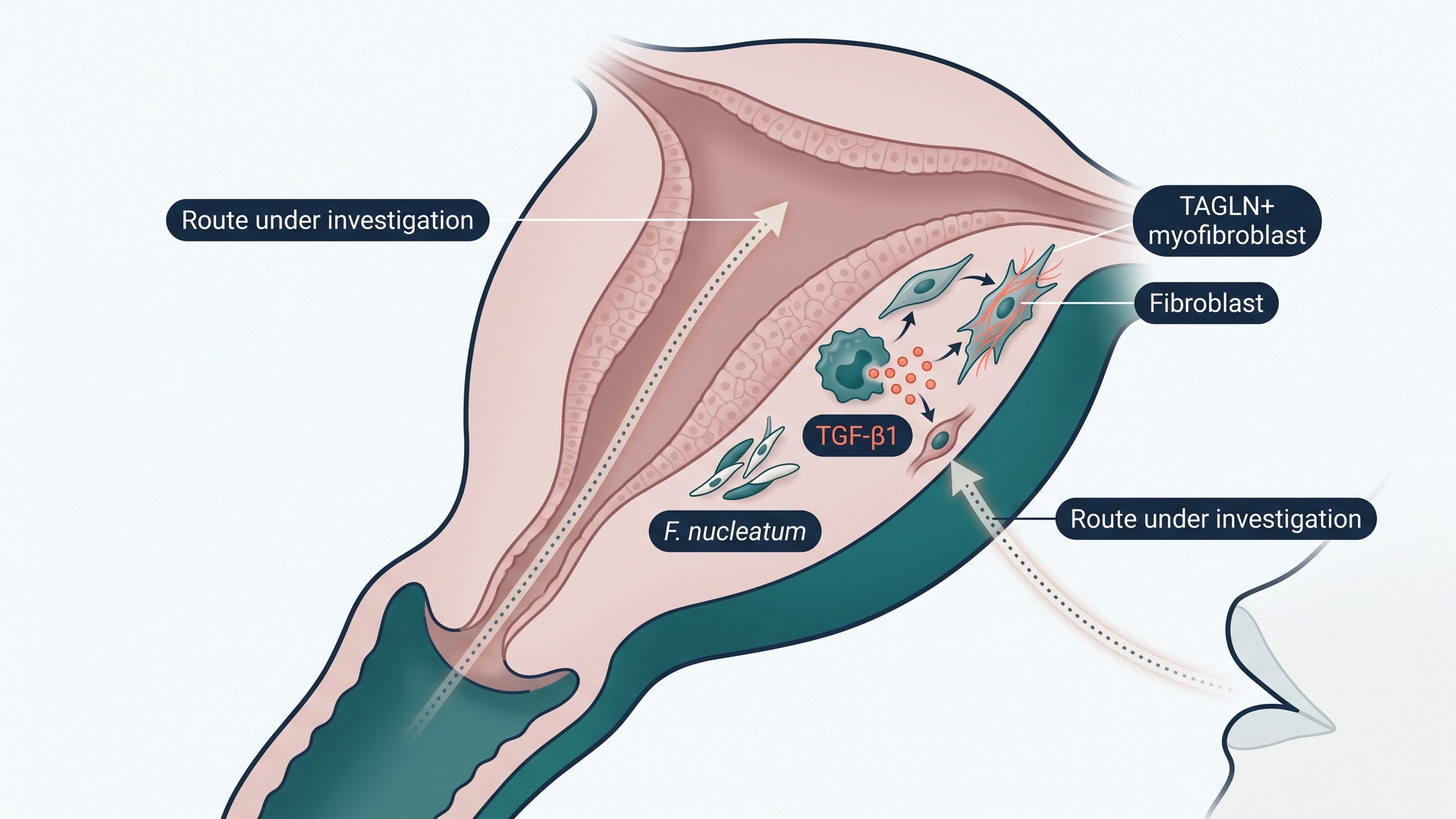
From microbial exposure to altered fibroblast behavior
Inside the tissue, the proposed sequence begins with immune recognition. F. nucleatum stimulated M2-polarized immune cells to release TGF-β1, including when heat-killed organisms were used in vitro. In this model, a macrophage releases the signal that increases transgelin expression and shifts quiescent fibroblasts toward a contractile myofibroblast phenotype. These cells adhered and migrated more readily, properties relevant to the establishment of displaced endometriotic tissue after menstruation.
This pathway describes a local tissue mechanism. Oral abundance, stool abundance and a tissue finding remain different biological measurements. A positive stool panel describes intestinal bacteria and leaves pelvic presence unanswered.
Which endometriosis symptoms deserve a more specific investigation?
The most informative symptom pattern is pain or organ dysfunction that tracks the menstrual cycle. Severe dysmenorrhea may begin before bleeding and continue for several days. Deep dyspareunia often feels localized behind the vagina or lower pelvis. Dyschezia can present as sharp pain with bowel movements, rectal pressure, constipation or cyclical rectal bleeding. Dysuria may include bladder pain, urgency or cyclical blood in the urine.
Pain between periods, chronic lower-back pain, heavy bleeding, fatigue, abdominal distension and infertility also occur. Bowel symptoms can resemble IBS, especially when bloating, diarrhea or constipation changes across the cycle. Bladder symptoms may resemble recurrent cystitis. The timing, exact location and relation to penetration, defecation or urination often provide more diagnostic information than a general pelvic-pain score.
Symptoms reported in a specialist endometriosis cohort
van Poll et al., 2020, Sexual Medicine. The denominators varied by symptom because questionnaire completion differed. DOI 10.1016/j.esxm.2020.06.004.
Where are you in the diagnostic process?
Your answer helps show where readers are getting delayed in the diagnostic process.
See the resultWhich tests can find endometriosis and what can each report show?
A specialist transvaginal ultrasound is usually the most important first imaging test. It can identify ovarian endometriomas, reduced organ mobility, obliteration of the pouch of Douglas and many forms of deep disease. MRI adds value when the likely distribution needs detailed mapping before surgery, especially around the bowel, bladder, ureters or pelvic sidewall. Imaging quality depends heavily on the operator and protocol.
| Test and clinical priority | What the report may show |
|---|---|
| Specialist transvaginal ultrasound Most important first imaging test | An ovarian cyst with homogeneous ground-glass echoes, kissing ovaries, a negative sliding sign, fixed pelvic organs, deep nodules or signs of adenomyosis. A routine pelvic scan may omit systematic mapping. |
| Pelvic MRI with an endometriosis protocol Most useful for mapping complex or deep disease | T1-hyperintense endometrioma with T2 shading, low-T2 fibrotic plaques, tethering, adhesions and involvement of rectosigmoid, bladder, ureter, vagina or uterosacral ligaments. |
| Laparoscopy with targeted histology Most definitive when direct confirmation or surgery is needed | Superficial implants, ovarian disease, adhesions, fibrosis and deep nodules. Histology may describe endometrium-like glands and stroma, hemosiderin-laden macrophages or fibrosis. |
| Pelvic examination Supportive | Posterior fornix tenderness, uterosacral nodularity, a fixed retroverted uterus, adnexal mass or reduced organ mobility. A normal examination remains common in superficial disease. |
| CA-125 or other blood biomarkers Low diagnostic priority | CA-125 may be raised in advanced disease and may remain normal at any stage. Current guidelines do not use it to establish or exclude the diagnosis. |
| Biopsy or local sampling for the organism Research use | PCR, sequencing or in-situ detection may identify microbial DNA in research samples. Clinical cutoffs for diagnosis and treatment selection are still being developed. |
How accurate are examination and imaging for deep disease?
A meta-analysis of 30 studies and 4,565 participants compared physical examination, transvaginal ultrasound, transrectal ultrasound and MRI for deep infiltrating disease. The numbers below apply specifically to deep disease. Superficial peritoneal implants can remain invisible on scans.
Diagnostic performance for deep infiltrating disease
Zhang et al., 2020. Systematic review and meta-analysis of 30 studies with 4,565 participants. DOI 10.3892/etm.2020.9043.
GUIDELINE The 2022 ESHRE guideline recommends imaging in the diagnostic work-up and considers laparoscopy when imaging is negative and empirical treatment is inappropriate or unsuccessful. A normal scan therefore has a precise meaning: deep or ovarian disease was not visualized, while superficial disease may still be present.
I have surgically confirmed endometriosis and a stool test showing high Fusobacterium nucleatum. Does that mean the bacterium is also present in my uterus, and which test would actually check that?
A stool result describes the intestinal ecosystem and leaves the location of the same organism unanswered. Research protocols use a cervical or vaginal sample, a biopsy of the lining, PCR and tissue imaging. Clinical cutoffs for Fusobacterium endometriosis are still being developed. The practical review starts with your operative report, histology, specialist imaging, oral health, bowel pattern and previous antimicrobial exposure.
What makes F. nucleatum capable of reaching and attaching to distant tissues?
F. nucleatum is a Gram-negative, obligate anaerobe with a slender spindle shape and tapered ends. It primarily occupies the oral cavity and acts as a physical bridge inside dental plaque because its surface adhesins bind human cells and other bacteria. This coaggregation ability helps organize mixed communities in periodontal pockets and contributes to gum disease. The organism can also enter blood during active oral inflammation or dental procedures.
Outside the mouth, increased abundance or tissue localization has been associated with colorectal cancer, inflammatory bowel disease, appendicitis, adverse pregnancy outcomes and several opportunistic infections. Association varies by subspecies and tissue context. For a detailed organism-level review, read how to get rid of Fusobacterium naturally. The role of the gut microbiota is covered in how to treat gut dysbiosis.
Candida may provide an additional docking partner
A 2026 Cancer Cell study found that the fungal adhesin Flo9 on Candida albicans binds the fusobacterial adhesin RadD. That interaction helped F. nucleatum localize to colonic mucosa and increased colorectal tumor progression in experimental systems. The study gives direct molecular evidence for cross-kingdom docking in the colon. Relevance to the lining of the womb remains a research question. The interaction is also summarized in this Candida and cross-kingdom docking post.
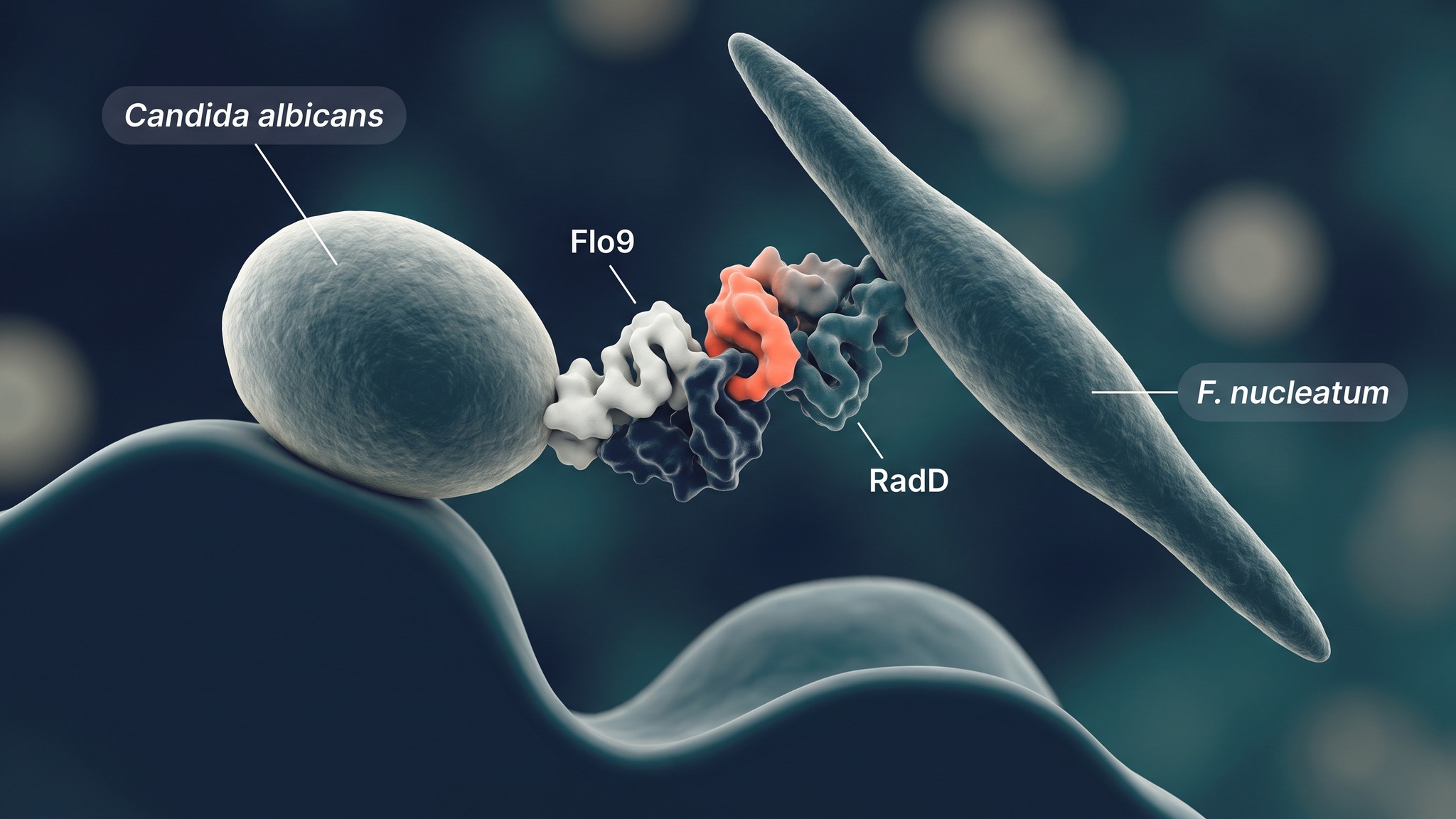
MECHANISTIC STUDY Li and colleagues identified Flo9–RadD binding as the mechanism through which C. albicans facilitated F. nucleatum localization to colonic mucosa. Li et al., 2026, Candida albicans synergizes with Fusobacterium nucleatum in colorectal cancer progression via the Flo9-RadD interaction, Cancer Cell.
What does Fusobacterium endometriosis treatment mean in 2026?
At present, it is a research direction awaiting a validated clinical protocol. In the original experiment, MZ and chloramphenicol reduced the microbial signal, M2-cell infiltration, growth-factor abundance, lesion burden and the weight of established endometriosis lesions in mice. Both transvaginal and oral antibiotic treatment were studied at different stages of the model. These findings establish experimental reversibility in a controlled mouse system.
The human antibiotic trial produced a different result
METROFERT randomized 88 participants after fertility-sparing excision to a 14-day course of the study drug or placebo. Seventy-two contributed to the primary endpoint. At six weeks, persistent pain was reported by 84% in the treatment group and 88% in the placebo group, P = .74. Secondary pain, quality-of-life and adverse-event outcomes were also similar. Eligibility followed postoperative surgical status. The study left tissue positivity and microbial eradication unmeasured.
RANDOMIZED TRIAL Pain persistence was 84% with treatment and 88% with placebo. Quevedo et al., 2025, The impact of metronidazole on pain persistence after fertility-sparing endometriosis surgery: METROFERT randomized study, American Journal of Obstetrics and Gynecology.
What testing and clinical trials still need to establish
The ENDS study, registered in 2024 as NCT06368596 with a planned enrollment of 845 women, is examining detection in cervical, vaginal and tissue samples. It is a diagnostic study without a drug intervention. Its design reflects the main unresolved issue: a reproducible tissue-defined subgroup must exist before clinicians can test a targeted strategy.
A broad-spectrum antibiotic changes many bacteria alongside the intended target. Clinicians therefore need a validated test, a defined positive subgroup and human outcome data before they prescribe antibiotics for this mechanism. Oral hygiene and treatment of active periodontitis make sense for general health and reduction of the oral reservoir. Laboratory findings for botanical antimicrobials remain preclinical for pelvic disease.
What changes when microbial ecology is included in a root-cause plan?
The microbial question becomes one layer of the clinical picture. The first layer identifies disease location and phenotype through symptoms, specialist imaging and previous operative findings. The second examines contributors to persistence, including estrogen exposure, immune activation, fibrosis, pelvic-floor dysfunction, bowel motility, oral inflammation and gastrointestinal dysbiosis. Treatment then follows the layer with the strongest evidence and the clearest link to the person's symptoms.
This approach also prevents a positive stool result from displacing standard gynecological care. A person with cyclical dyschezia and a normal routine ultrasound may need specialist imaging before another antimicrobial protocol. A person with confirmed disease, active periodontitis and digestive symptoms may benefit from coordinated gynecological, dental and gastrointestinal assessment. The sequence changes according to the evidence already present.
The hypothesis is most useful when it improves the questions being asked. Where is the disease located? Which symptoms follow the cycle? Is oral or intestinal dysbiosis clinically active? Which finding has a validated treatment today? That order preserves the root-cause perspective while the evidence continues to mature.
My pelvic pain temporarily improved while I was taking metronidazole for another infection. Could that suggest a Fusobacterium-associated pattern, and is targeted antibiotic treatment worth discussing?
A temporary response is worth recording, including the dose, duration, cycle phase and which symptoms changed. The response reflects activity against several anaerobes and possible changes in gut or vaginal ecology. A validated endometriosis test-and-treat pathway for this organism remains under development. A clinician can use the response as one data point beside imaging, operative findings, oral health and the pattern of recurrence.
Understand the physiology behind persistent symptoms
IBSyncrasy explains how barrier function, microbial ecology, motility and immune signaling can preserve symptoms after the first trigger has passed, using complete clinical cases with connected test results.
Frequently asked questions
The 2023 study linked the organism with a TGF-β1 and transgelin pathway that changed fibroblast behavior and increased disease in mice. A 2025 human study found no significant difference between cases and controls. The current connection is a plausible mechanism with mixed human replication.
An ascending route from the lower reproductive tract and a bloodstream route from the oral cavity are both biologically plausible. Research has detected the organism in vaginal and tissue samples, yet the direction, timing and frequency of transfer remain unresolved.
Several plant compounds inhibit the organism in laboratory experiments. Human evidence for clearance from local tissue and treatment of the gynecological disease is still pending. Periodontal care and consistent oral hygiene address its main reservoir. Treatment decisions benefit from locally relevant findings rather than a stool result alone.
Current evidence supports a candidate microbial modifier within a wider inflammatory, hormonal, immune and fibrotic process. The conflicting tissue studies and similar postoperative outcomes between treatment and placebo make a single-cause interpretation premature.
A stool test measures intestinal abundance. Research detection in uterine tissue requires a locally collected sample such as a biopsy, followed by PCR, sequencing or tissue imaging. Validated clinical cutoffs for diagnosis and treatment selection are still being developed.