Acid reflux without heartburn, what it really means for your throat
Acid reflux without heartburn usually means the reflux is landing on your throat, in a pattern called silent reflux.
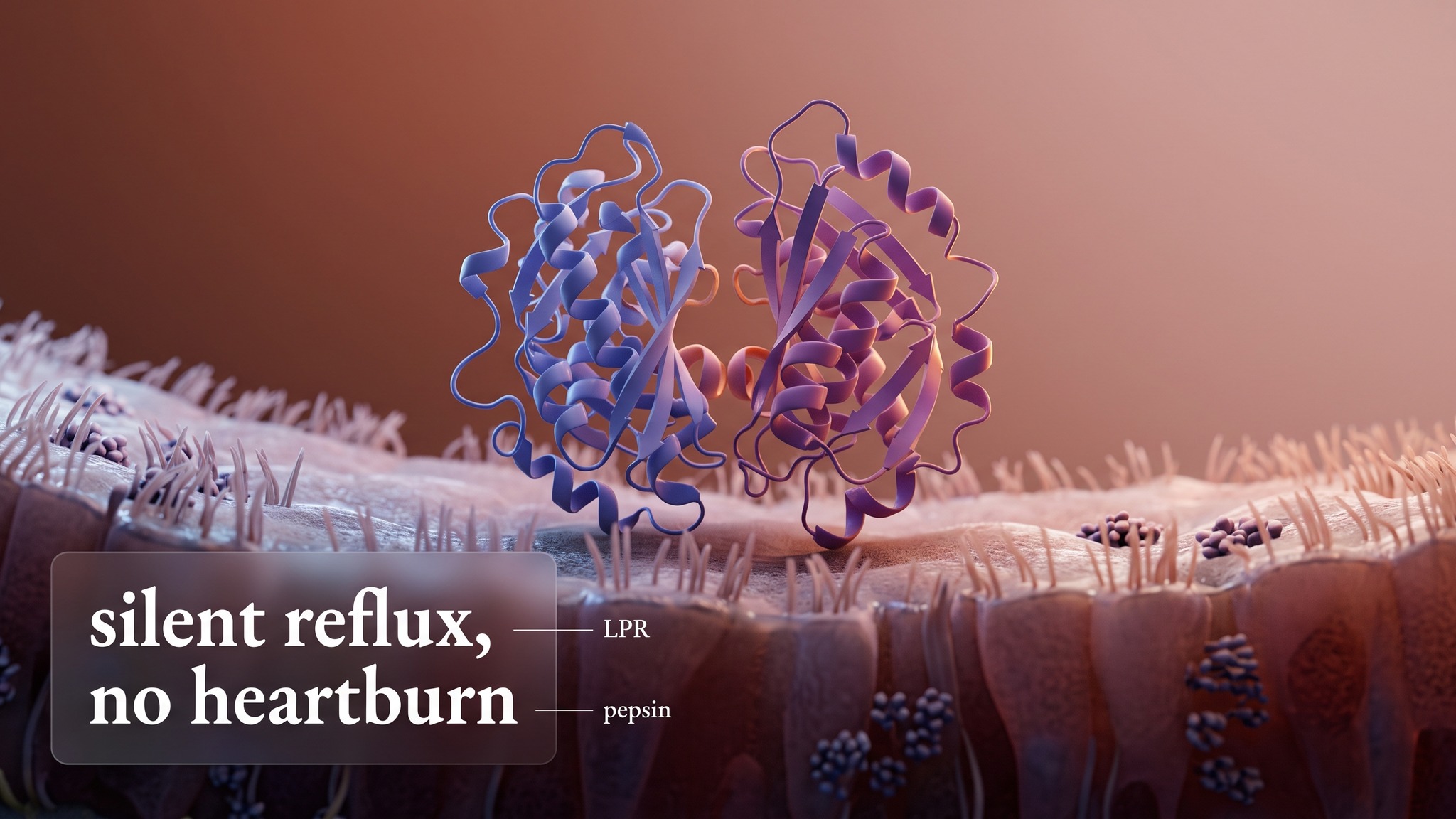
Could I have acid reflux without heartburn?
Yes, acid reflux without heartburn is a well-recognized pattern. Stomach contents can travel high enough to reach the throat and voice box while barely touching the esophagus, so the burning chest sensation people associate with reflux never appears. Clinicians call this laryngopharyngeal reflux, or LPR, and it behaves differently enough from classic gastroesophageal reflux disease that it is often missed for months.
The confusion is understandable. A chronic cough, a persistently hoarse voice, or the feeling of a lump in the throat point toward the ears, nose and throat clinic long before anyone thinks about the stomach. Many people cycle through allergy testing, chest imaging and voice rest before a clinician finally connects the symptoms to reflux, because the one symptom everyone expects, heartburn, is simply absent.
The reflux itself is real even though it feels invisible. It is measurable on laryngoscopy, it shows up in symptom scoring tools built specifically for this pattern, and it responds to a defined set of mechanisms once someone knows to look for it in the throat and voice box specifically.
How common silent reflux is in a general adult population
Spantideas et al 2015, BMC Ear, Nose and Throat Disorders
What is silent reflux (LPR)?
Silent reflux, or laryngopharyngeal reflux, is what happens when stomach contents move past the upper esophageal sphincter and reach the throat, voice box and back of the nose, well beyond the esophagus and its lower esophageal sphincter. That single difference in location changes almost everything about how the condition feels and how it needs to be managed.
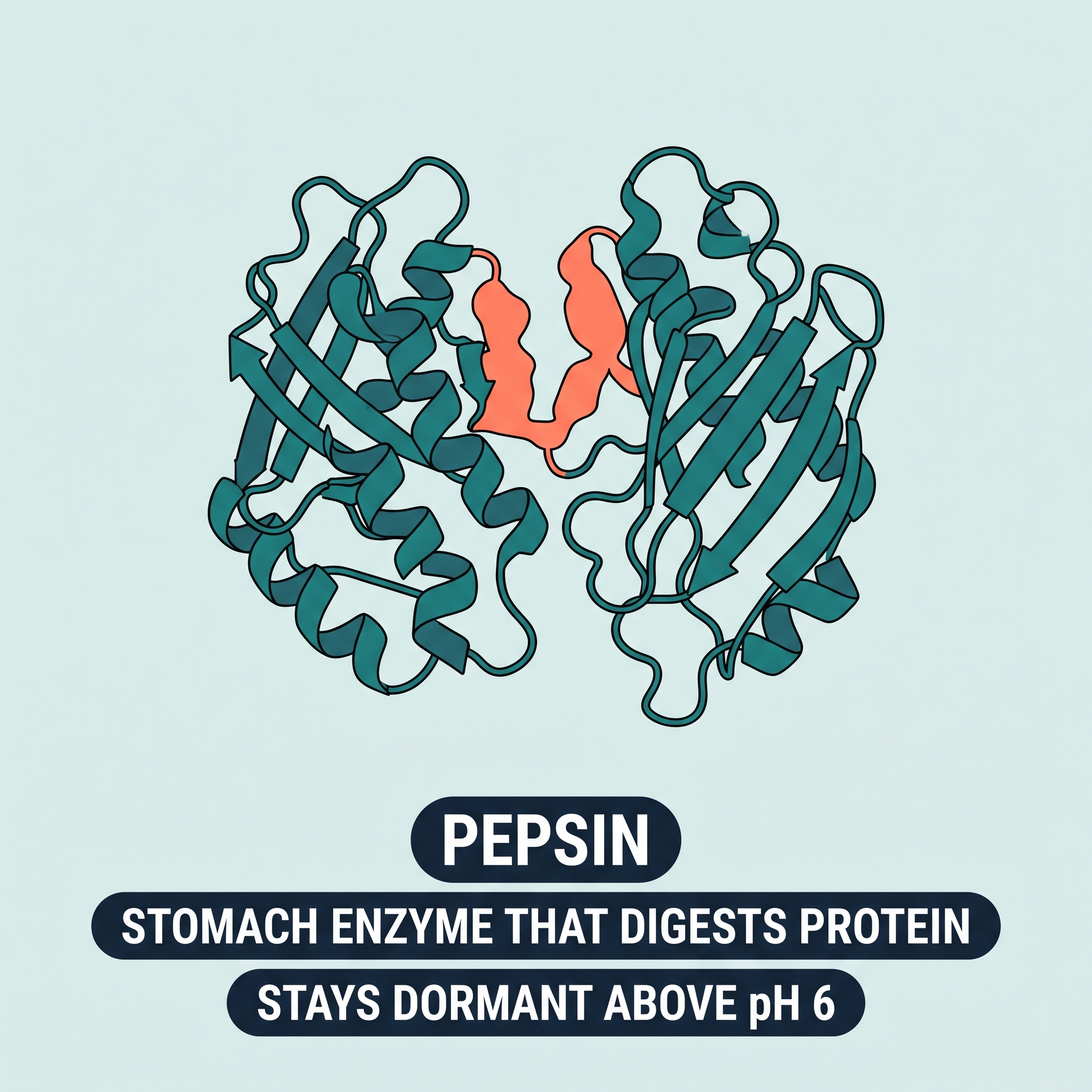
Acid plays a role, but pepsin, the stomach enzyme that digests protein, is the more persistent troublemaker here. Pepsin can sit on throat tissue in a dormant but stable state for hours, then reactivate the moment a fresh, even mildly acidic, reflux event lowers the local pH again.
STUDY Pepsin remains stable at neutral pH and regains its digestive activity as soon as the tissue is reacidified, which explains why laryngeal irritation can flare well after the reflux event that first deposited it. Bardhan et al., 2012, Reflux revisited, advancing the role of pepsin, International Journal of Otolaryngology.
How LPR differs from classic GERD
Classic GERD is mainly a lower esophageal sphincter problem. Acid pools in the esophagus, which has real defenses against it: a mucus layer, bicarbonate secretion, and fast acid clearance through peristalsis, so the tissue can absorb a fair amount of exposure before it complains, usually as heartburn.
The larynx has almost none of that protection. There is no equivalent mucus barrier, no meaningful bicarbonate defense, and a much slower tissue turnover than the esophagus has. A brief, weak reflux event that the esophagus would barely register can still injure the throat, which is exactly why silent reflux produces voice and airway symptoms out of proportion to how little reflux is actually happening.
What are the symptoms of silent reflux?
The symptoms of silent reflux center on the throat, voice and airway, because that is where the reflux actually lands. Most people notice a cluster of these symptoms building gradually, which is part of why the pattern gets missed.
- A hoarse or strained voice, often worse in the morning
- Frequent throat clearing that becomes a habit
- A chronic cough with no clear respiratory cause
- A sensation of a lump in the throat between meals
- Post-nasal drip that does not respond to allergy treatment
- Mild difficulty swallowing certain foods
- A raw or irritated feeling in the throat by evening
Throat and voice symptoms
Hoarseness and frequent throat clearing are usually the first symptoms people notice, and singers or teachers who rely on their voice often catch the pattern earliest. The irritation tends to build through the day, peaking by evening or after a long block of talking, which fits a mechanism of repeated, low-grade pepsin exposure building up over the day.
Digestive and airway symptoms
Chronic cough, post-nasal drip and a mild swallowing catch round out the picture, and they commonly get treated as allergy or sinus problems first. Chest pain or a burning sensation is uncommon in this pattern, and its absence works as a diagnostic clue in its own right, pointing clinicians toward LPR specifically.
How is silent reflux diagnosed?
It is diagnosed mainly through a symptom score and a direct look at the throat, since the endoscopy and pH tests built for classic GERD are tuned to a different part of the anatomy and often miss it. A gastroenterologist or ENT specialist usually starts with a structured questionnaire, then a laryngoscopy to see the tissue directly.
| Diagnostic method | What it shows and where it falls short |
|---|---|
| Reflux symptom index, a short questionnaire | Captures the pattern of throat and voice complaints quickly, working as a screening signal that points toward further testing. |
| Laryngoscopy with a reflux finding score | Shows visible signs of irritation on the throat and voice box directly, though mild irritation can also come from allergies, smoking or vocal strain. |
| Dual-probe or pharyngeal pH monitoring | Can catch reflux events reaching the throat, with results read alongside symptoms and laryngoscopy findings, since events are often brief and intermittent. |
| A supervised trial of acid suppression | Used in practice as a practical diagnostic step, with the degree of symptom response feeding into the overall clinical picture. |
This is why the condition is often called difficult to diagnose. No single test is a full gold standard on its own, so most clinicians combine the questionnaire, the laryngoscopy findings and the response to a treatment trial into one overall clinical picture, weighing each result alongside the others.
A gastroenterologist typically leads the workup when digestive symptoms sit alongside the throat complaints, while an ENT specialist is often the first stop when hoarseness or chronic cough dominates the picture. In practice, the two specialties frequently collaborate, since confirming LPR usually means correlating what the larynx looks like with what the rest of the digestive system is doing at the same time.
How do you heal or treat silent reflux?
Treatment usually starts with reducing acid production, most often with a proton pump inhibitor, alongside the lifestyle changes that lower how often reflux happens in the first place. PPIs help many people, and they are a reasonable first step precisely because they are simple to start and monitor.
The limits of PPIs on their own
PPIs raise stomach pH, which helps, but pepsin bound to throat tissue can still cause irritation once it is reactivated, and the reflux event itself keeps happening even when the fluid is less acidic. That is one reason a meaningful share of patients feel only partially better on acid suppression alone.
In practice, I typically see the gut side of this story compound the longer PPI use continues. Once someone has been on a PPI for more than about six weeks, the disruption to their gut bacteria tends to compound, because stomach acid is also the body's first checkpoint against swallowed microbes.
META-ANALYSIS A pooled analysis of 29 studies found a duration-dependent trend: each additional month of PPI therapy was associated with roughly a 4.3 percentage point increase in the risk of small intestinal bacterial overgrowth. Khurmatullina et al., 2025, The duration of proton pump inhibitor therapy and the risk of small intestinal bacterial overgrowth, Journal of Clinical Medicine.
The longer that suppression continues, the more deliberate the rebuilding work tends to be: restoring stomach acid function, motility and a stable gut community as a structured sequence. It takes more structured work the longer it has been left unaddressed, and it remains entirely workable with the right sequence, as I outline in the SIBO recovery approach I use with patients on long-term acid suppression.
Years of acid suppression
A patient on long-term PPI therapy for reflux developed bloating, altered bowel habits and IBS-like symptoms that looked unrelated to the original prescription.
The connected picture
Testing linked the bowel symptoms to reduced stomach acid, a weakened microbial barrier and small intestinal bacterial overgrowth, all traceable to the same root cause.
Rebuilding the whole system
Correcting the picture meant restoring digestive function step by step, a full sequence documented in the book.
What lifestyle changes help with silent reflux?
Sleep and meal timing change reflux risk directly, independent of any medication, because both affect how much stomach content is available to move upward and how easily gravity can help keep it down. A handful of specific, targeted changes make a measurable difference on top of that.
Prioritize sleep quality and position
Lying flat removes the gravity assist that keeps stomach contents down during the day, so reflux events cluster in the first sleep cycle when the stomach is still working through the evening meal. Sleeping on the left side reduces this further, since it keeps the stomach lower than the esophageal opening.
Move your last meal earlier
Lying down with a full stomach is one of the most reliable triggers for nighttime reflux, since digestion has barely started and intra-abdominal pressure stays high right when the body goes horizontal. Finishing the last meal three hours before bed gives the stomach real time to empty first.
Three more targeted changes
Raise the head of the bed frame itself six to eight inches, using bed risers under the legs, so gravity works for the entire night in every sleep position. Loosen tight waistbands and skip the post-meal crunch, since anything that compresses the abdomen pushes directly on the lower esophageal sphincter. Choose smaller, lower-fat meals and chew thoroughly, since fat slows gastric emptying and a large, distended stomach both relax the sphincter and increase the number of reflux events.
STUDY In patients with reflux resistant to standard PPI treatment, a strict low-acid diet for several weeks improved both symptom scores and visible throat findings, with symptoms improving in 19 of 20 patients. Koufman, 2011, Low-acid diet for recalcitrant laryngopharyngeal reflux, Annals of Otology, Rhinology and Laryngology.
- Finish eating at least three hours before lying down
- Sleep on your left side where possible
- Raise the head of the bed frame, not just the pillows
- Keep waistbands and belts loose after meals
- Favor smaller, lower-fat meals and chew slowly
None of these changes require giving up on medication if you and your clinician decide it belongs in the plan. What they do is lower how often reflux reaches the throat in the first place, which is the actual target, since fewer events mean less pepsin deposited on tissue that has very little natural defense against it. Reflux that never announces itself with heartburn is easy to miss for months precisely because the expected warning sign never shows up, but once the throat and voice symptoms are recognized for what they are, the path forward combines a clear mechanism with genuinely specific, workable steps.
See the full recovery roadmap
IBSyncrasy documents the complete case behind long-term acid suppression, from the first overlooked symptom to a structured recovery plan, so you can see exactly how each finding connected to the next.
Frequently asked questions
Yes. When reflux reaches the throat and voice box, the classic burning chest sensation can be absent entirely, a pattern called silent reflux or laryngopharyngeal reflux. Cough, hoarseness and throat clearing are the more common signs.
Silent reflux, or laryngopharyngeal reflux, happens when stomach contents pass the upper esophageal sphincter and reach the throat and voice box. Pepsin, the stomach's protein-digesting enzyme, stays active on that tissue and can reactivate with even a mild later reflux event.
Treatment typically combines acid suppression with specific lifestyle changes, since PPIs lower acidity while the lifestyle changes reduce how often reflux events happen in the first place. Long-term acid suppression can also affect gut bacteria, so a full plan usually addresses both the throat symptoms and the digestive system together.
Finishing meals at least three hours before bed, sleeping on your left side, raising the head of the bed frame, loosening tight waistbands after eating, and choosing smaller, lower-fat meals all reduce how often reflux reaches the throat.