Night shift work and IBS: the slow gut damage nobody warned you about
Your gut runs on a circadian schedule; night shifts break it. Shift work and IBS now show up together in cohort studies of hundreds of thousands of workers, and the mechanism goes far beyond stress or cafeteria food. Here is what years of rotating and night shifts actually do to your gut, and what still protects it.
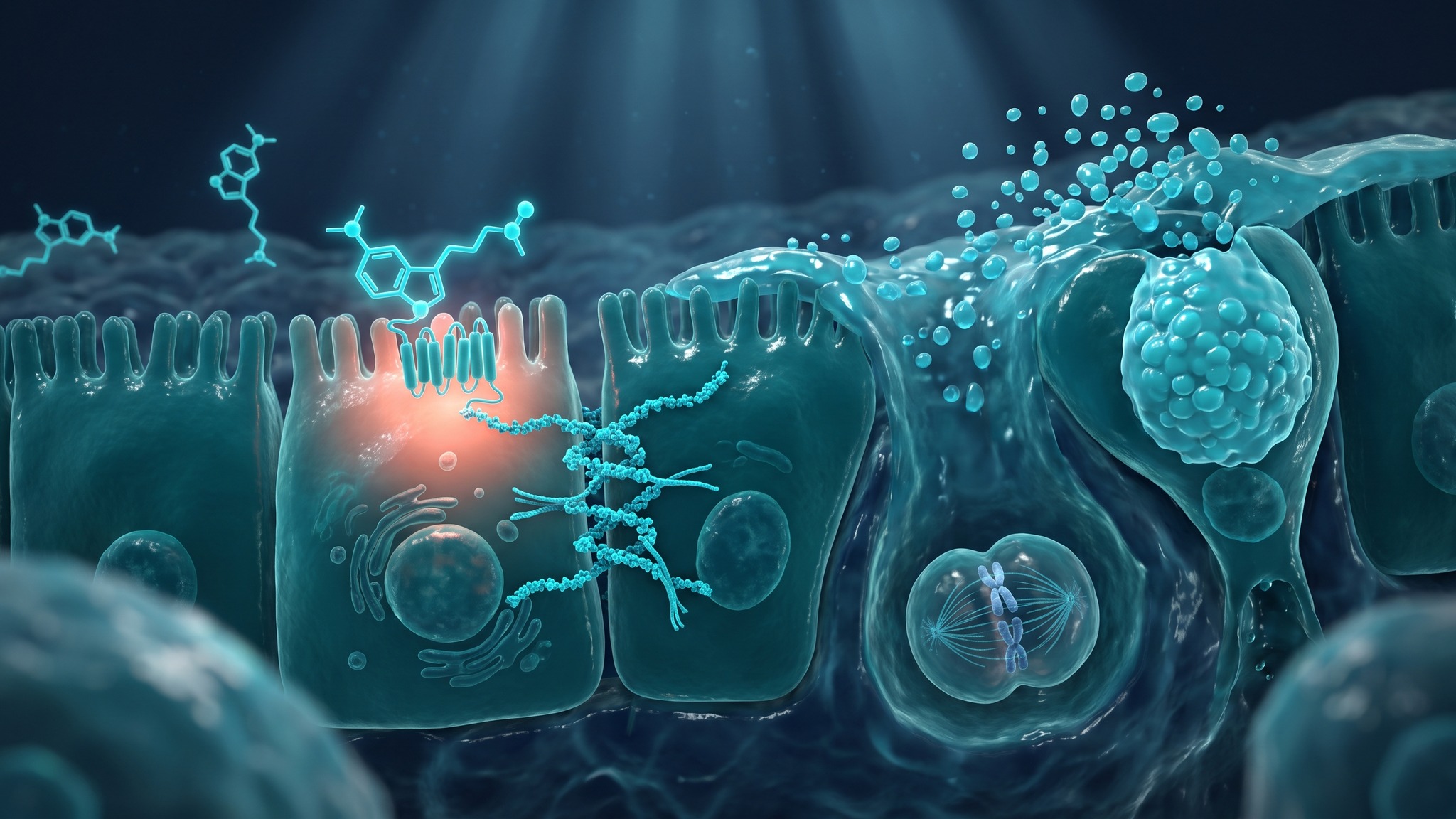
What is the connection between night shift work and IBS risk?
Night shift work and IBS are connected through a misaligned body clock, and the association is one of the most replicated findings in occupational gastroenterology. In a 2022 meta-analysis of eight observational studies, shift workers had 81% higher odds of irritable bowel syndrome than colleagues on regular schedules. Few risk factors for this condition are so consistent across countries and study designs.
Since then, one UK Biobank cohort study after another has sharpened the picture. People on permanent night shifts showed a 36% higher incidence of IBS over nine years, and risk climbed further with every additional year and every extra night per month. Working nights does not merely track with symptoms on paper; over enough time it can increase the risk of a formal diagnosis. Rotating schedules, the kind that never let the body adapt, look worst of all.
IBS prevalence by work schedule in 399 US nurses
Nojkov et al., Am J Gastroenterol 2010;105:842-847. Rome III criteria; rotation vs day p<0.01, OR 2.14 (1.14-3.03).
One detail deserves attention: abdominal pain, not just bowel change, drove the difference, reported by 81% of rotating-shift nurses. And the association survived adjustment for sleep quality. Something about the schedule itself, beyond lost sleep, pushes the gut toward a gastrointestinal disorder.
STUDY Nurses rotating between day and night schedules met the Rome III criteria for IBS at 48%, versus 31% on fixed day work, and the link held after sleep quality was taken out of the equation. Nojkov et al., 2010, The impact of rotating shift work on the prevalence of irritable bowel syndrome in nurses, American Journal of Gastroenterology.
How does shift work disrupt your gut's hormones and neurotransmitters?
Night work disrupts digestion at the level of its chemical messengers. Melatonin, cortisol, serotonin, motilin, bile acids and pancreatic enzymes all keep a circadian rhythm, and night work flattens, delays or exaggerates every one of them, which is exactly why shift work and IBS so often travel together.
Each mediator fails in its own way. Some go quiet when they should peak, others fire at the wrong hour, and the gut loses the coordinated nightly maintenance it evolved to expect. These are the six that break first.
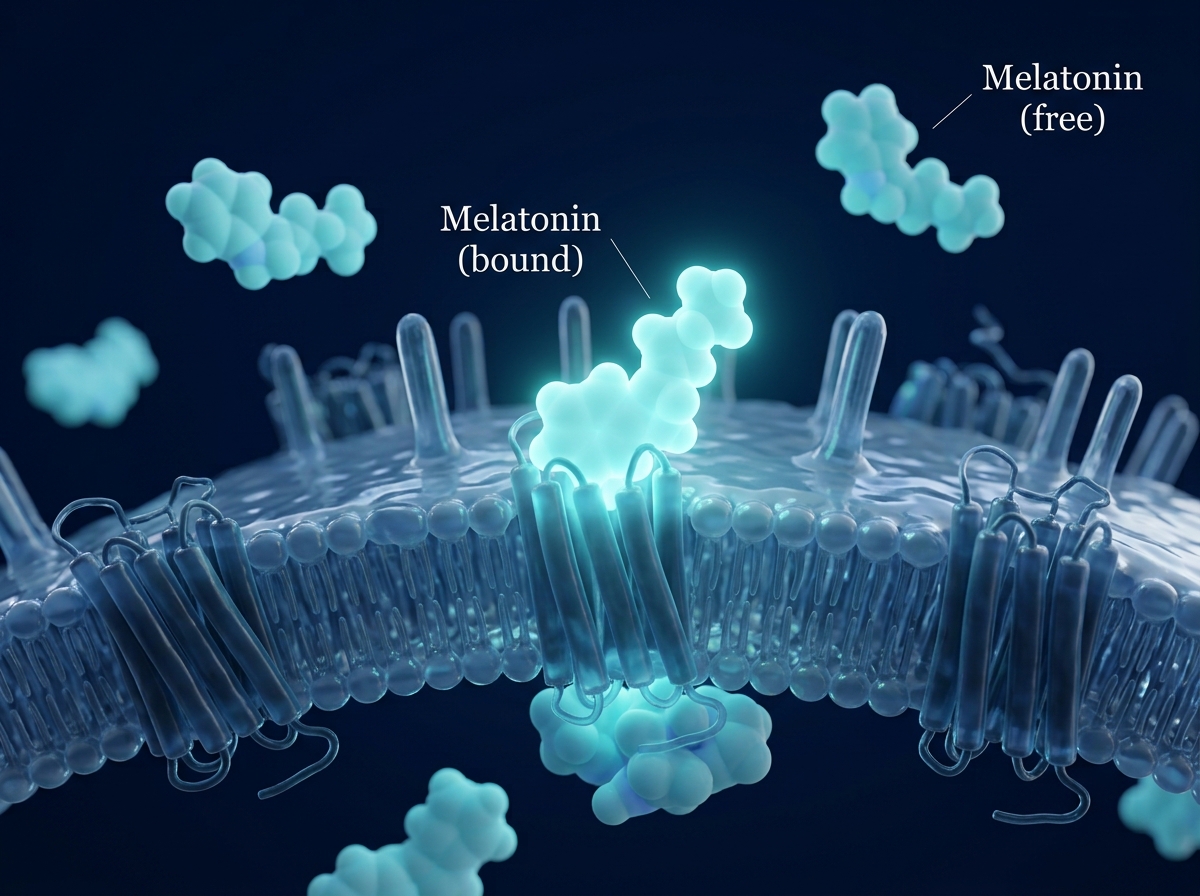
Melatonin: the night foreman
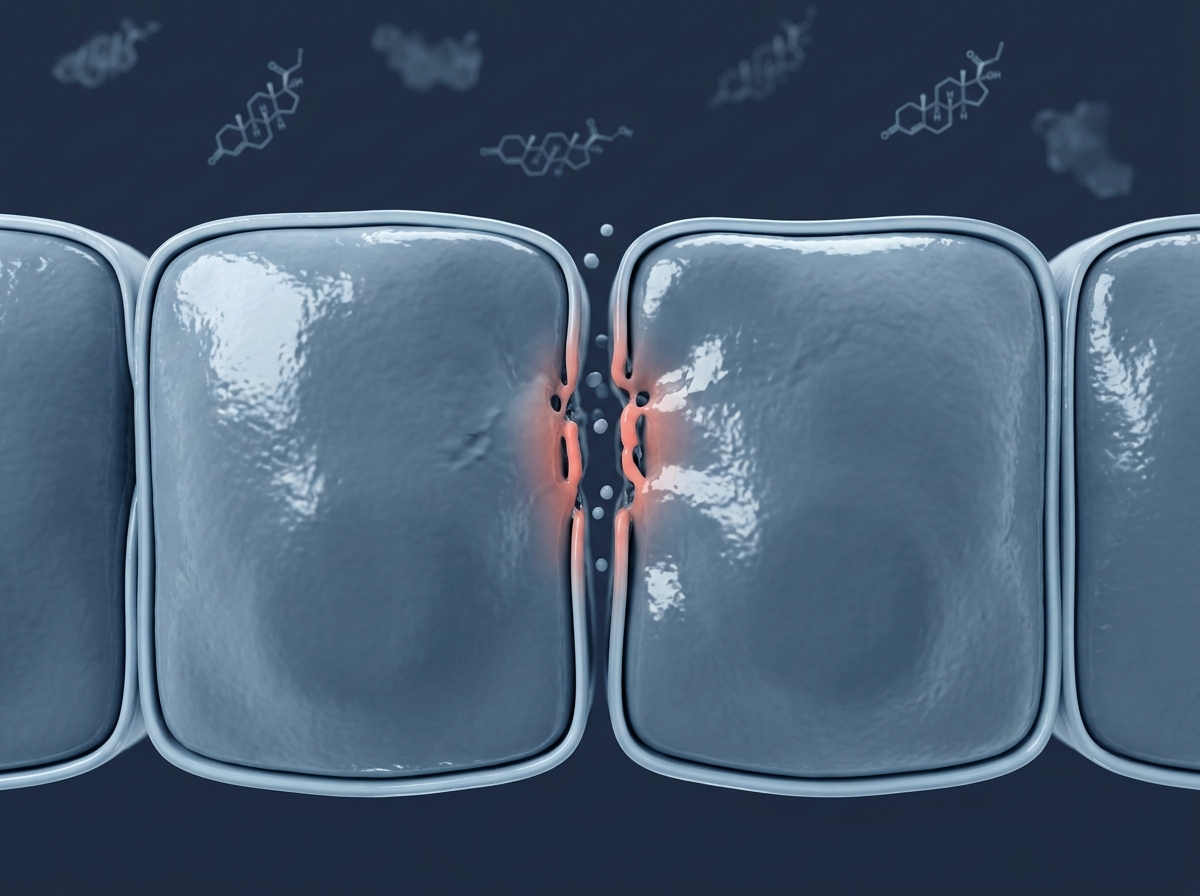
Cortisol: the inverted curve

Serotonin: the pain dial
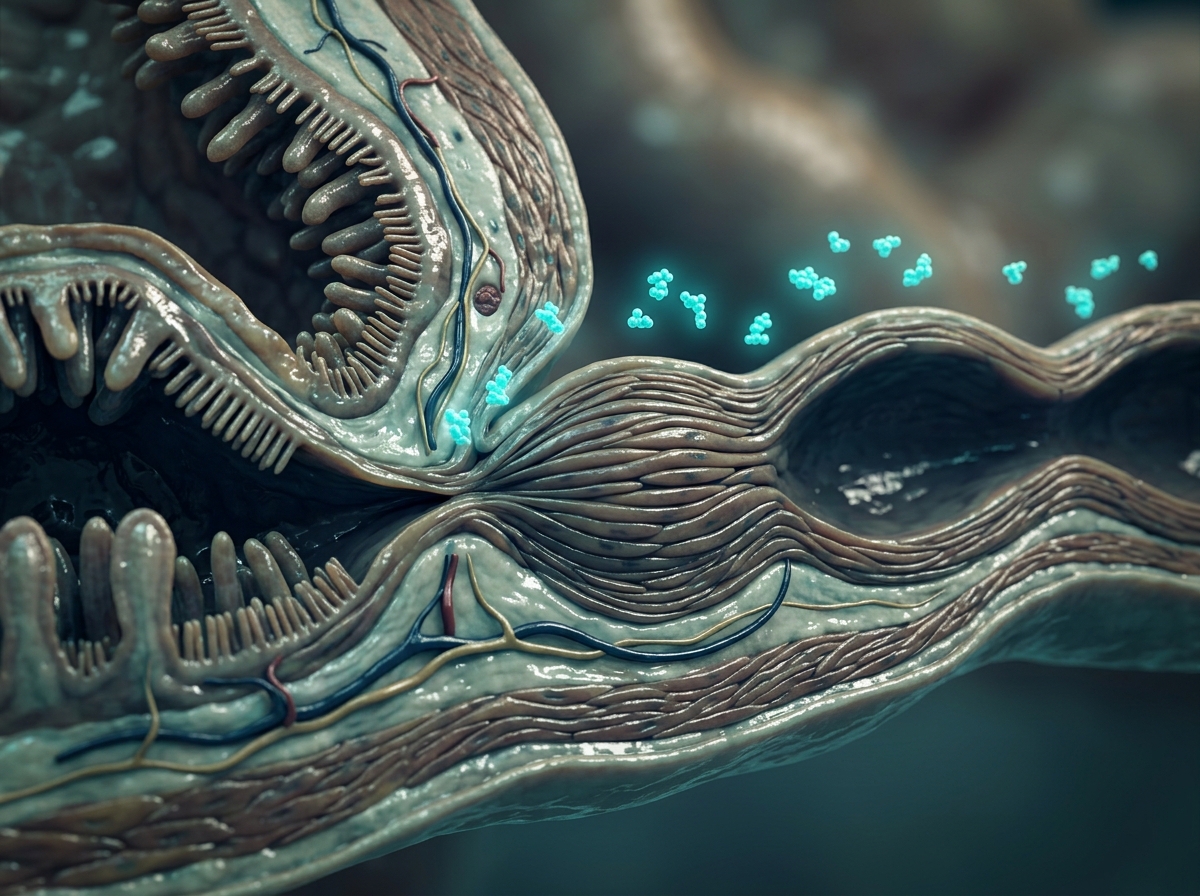
Motilin and the night cleaner

Bile acids: mistimed detergent
Pancreatic enzymes: the tired workhorse
Individually, each hit looks small. Together they explain why a gut that worked fine at 25 starts complaining at 40. Sleep deprivation on its own flattens the daily cortisol curve and raises inflammatory markers, and that is before a single meal gets eaten at the wrong time. The gastrointestinal tract runs on anticipation, and anticipation is the first casualty of a rotating roster.
STUDY The small intestine's cleaning wave slows from 6.4 cm per minute by day to 2.9 cm per minute at night, a nightly drop seen in healthy volunteers and IBS patients alike. Kumar et al., 1986, Circadian variation in the propagation velocity of the migrating motor complex, Gastroenterology.
Why is night-time repair so important for your gut lining?
Your gut lining renews itself fastest at night, following a strict circadian rhythm, and the night hormones act as project managers. While you sleep, melatonin rises, tight junction proteins are rebuilt, goblet cells thicken the mucus layer, and stem cells in the crypts divide to restock the surface. Interrupt that window often enough and the barrier thins. This is where the shift work and IBS connection turns physical.
An efficient mucosa is the one thing standing between your microbiome and dysbiosis. When the barrier works, bacteria stay in the lumen, their metabolites feed the lining, and the ecosystem holds its balance. When repair lags, bacterial products slip through, immune cells react, and the composition of the microbiome itself starts to drift.
Animal work shows how direct this is: when melatonin falls, expression of the tight junction proteins ZO-1, occludin and claudin-1 drops, and giving melatonin back restores them. In women with IBS, melatonin eased abdominal pain in a placebo-controlled trial, a hint that the night signal matters clinically, not only in rodents.
STUDY Stressed mice lost melatonin, tight junction proteins and goblet cells; melatonin administration restored the mucosal barrier, pointing to a direct repair role. Lin et al., 2020, Role of melatonin in intestinal mucosal injury induced by restraint stress in mice, Pharmaceutical Biology.
Which gut bacteria actually change when you work nights?
Faecalibacterium prausnitzii matters most here. It is the gut's main butyrate producer, and butyrate is the fuel your colon lining burns. Lose it and the barrier's energy budget shrinks at the same moment night work is canceling the repair shift. In mice, clock disorganization on its own pushes the microbiota toward pro-inflammatory species, even with diet held constant.
A US study of 51 nurses tells the subtler version: overall diversity looked similar between day and night workers, yet three bacterial lineages differed specifically in those reporting IBS symptoms. The change is compositional, easy to miss in a routine check, and exactly the kind of slow drift that pairs with years of shift work and IBS risk.
How much does shift work raise the risk of IBS?
Point estimates with 95% CI, reference line at 1.0 (no excess risk). OR = odds ratio, HR = hazard ratio. UK Biobank cohorts 2025.
STUDY Among nurses on 12-hour schedules, gut microbiome diversity was similar across rosters, but distinct bacterial lineages tracked with who actually reported IBS symptoms. Rogers et al., 2021, Shiftwork, functional bowel symptoms, and the microbiome, PeerJ.
How do delayed sleep and sleep debt change your stomach acid?
Stomach acid keeps its own schedule: secretion climbs through the evening and peaks around midnight, which is precisely when a shift worker is most awake and most likely to eat. Go to bed late and you stretch that acid peak into the small hours, with food sitting on top of it.
Sleep debt adds a second hit. In a controlled experiment, just two nights of deficient sleep increased esophageal acid exposure so much that 45.5% of previously healthy volunteers crossed into abnormal territory. Delayed sleep shifts the acid peak; lost sleep makes the acid itself more damaging to a hypersensitive esophagus.
Put the two together and the 3 a.m. heartburn of night workers stops being a mystery. The lower esophageal sphincter relaxes more often, acid clearance slows because you are upright and snacking instead of lying down fasting, and the stomach keeps producing for a dinner shift that never ends. For many people, the shift work and IBS story starts right here, as reflux in the small hours.
Your gut at 7 p.m., fed and on schedule
Acid matches the meal, enzymes are ready, the sphincter holds, and the migrating motor complex is queued up for the night fast. Melatonin is about to open the repair window.
Your gut at 3 a.m., mid-shift, third coffee
Acid peaks with no meal planned, caffeine lifts it further, snacking cancels the cleaning wave, and the repair window shrinks because dawn arrives before deep sleep.
STUDY Two nights of sleep deficiency measurably increased esophageal acid exposure in healthy controls and GERD patients alike, and nearly half the healthy group developed abnormal acid exposure. Yamasaki et al., 2019, The effect of sleep deficiency on esophageal acid exposure of healthy controls and patients with gastroesophageal reflux disease, Neurogastroenterology & Motility.
Why can shift-work gut damage take years to show up?
Nothing about shift work guarantees IBS, and that is precisely what makes it treacherous. The gut has reserve capacity: it repairs, compensates, copes. In the UK Biobank the risk curve climbed only after at least three years of nights, or more than seven nights a month, and workers combining nights with short sleep carried a 54% higher risk of developing IBS. Silent does not mean safe.
The honest reading of the data is this: you can do everything wrong for a decade and feel nothing, because symptoms are the last thing to fail, not the first. Long before the diagnosis, elastase dips, the mucus layer thins, and motilin's night wave weakens. That the damage took ten years to surface does not mean ten years of shift work caused none of it. The connection between shift work and IBS is cumulative, not deterministic.
I've worked nights for years and my stomach is fine, so shift work obviously never affected my gut.
Feeling fine is the default state of a barrier that is still compensating. Cohort data show risk rising with cumulative exposure, and in clinic the first abnormal markers appear years before the first cramp. Absence of symptoms is not evidence of absence of damage, which is exactly how shift work and IBS stay invisible for so long.
In my practice, the share of IBS patients who either work shifts or habitually fall asleep after midnight with real sleep debt is strikingly higher than in any other group I test. The pattern repeats too often to be coincidence.
If that sounds like you, the useful question is not 'did the shifts cause this?' but 'which of the six mediators is failing right now?' That question is testable, and in most cases fixable.
STUDY Among 239,760 UK Biobank workers, IBS risk rose with night-shift duration and frequency, and low-grade inflammation explained part of the increase. Yao et al., 2025, Associations of long-term night shift work with incident irritable bowel syndrome, Journal of Gastroenterology and Hepatology.
What can you do to protect your gut if you work shifts?
You cannot always change the roster, but you can change how much of the night your gut gets back. Two habits do most of the work: sleeping before midnight at least five nights a week, and finishing your calories as early as your shift allows. Both restore the circadian rhythm of repair that shift work and IBS chip away at together.
Then check the machinery. If bloating, urgency or pale loose stools have crept in, ask for a fecal pancreatic elastase test. The pancreas fatigues under chronic clock disruption, and a low elastase changes the whole plan, from meal timing to enzyme support.
Your gut keeps time, even when you cannot.
IBSyncrasy maps the full circadian physiology of digestion, from serotonin at 3 a.m. to the midnight acid peak, and devotes a whole chapter to the gut problems that build up on shift work, with the protocols we actually use to reverse them.
IBSyncrasy
IBSyncrasy is my practical manual for irritable bowel syndrome: the complete physiology of the circadian control of digestion, a dedicated chapter on shift-work-related gut problems (including a real case of a collapsed migrating motor complex and exactly how we fixed it), and step-by-step testing and repair protocols you can run with your own doctor.
Buy IBSyncrasyFrequently asked questions
Cohort studies and a meta-analysis of eight studies agree: shift workers carry roughly 36 to 81% higher risk of IBS than day workers, depending on schedule and exposure. Rotating rosters and long cumulative exposure carry the highest risk. The driver is body-clock disruption of gut hormones, gut movement, the barrier and the microbiome, not stress alone.
Digestion is scheduled: acid peaks near midnight, the migrating motor complex sweeps between meals, melatonin opens the mucosal repair window, and enzymes anticipate daytime food. Night work runs these programs at the wrong hours, so repair, motility and secretion fall out of sync.
Protect five nights a week with a bedtime before midnight, finish eating two to three hours before your main sleep, keep caffeine in the first half of the shift, and use blackout curtains plus a fixed wake time after nights. Consistency matters more than total hours.
You are in the most common profile I see in clinic, and there is a clear workup: fecal pancreatic elastase, calprotectin, and a review of meal timing and sleep debt. Get those nights back and the shift work and IBS link starts to loosen. The dedicated shift-work chapter in IBSyncrasy walks through the full protocol, including how we restored a collapsed migrating motor complex.