When IBS and low testosterone feed each other
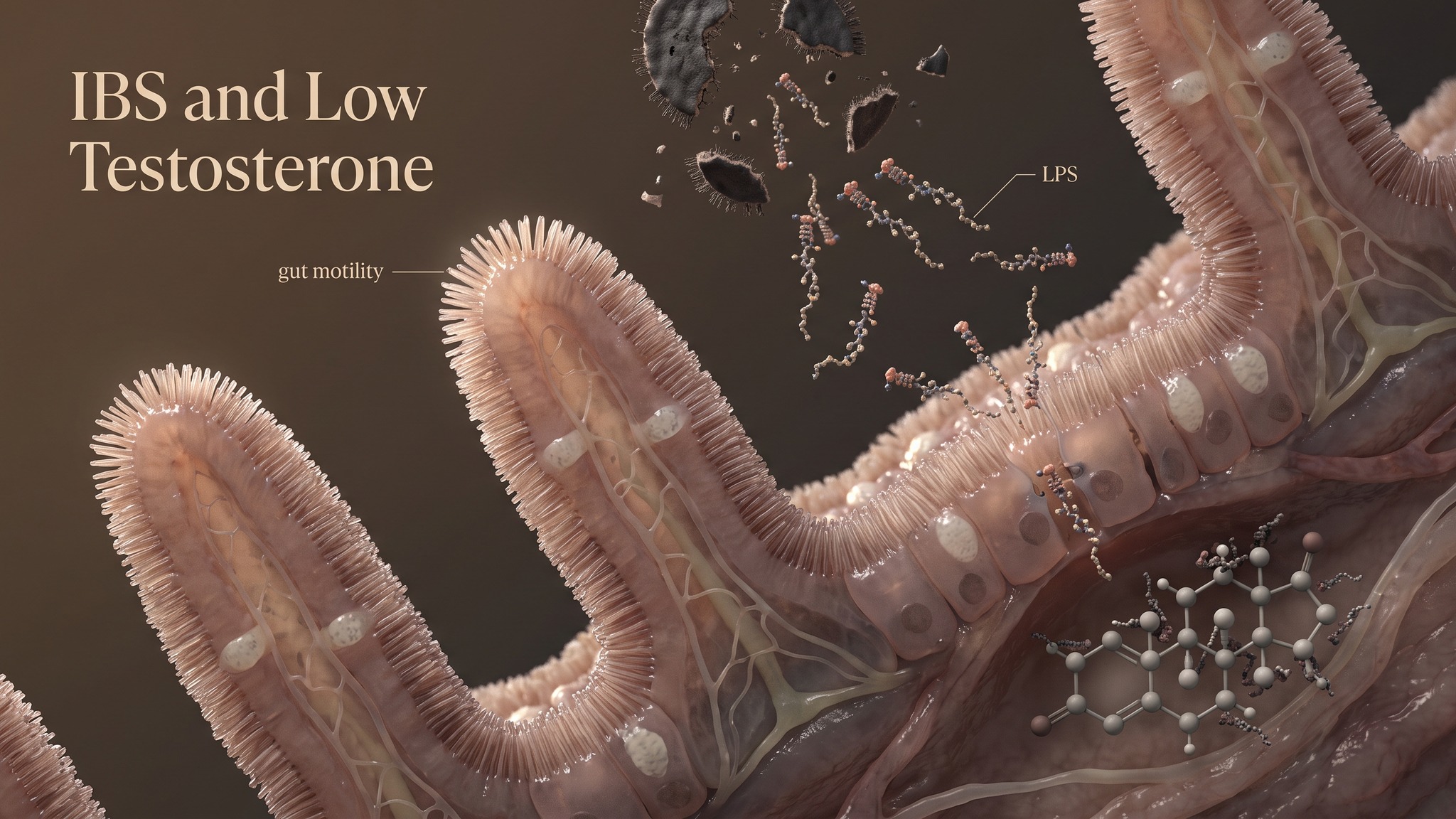
IBS and low testosterone are locked in a two-way relationship. Low androgens can slow gut motility and turn up visceral pain, while an inflamed gut releases bacterial LPS that orders the testis to stop making testosterone. Here is the bi-directional axis, study by study, and what it means for you.
IBS and low testosterone: is the link real?
Ask whether IBS and low testosterone are connected and the honest short answer is yes, in both directions. Most research so far has asked how testosterone shapes gut function. The reverse path is now just as well documented: the dysbiosis and barrier leak of irritable bowel syndrome can suppress testosterone production on their own, at least in experimental models, and sometimes hard enough to cause real hypogonadism.
There is no single IBS hormone, and there cannot be. The intestine is an exceptionally complex neurophysiological system, wired with receptors for estrogen, progesterone, cortisol, serotonin, melatonin, thyroid hormones and androgens, so almost any shift in hormone levels can change how it behaves. Sex steroids simply leave the most visible fingerprints: IBS is roughly twice as common in women, and symptoms swing with the menstrual cycle, pregnancy and menopause. Reviews of the field describe androgens as the quieter, protective side of that story, with anti-inflammatory and pain-dampening actions in the bowel.
The male side of the data is smaller, but consistent enough to take seriously. Men with IBS have shown altered luteinizing hormone, unusual free testosterone patterns and rectal sensitivity that tracks androgen status. And a 2021 review describes what makes this topic so interesting: a bidirectional cross-talk between sex steroids and gut bacteria, where hormones shape the gut microbiome and the microbiome recycles hormones back into active forms.
STUDY Twice as many women as men are affected by IBS in Western countries, with ovarian hormones modulating pain processing, motility, permeability and stress reactivity, while the authors explicitly call for more research on male hormones. Meleine and Matricon, 2014, Gender-related differences in irritable bowel syndrome: potential mechanisms of sex hormones, World Journal of Gastroenterology.
How does testosterone shape overall gut function?
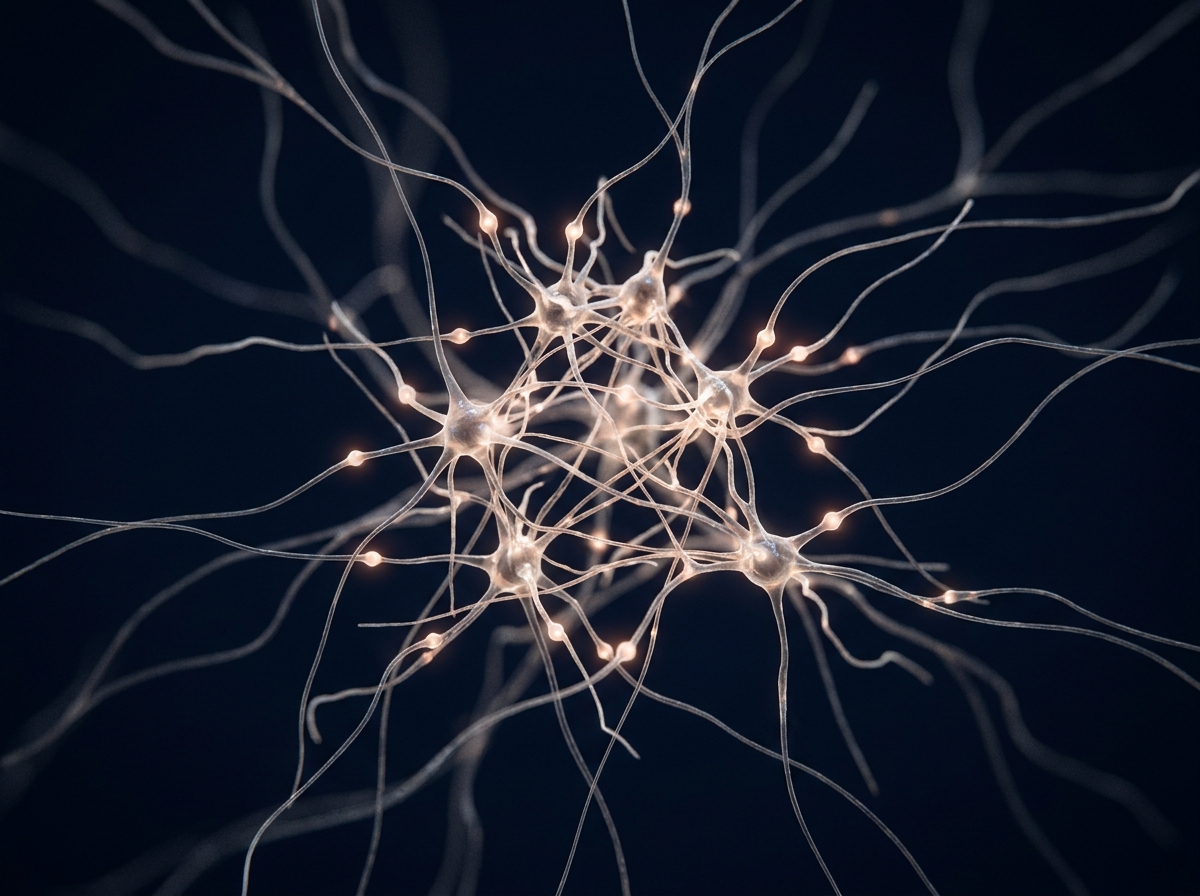
Think of testosterone inside the digestive tract as a maintenance signal rather than a reproductive one. Androgens are steroid hormones, and their receptor sits throughout the intestinal wall: in smooth muscle, in immune cells and, most interestingly, in the nervous system of the gut itself. When androgen signaling drops, several parts of gut function degrade at the same time, which is one reason IBS and low testosterone so often appear in the same patient. Four targets carry most of the weight.
Two of these targets are about movement, two about defense. Together they explain why a hormonal problem can feel like a digestive one.
The motility switch
The pain dial
The barrier guard
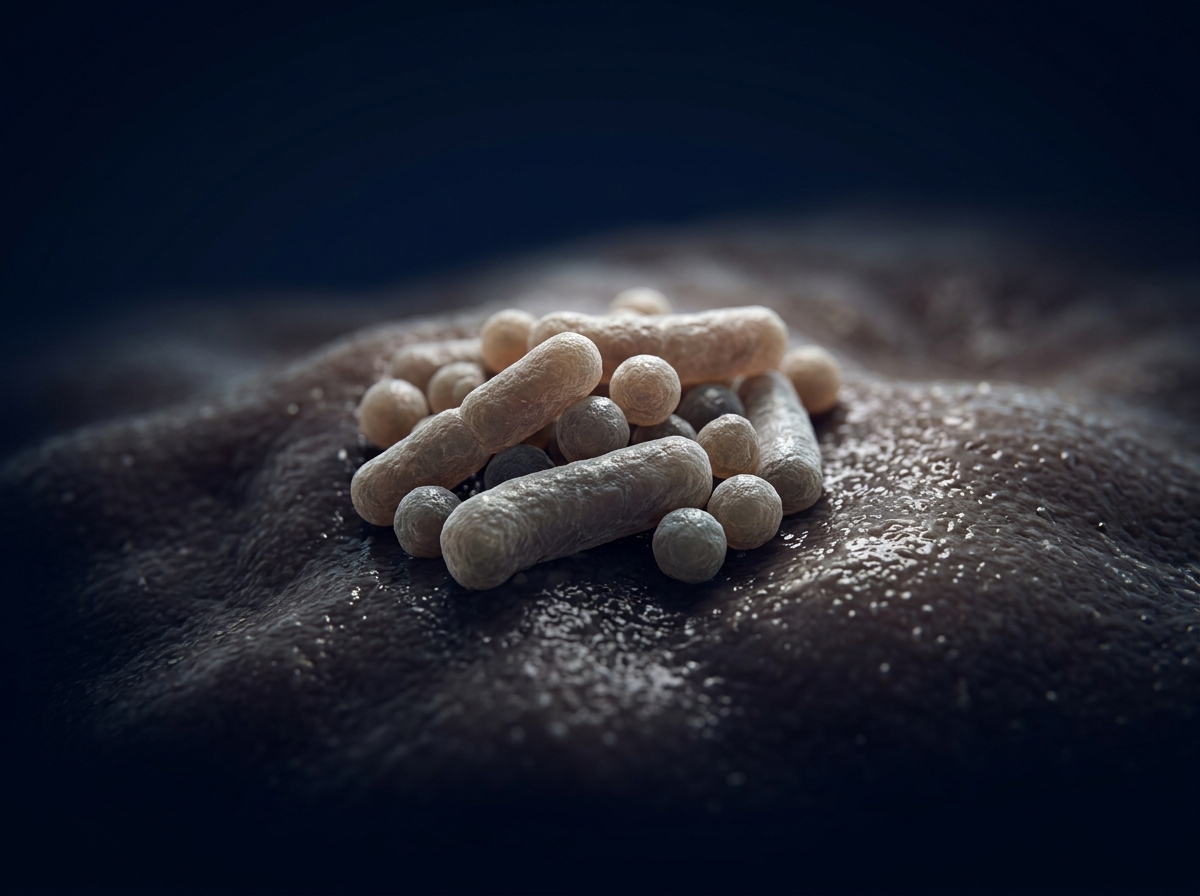
The microbial mirror
The strongest human evidence linking testosterone and gut health comes from a 2022 study that measured androgens with mass spectrometry in IBS patients and then tested causality in mice. Its findings anchor much of what follows.
STUDY In 208 adults with IBS, free testosterone was lower than in healthy controls of both sexes, and the lower the percentage, the higher the symptom severity score (r = -0.19, p = 0.009). In mice, removing gonadal androgens caused severe bowel dysfunction, and a single androgen restored it. Rastelli et al., 2022, Diminished androgen levels are linked to irritable bowel syndrome and cause bowel dysfunction in mice, Journal of Clinical Investigation.
| Study | What it showed about the testosterone-gut link |
|---|---|
| Rastelli et al. 2022, J Clin Invest | Free testosterone lower in IBS patients of both sexes; severity of IBS inversely correlated (r = -0.19). Androgen loss in mice broke colonic motility. |
| Lagomarsino et al. 2026, Nat Neurosci | Gut bacteria reactivate androgens locally; this microbial-androgen loop drives the enteric neurons that set gut motility. |
| Houghton et al. 2000, Am J Gastroenterol | Men with IBS were far more sensitive to rectal distension; the lower the testosterone, the lower the pain thresholds. |
| Ji et al. 2018, J Pain | Testosterone actively blocked stress-induced visceral hypersensitivity in rats, while estradiol amplified it. |
| Harada et al. 2016, Gut Microbes | Castration alone reshaped the gut microbiota of male mice, proof the axis runs hormone-to-microbe as well. |
Can low testosterone slow gut motility?
Yes, and the colon is where it shows first. When researchers removed gonadal androgens from adult male mice, total gut transit became 40% slower within four weeks and stayed that way for months. The deficit was strikingly specific: stomach emptying and small bowel transit were untouched, while the colon's coordinated contractions disintegrated. One-hour pellet output fell by 60%, and pellets grew 25% larger with less water inside. In clinical language, that is constipation produced by hormone loss alone.
The site of action surprised even the team. The smooth muscle worked perfectly without androgens. The problem was neuronal: deleting the androgen receptor only from enteric neurons reproduced the entire picture, and a single replacement androgen, DHT, returned transit to normal within three weeks. The enteric nervous system, it turns out, switches its androgen sensitivity on at puberty and depends on that signal for the rest of adult life.
What androgen loss did to bowel function in mice
Rastelli et al., J Clin Invest 2022;132:e150789. Change vs sham-operated mice, 4 weeks after orchiectomy; all differences statistically significant.
The newest piece of the puzzle arrived in 2026, and it closes the loop. Gut bacteria chemically reactivate androgens inside the intestine through enzymes called glucuronidases, and this local androgen pool drives the neuronal control of gut motility. When antibiotics wiped out the relevant bacteria in mice, testosterone fell and motility slowed; restoring androgens fixed both. IBS and low testosterone, in other words, can meet in the middle: the gut microbiome helps set the hormone level, and the hormone helps set the motility.
STUDY Commensal gut bacteria reactivate host androgens through microbial glucuronidase enzymes, and this reactivated pool directs the enteric neurons that regulate gut motility; a week of antibiotics disrupted the loop, and androgen restoration repaired it. Lagomarsino et al., 2026, Microbial reactivation of host androgens directs enteric neuronal regulation of gut motility, Nature Neuroscience.
Does low testosterone make IBS symptoms hurt more?
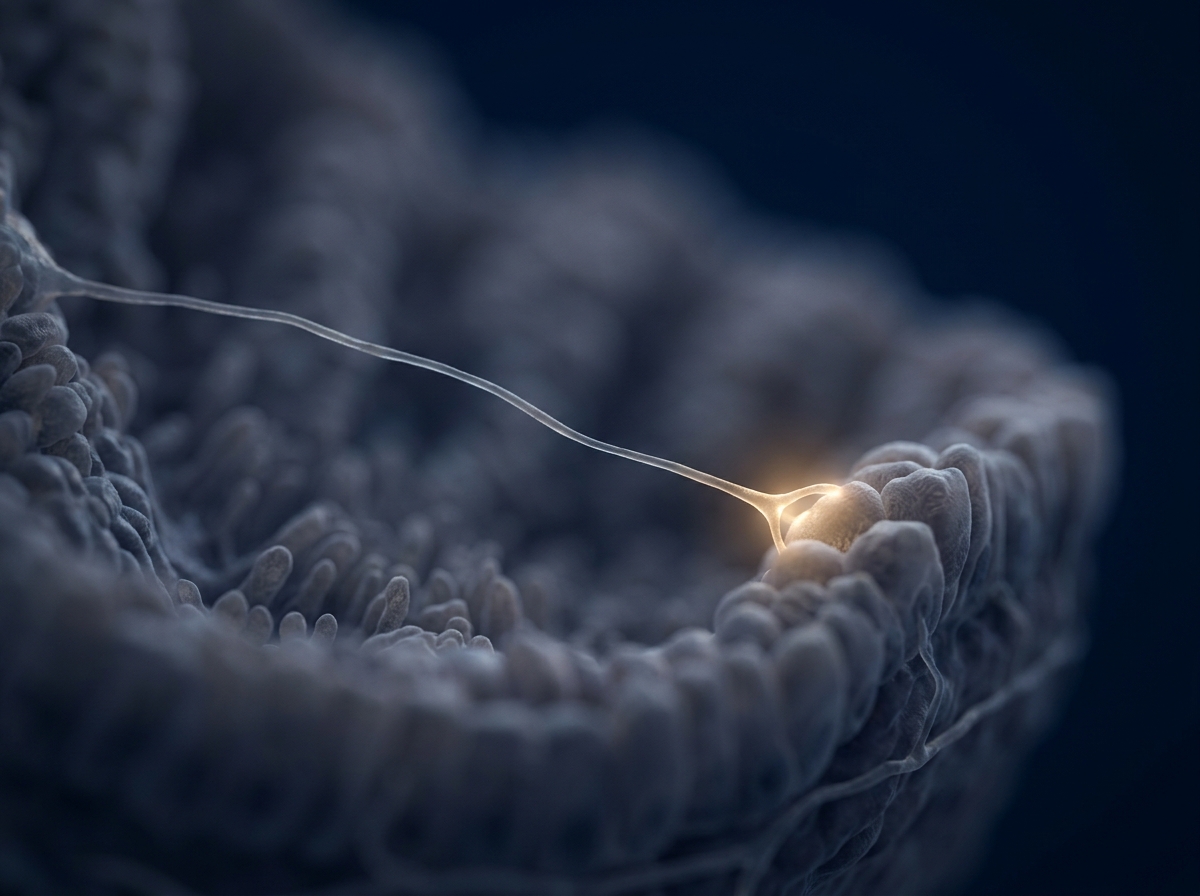
The evidence points mostly at pain. In a classic study, men with IBS needed barely half the balloon volume inside the rectum to report urgency and discomfort compared with healthy men, and the men with the lowest thresholds tended to have the lowest free testosterone. Digestive symptoms like abdominal pain and persistent bloating do not come from low testosterone levels alone, but low androgens could contribute by removing a layer of protection against visceral hypersensitivity.
Animal work explains the mechanism. In a stress model of visceral pain, estradiol made rats more sensitive while testosterone did the opposite, actively blocking the hypersensitivity. The androgen receptor also tunes pain-related channels such as TRPM8 in sensory neurons. One honest caveat: in younger men with IBS, one study actually found higher testosterone alongside higher SHBG, so the relationship is not a simple straight line and probably shifts with age and compensation.
Rectal balloon thresholds in men (ml of distension)
Houghton et al., Am J Gastroenterol 2000;95:2296-2300. Lower volume = more sensitive. Thresholds correlated with total and free testosterone.
| Symptom measure studied | What the data showed |
|---|---|
| Rectal urgency threshold | 51 ml in men with IBS vs 88 ml in controls. Thresholds tracked total and free testosterone (Houghton 2000). |
| Rectal discomfort threshold | 86 ml vs 134 ml. Men with IBS reported pain at far lower distension volumes (Houghton 2000). |
| IBS severity score (IBS-SSS) | Inversely correlated with free testosterone, r = -0.19, p = 0.009, in 208 patients (Rastelli 2022). |
| Stress-induced visceral pain | Blocked by testosterone, amplified by estradiol in rat models (Ji 2018). |
| Colonic transit and stool form | 40% slower transit and drier, larger pellets after androgen loss in mice; reversed by DHT (Rastelli 2022). |
STUDY Fifty men with IBS felt rectal urgency at 51 ml and discomfort at 86 ml of balloon distension, versus 88 and 134 ml in healthy controls, and the lower a patient's total and free testosterone, the more sensitive his rectum proved. Houghton et al., 2000, Do male sex hormones protect from irritable bowel syndrome?, American Journal of Gastroenterology.
STUDY In a stress model of visceral hypersensitivity, estradiol made male rats more pain-sensitive while testosterone blocked the hypersensitivity in females; removing the testes made males as sensitive as females. Ji et al., 2018, Opposing roles of estradiol and testosterone on stress-induced visceral hypersensitivity in rats, The Journal of Pain.
How does gut health affect testosterone levels?
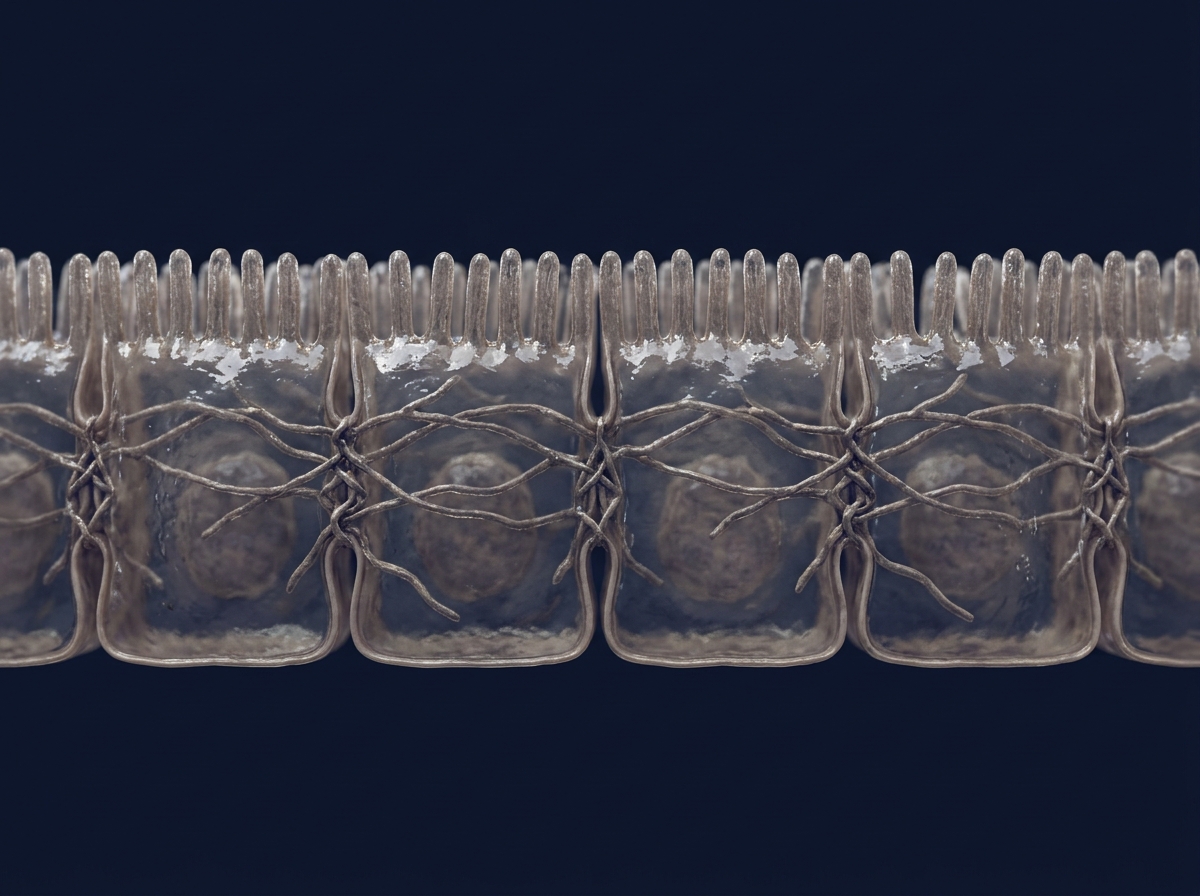
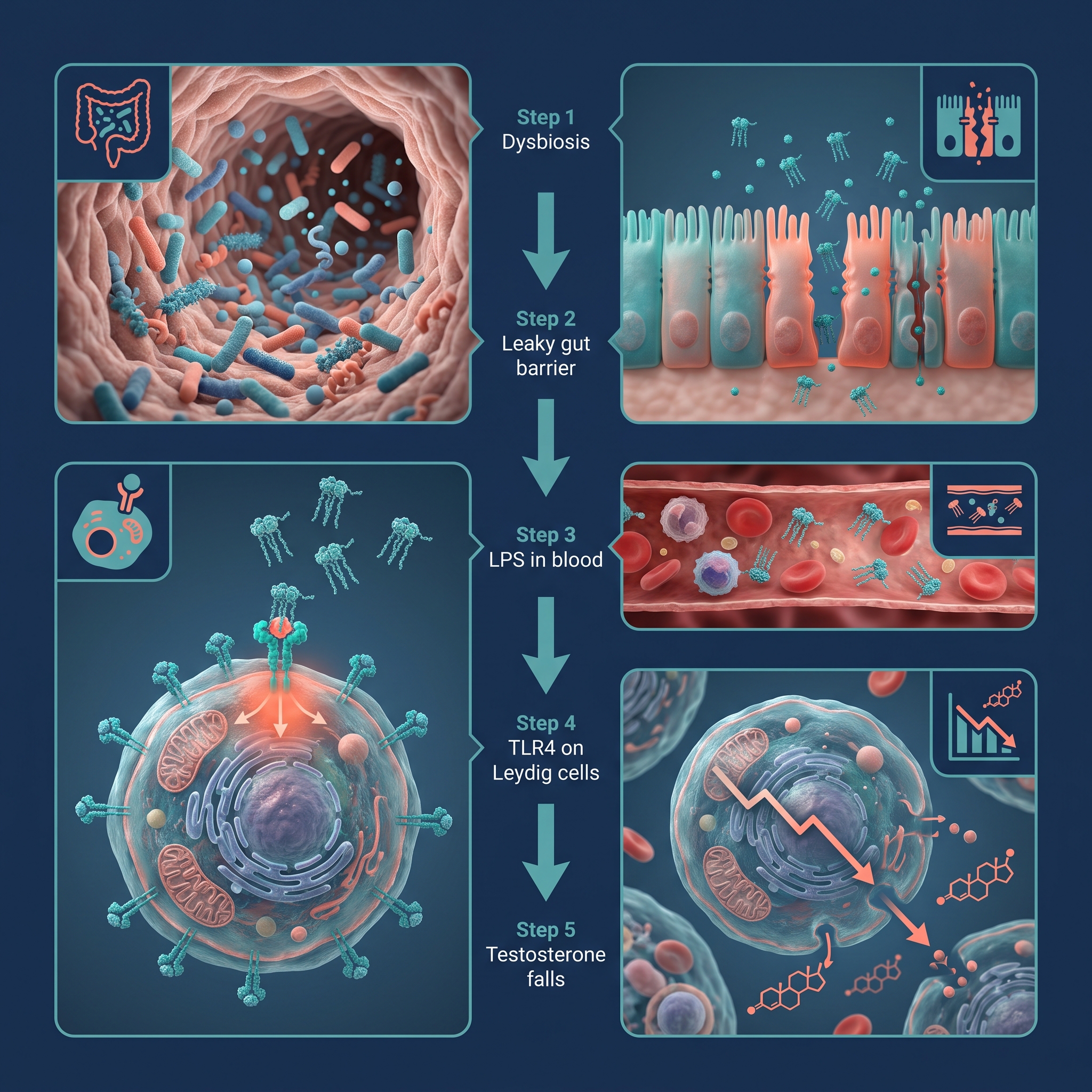
This is the direction almost nobody checks, and it starts with bacterial debris. When gram-negative gut bacteria die, they shed lipopolysaccharide, better known as LPS. A healthy intestinal barrier keeps LPS locked inside the gut. Dysbiosis plus a permeable, leaky barrier lets it seep into the circulation, a state researchers call metabolic endotoxemia, and LPS turns out to be a direct testicular toxin.
Leydig cells, the testosterone factories of the testis, carry TLR4, the exact receptor LPS docks onto. When that receptor fires, the cells release inflammatory cytokines and suppress steroidogenesis at its first enzymatic step. The StAR protein, which ferries cholesterol into the mitochondria to become testosterone, collapses, falling to about a tenth of baseline within two hours of endotoxin exposure in rodents.
The human experiment is the striking part. Researchers gave healthy lean men a tiny, safe intravenous dose of LPS and watched what happened. Inflammatory IL-6 peaked at two hours, then the testosterone level dropped about 30% by six hours and recovered by 24. The crucial detail: LH and FSH, the brain's orders to the testis, never changed. The brain kept shouting make testosterone and the testis refused. This was a direct gonadal hit, not a stress reaction, and it explains how IBS and low testosterone can connect from the gut upward.
How fast inflammation suppresses testosterone
Tremellen et al. 2018, Am J Physiol Endocrinol Metab (LPS); Tsigos et al. 1999, J Interferon Cytokine Res (IL-6); Bosmann et al. 1996, Endocrinology (StAR protein). Values vs baseline.
STUDY A single low-dose endotoxin injection in healthy men cut testosterone production by about 30% within six hours, with no change in LH or FSH, proving a direct inflammatory hit on the testis. In the same paper, higher endotoxin exposure tracked with lower testosterone across 75 men. Tremellen et al., 2018, Endotoxin-initiated inflammation reduces testosterone production in men of reproductive age, American Journal of Physiology-Endocrinology and Metabolism.
Why would an inflamed gut switch off reproduction?
Because evolution treats the two as competing budget lines. Fighting infection and repairing the intestine are urgent, expensive projects. Reproduction is expensive too, and offspring conceived during active illness start life with worse odds. A body that temporarily suppresses the gonadal axis while the gut is inflamed is not malfunctioning. It is queuing.
The idea now has a formal name: the GELDING theory, short for Gut Endotoxin Leading to a Decline IN Gonadal function. It was proposed to explain why men with obesity and metabolic syndrome so often slide into hypogonadism, and overweight men with higher endotoxin exposure do show measurably lower testosterone levels. The same logic applies to a chronically irritable bowel: a low-grade endotoxin leak, day after day, keeps the testicular brake pressed, which is how IBS and low testosterone become chronic companions.
There is a second layer to the logic. Endotoxin-driven suppression may protect the testis during sepsis-like states, and it lowers the chance of releasing sperm with damaged DNA while the body is fighting. The system trades fertility for survival on the assumption that the crisis will pass. With a chronic gastrointestinal disorder, the crisis never quite passes, and the pause becomes the new normal. The experiment below shows what the pause is supposed to look like.
Testosterone after one LPS dose, healthy men
Tremellen et al., Am J Physiol Endocrinol Metab 2018;314:E206-E213. 33 lean men, 0.8 ng/kg endotoxin IV. IL-6 peaked at 2 h, testosterone bottomed at 6 h, recovered by 24 h.
STUDY The GELDING theory frames late-onset male hypogonadism as a gut-driven process, where endotoxin leaking from a dysbiotic or permeable intestine chronically suppresses testicular testosterone production. Tremellen, 2016, Gut Endotoxin Leading to a Decline IN Gonadal function (GELDING): a novel theory for the development of late onset hypogonadism in obese men, Basic and Clinical Andrology.
Can testosterone treatment help IBS symptoms?
The honest answer is that nobody knows yet. The combination of IBS and low testosterone has never been tested in a randomized trial of testosterone replacement therapy, so any claim that TRT fixes the gut runs ahead of the evidence. What exists is a plausible rationale: testosterone is antinociceptive in visceral pain models, anti-inflammatory in the gut wall and, in animals, required for normal colonic motility.
There is also a practical reason to mind the order of operations. If the gut is actively suppressing the testis, adding testosterone from outside corrects the number, not the cause. Restoring gut health first often lets hormone levels recover on their own, and it answers a useful diagnostic question: was the testis broken, or just paused? Testosterone treatment still has its place when hypogonadism is confirmed and persistent, but it works best alongside gut work, not instead of it.
My testosterone is low and I have IBS, so testosterone replacement will fix my gut.
No trial supports TRT as an IBS therapy. The axis runs both ways, which means gut repair often raises testosterone by itself. TRT is a treatment for confirmed hypogonadism, decided on standard endocrine criteria, and it makes most sense when the gut side is treated in parallel.
When both problems show up together, the most productive question is which loop is driving. One real-world illustration is this IBS and prostatitis case study, where untangling the two diagnoses changed the entire trajectory of treatment.
IBS and low testosterone: what should you actually check?
If you recognize yourself somewhere on this axis, the workup is straightforward, but it has rules. Testosterone must be measured in the morning, on two separate days, and paired with SHBG and albumin so that free testosterone can be calculated rather than guessed. One low afternoon reading means nothing. IBS and low testosterone are both diagnoses that punish shortcuts.
On the gut side, map the pattern before testing: constipation or diarrhea dominance, bloating timing, pain triggers, antibiotic history. The combination matters more than either problem alone, because the plan has to work on both ends of the loop at once. Men who develop IBS symptoms in adulthood deserve this dual look, especially when fatigue, low libido or mood changes ride along.
The men who do best are the ones who stop treating these as two separate problems. Fix the gut and the hormone levels often follow. Protect the hormones and the gut gets its maintenance signal back. That is what a bi-directional axis means in practice.
The gut and the testis talk. Learn to listen.
IBSyncrasy maps the full gut-hormone axis, including a dedicated chapter on what happens when IBS and prostatitis-type symptoms collide in men, why the two get confused, and the step-by-step protocol we use to break the loop.
IBSyncrasy
IBSyncrasy is my practical manual for irritable bowel syndrome: the complete physiology of the gut-hormone axis, a dedicated chapter on the overlap of IBS and prostatitis-type symptoms in men (and the antibiotic spiral that makes both worse), plus step-by-step testing and repair protocols you can run with your own doctor.
Buy IBSyncrasyFrequently asked questions
No single hormone causes IBS, and that is the key point. The gut is such a complex neurophysiological system that virtually every hormone can influence it: estrogen and progesterone (symptoms swing with the menstrual cycle), cortisol (stress reactivity), serotonin (motility and pain), thyroid hormones (transit speed), melatonin (mucosal repair) and androgens including testosterone (protection, motility, pain thresholds). IBS is best understood as a disorder of gut-brain interaction in which hormones tune the system up or down rather than switch a disease on.
Through bacterial endotoxin. When gram-negative gut bacteria die, they release LPS. Dysbiosis and a leaky barrier let LPS reach the bloodstream, where it docks onto TLR4 receptors on the Leydig cells of the testis and shuts down steroidogenesis directly. In healthy men, one tiny LPS dose cut testosterone by about 30% within six hours. Evolution likely designed this on purpose: when the gut is inflamed, reproduction is asked to wait.
It can contribute, through two studied routes. First, motility: androgen loss slowed colonic transit by 40% in mice, and slow transit means constipation, fermentation and bloating. Second, pain: men with IBS feel rectal distension at much lower volumes than healthy men, and the lowest thresholds track with the lowest free testosterone, meaning low androgens seem to remove a protective layer against visceral pain. Low testosterone is rarely the sole cause, but it can load the dice.
Possibly, but nobody has proven it. No randomized trial has tested testosterone replacement therapy for IBS. The rationale exists (pain-dampening, anti-inflammatory, pro-motility effects), yet the bi-directional axis argues for treating the gut first, because hormone levels often recover once the endotoxin leak closes. TRT remains a treatment for confirmed hypogonadism, best used alongside gut repair, not as a substitute for it.