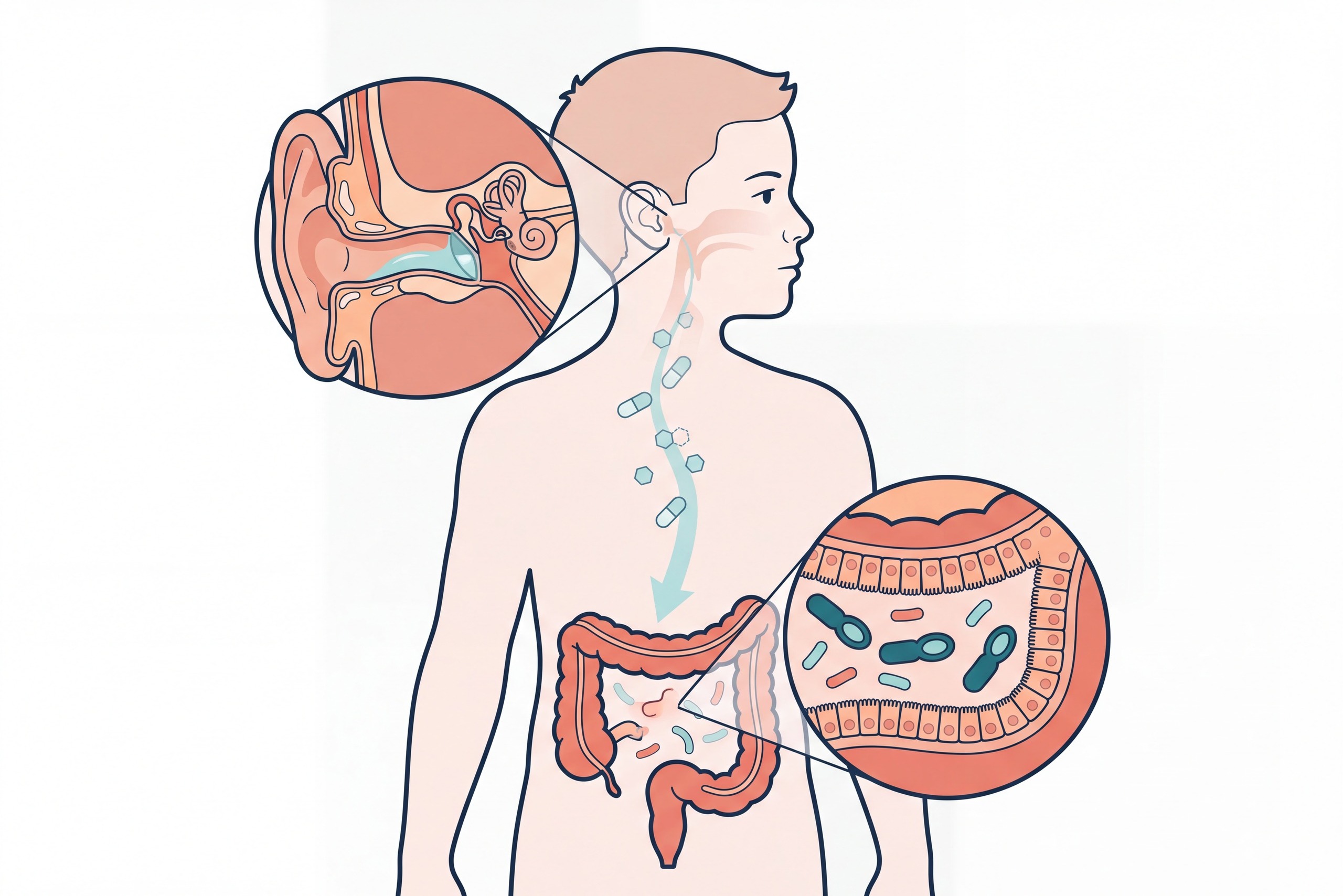
The relationship between antibiotics, the developing gut microbiome, and Clostridioides difficile (antibiotics microbiome clostridium child) often appears in histories where treatment starts early and bowel symptoms persist. Eliot had diarrhea from birth. During his first year, he developed frequent infections, mainly ear infections, and received repeated antibiotic courses. At 19, he had 3 to 9 bowel movements a day, usually after meals, along with frequent belching. During his assessment, we examined early-life antibiotic exposure, the childhood gut microbiome, post-antibiotic dysbiosis, and antibiotic-associated diarrhea. Molecular stool testing detected genetic material from Clostridioides difficile, the tcdA target, and a broad absence of bacteria associated with butyrate production. Colonization resistance and the tcdA and tcdB toxin genes provided further information about the persistent symptom.
How we interpret a complex bowel history
In IBSyncrasy, we explain how we connect symptoms, microbiome findings, and daily patterns before selecting interventions. Buy IBSyncrasyWho Eliot is and when the diarrhea began
Nineteen years old with a low-normal body weight
Eliot was 1.78 m tall, weighed 63 kg, and had a body mass index of 19.9 kg/m². He exercised three times a week and drank about three glasses of water a day.
Frequent ear infections and several antibiotic courses
Soon after his birth, his mother developed mastitis and continued breastfeeding while taking an antibiotic. Eliot was breastfed for almost two years. During his first year, he had frequent infections, mainly ear infections, and received several antibiotic courses.
Diarrhea from birth
At 19, he had 3 to 9 bowel movements a day. Most were loose and often occurred immediately after eating. High-fat meals made the symptoms worse, while vegetables were better tolerated.
Frequent belching and difficult flights
Belching recurred throughout the day. Air travel was associated with severe nausea and exhaustion that lasted 3 to 5 days after a flight.
Daily dairy, sweets, and wheat
His daily diet included dairy, sweets, wheat, and coffee. Fish appeared up to once a week. Eliot ate throughout the day and often had his final snack around midnight.
How childhood antibiotics relate to the molecular findings
We started with the duration of the symptom. The diarrhea had begun at birth and was still present at 19. His first-year history included two distinct exposures, maternal antibiotic use during breastfeeding and the repeated courses he received for infections and otitis. We considered these exposures separately and focused on his direct antibiotic treatment as the clearer factor associated with microbiome disruption.
Why we examined the childhood ear infections
In a study of children aged 1 to 5 years, antibiotic exposure within the previous 12 weeks was recorded in 54.4% of Clostridioides difficile infection cases and 19.4% of controls. The adjusted odds ratio was 6.25. Among children who had received a cephalosporin, 8 of 14 had an ear, sinus, or respiratory infection as the sole indication.[1] This finding explains why we requested a detailed antibiotic history and included Clostridioides difficile in the molecular assessment.
Antibiotic exposure before C. difficile infection
Weng et al., Epidemiology and Infection, 2019
The timeline we wanted to examine
What may persist after early-life exposure
In a randomized trial of 147 newborns, microbiome composition differed immediately after antibiotics by R² 9.5% and remained different at 12 months by R² 1.1%. The resistome differed immediately by R² 7.5%. The researchers recorded fewer Bifidobacterium and more Klebsiella and Enterococcus after treatment.[2] The study examined neonatal exposure. Eliot had a single later measurement at age 19, so we used the study to explain the plausible biological mechanism.
Microbiome and resistome changes after early-life antibiotics
Reyman et al., Nature Communications, 2022
Which changes we started before the results
The first interventions addressed meal timing, low water intake, and foods that appeared every day. We also arranged molecular stool testing so the next interventions could be selected from measured findings.
Last meal before 7 p.m.
We recommended finishing all food before 7 p.m. on at least five days each week. This change addressed his snacks around midnight and increased the interval between his final meal and sleep.
Reducing dairy, wheat, and sugar
We reduced dairy and sugar, removed fruit juice, and selected two days each week with substantially less wheat. These foods appeared daily, so the change provided a practical way to assess his postprandial response.
Eight glasses of water spaced away from meals
We increased the daily target from three to eight glasses of water. Fluids were placed between meals, about 60 minutes after eating, because of the frequent belching and postprandial bowel movements.
Specific preparation for flights
For the severe nausea and exhaustion associated with air travel, we recommended lighter food, adequate hydration, and a small low-fat meal before the flight.
Molecular stool testing
We requested quantitative molecular testing for Clostridioides difficile, toxin A and B targets, Clostridium perfringens, Clostridium sporogenes, protective bacteria, opportunistic species, and markers of digestion and mucosal defense.
What the molecular test found and how we organized the plan
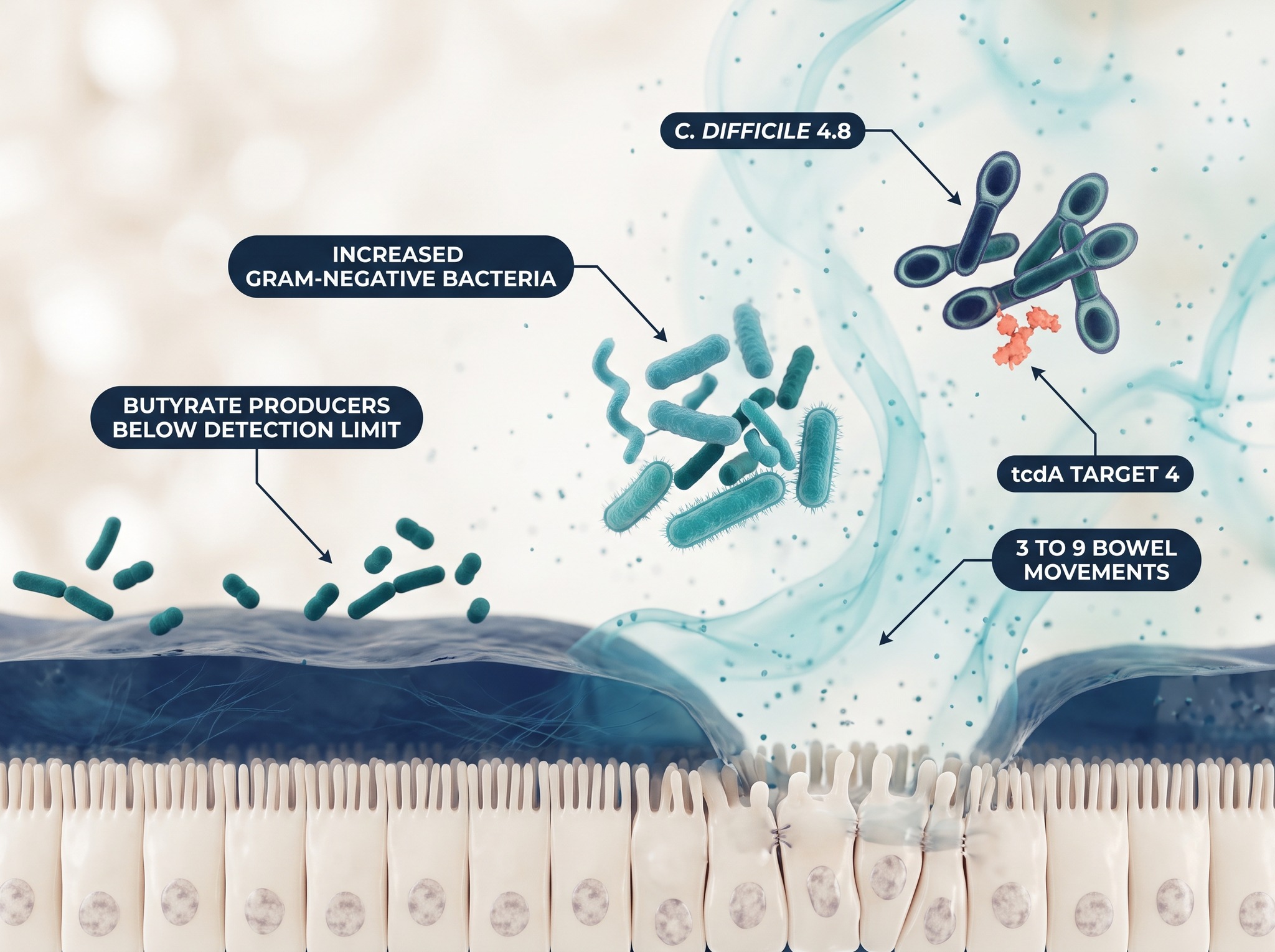
The test provided three groups of findings. It detected Clostridioides difficile and the toxin A target, showed very limited presence of major butyrate producers, and recorded increased Gram-negative and opportunistic bacteria.
What changes when colonization resistance decreases
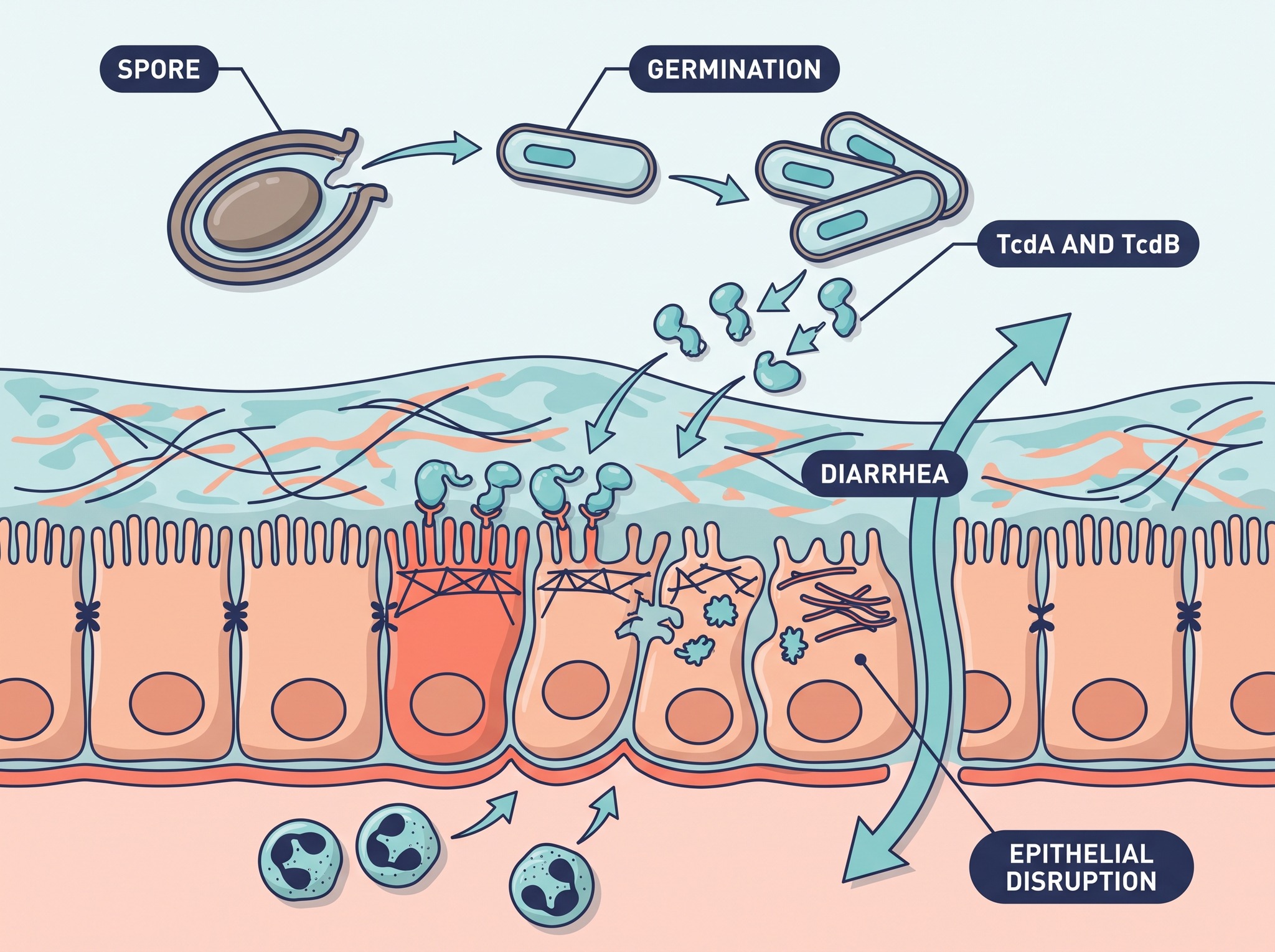
A diverse microbiome consumes nutrient substrates, metabolizes bile acids, and produces compounds that restrict the germination and growth of Clostridioides difficile. Disruption of this community reduces colonization resistance and favors spore germination.[5] Many butyrate producers were below the detection limit, so we gradually increased fermentable fiber and added butyrate.
Diverse microbiome
More butyrate producers, competition for nutrient substrates, bile acid metabolism, and stable interaction with the mucus layer.
The profile we found in Eliot
Several protective taxa below the detection limit, low Lactobacillus spp. and Ruminococcus bromii, together with Clostridioides difficile genetic material and tcdA.
The main actions of Clostridioides difficile
Why we need the class and timing of each antibiotic
The meta-analysis by Dong and colleagues found an overall odds ratio of 1.93 for previous antibiotic use in children. The association differed markedly by class, from OR 0.42 for penicillin to OR 13.92 for clindamycin.[3] The active substances Eliot received during his first year were unknown. The chart shows why we ask for the active substance and timing of every antibiotic in a pediatric medication history.
Association between antibiotic classes and pediatric C. difficile infection
Dong et al., Journal of Hospital Infection, 2022, logarithmic OR scale 0.03 to 100
The active substances and why we selected them
| Intervention | Finding and rationale |
|---|---|
| Rifaximin, 1 capsule in the morning and 1 in the evening for 10 days | Finding Clostridioides difficile, tcdA, and increased opportunistic bacteria. Rationale An antimicrobial that acts within the intestine and has low systemic absorption. |
| Twelve probiotic strains, 1/3 teaspoon 20 minutes before breakfast for 60 days | Finding Bifidobacterium spp. below the detection limit and low Lactobacillus spp. Composition Lactobacillus rhamnosus, Bifidobacterium bifidum, Lactobacillus acidophilus, Lactobacillus casei, Lactobacillus plantarum, Lactobacillus salivarius, Bifidobacterium longum, Streptococcus thermophilus, Lactobacillus delbrueckii subsp. bulgaricus, Lactobacillus paracasei, Bifidobacterium animalis subsp. lactis, and Bifidobacterium breve. |
| L-glutamine and mucosal support blend, 1 teaspoon with breakfast for 60 days | Finding Chronic postprandial diarrhea and extensive dysbiosis. Active substances L-glutamine, N-acetyl-D-glucosamine, citrus pectin, deglycyrrhizinated licorice, aloe, slippery elm bark, mucin, marshmallow, chamomile, okra, Uncaria tomentosa, methylsulfonylmethane, quercetin, prune, zinc, and L-carnosine. |
| Sodium and potassium butyrate 500 mg, 1 capsule with lunch and 1 with dinner | Finding Multiple butyrate producers below the detection limit. Rationale Butyrate is a short-chain fatty acid and a major energy substrate for colonic cells. |
| Ascorbic acid, magnesium carbonate, and pyridoxine, approximately 0.8 g three times a day | Finding Elevated lipoprotein(a) and elevated iron. Amount per dose Approximately 600 mg ascorbic acid, 33 mg elemental magnesium, and 0.5 mg pyridoxine, with iron retesting after one month. |
| L-lysine and accompanying active substances, 1 capsule with ascorbic acid three times a day | Finding Elevated lipoprotein(a) and diarrhea. Active substances per capsule Approximately 400 mg L-lysine HCl, 20 mg calcium ascorbate, 15 mg zinc, extracts of Hypericum perforatum, Melissa officinalis, Astragalus membranaceus, Berberis aquifolium, and Commiphora molmol resin. |
| Methylcobalamin 1,000 µg and L-5-methyltetrahydrofolate 800 µg with breakfast | Finding Homocysteine 13.1 µmol/L and beta-thalassemia minor. Rationale Both methylated vitamins participate in homocysteine metabolism. |
Diet for two months
We removed dairy, sugar, sweets, fruit juice, and sugar-sweetened soft drinks for two months. We substantially reduced wheat. We set the final meal at least four hours before sleep and placed fluid intake 45 minutes after meals. After the first week of antimicrobial treatment, we added a small daily amount of cucumber and carrot. We then increased sources of soluble fiber gradually, including oats, barley, legumes, strawberries, and apple.
Exercise with controlled duration
The weekly plan included walking or running at least 4 km four times a week. We added strength training two to three times a week, with a five-minute warm-up, two sets of 10 to 12 repetitions for the major muscle groups, and 2 to 3 minutes of rest between sets. We also added yoga twice a week. Aerobic sessions remained moderate in duration because of the frequent bowel movements.
Sleep before midnight
The target was at least 7.5 hours of sleep with bedtime before midnight. We selected two to three days each week with an earlier bedtime and reduced artificial light in the evening. The final meal ended at least four hours before sleep.
When does C. difficile testing have diagnostic value in a child with persistent diarrhea and repeated antibiotic exposure?
In children aged 2 years and older, prolonged or worsening diarrhea together with recent antibiotic exposure increases the usefulness of testing for Clostridioides difficile. Asymptomatic carriage is very common in infants, so age changes the interpretation. Testing has greater value when it uses an unformed stool sample and is interpreted alongside bowel movement frequency, toxin targets, and other possible causes.[4]
What does it mean when PCR detects Clostridioides difficile genetic material and the toxin A target while the toxin B target is below the detection limit?
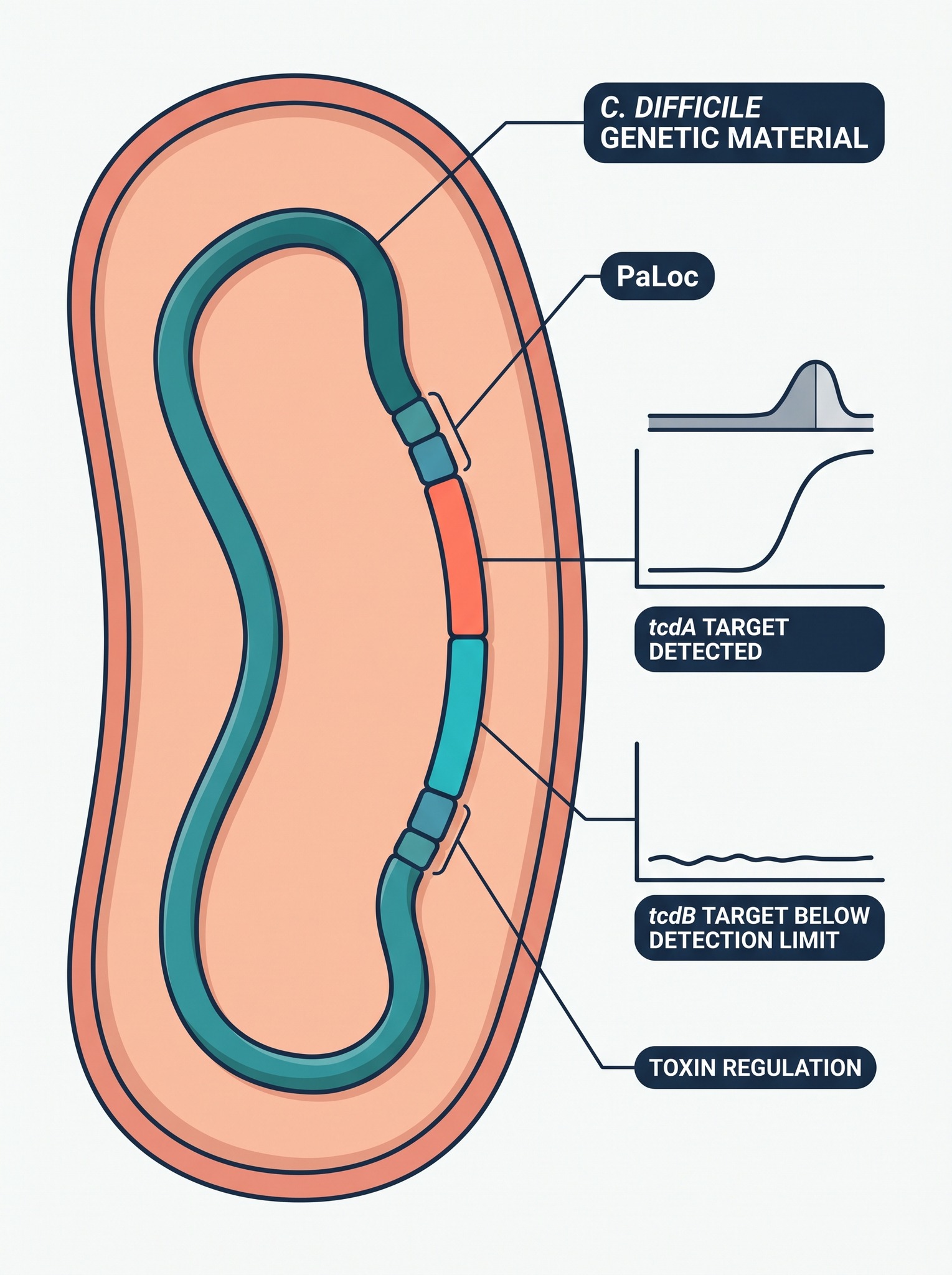
The result describes a specific molecular profile. PCR identifies genetic targets and indicates toxigenic potential. Active intestinal effects are assessed alongside bowel movements, sample consistency, and the rest of the microbiome test. The PaLoc includes tcdA and tcdB together with regulatory genes, and variants with different target patterns have been described.[6]
What we knew before and after molecular testing
The comparison shows what we knew beforehand and what molecular testing added. We organized the intervention plan after receiving these findings.
Clostridioides difficile
Quantitative measurement unavailable
Toxin targets
Molecular result unavailable
Colonization resistance
Protective taxa awaiting mapping
Clostridioides difficile
4.8, low
Toxin targets
tcdA 4 and tcdB below the detection limit
Colonization resistance
Six major taxa below the detection limit and three low taxa
What Eliot's case shows
Eliot's diarrhea began at birth, and repeated antibiotic courses started during his first year. At 19, molecular testing found Clostridioides difficile, tcdA, and a broad lack of protective bacteria. These findings guided our selection of antimicrobial treatment, butyrate, probiotic strains, and a gradual increase in fiber.
Age determines when testing has value
During the first 12 months, frequent asymptomatic carriage reduces test specificity. From age 2, prolonged diarrhea together with antibiotic exposure provides a clearer indication for testing.[4] In Eliot's case, persistent diarrhea throughout childhood supported earlier investigation. At 19, we interpreted the measurement alongside his history, the toxin genes, and the microbiome profile.
When diarrhea persists, we examine the history and the microbiome
The assessment considers bowel movement frequency, antibiotic history, and molecular microbiome targets together.
Frequently asked questions
In children aged 2 years and older, testing has greater diagnostic value when prolonged or worsening diarrhea occurs with a relevant exposure, such as recent antibiotic use. Asymptomatic carriage is common during the first 12 months, so age changes the interpretation.
The tcdA and tcdB targets are genes that encode the two major toxins of Clostridioides difficile. Their detection indicates the genetic capacity for toxin production. Assessment combines the molecular result with diarrhea, sample consistency, and the other findings.
Antibiotics can reduce diversity and alter the relative abundance of protective and opportunistic bacteria. In a randomized trial of 147 newborns, researchers recorded immediate changes in microbiome composition and the resistome, with smaller differences at 12 months.
References
- Weng MK, Adkins SH, Bamberg W, et al. (2019). Risk factors for community-associated Clostridioides difficile infection in young children. Epidemiology and Infection, 147, e172.
- Reyman M, van Houten MA, Watson RL, et al. (2022). Effects of early-life antibiotics on the developing infant gut microbiome and resistome: a randomized trial. Nature Communications, 13, 893.
- Dong N, Li JYR, Zhao JH, et al. (2022). Risk factors for Clostridioides difficile infection in children: A systematic review and meta-analysis. Journal of Hospital Infection, 130, 112-121.
- McDonald LC, Gerding DN, Johnson S, et al. (2018). Clinical Practice Guidelines for Clostridium difficile Infection in Adults and Children. Clinical Infectious Diseases, 66(7), e1-e48.
- Seekatz AM, Young VB. (2014). Clostridium difficile and the microbiota. Journal of Clinical Investigation, 124(10), 4182-4189.
- Monot M, Eckert C, Lemire A, et al. (2015). Clostridium difficile: New insights into the evolution of the pathogenicity locus. Scientific Reports, 5, 15023.