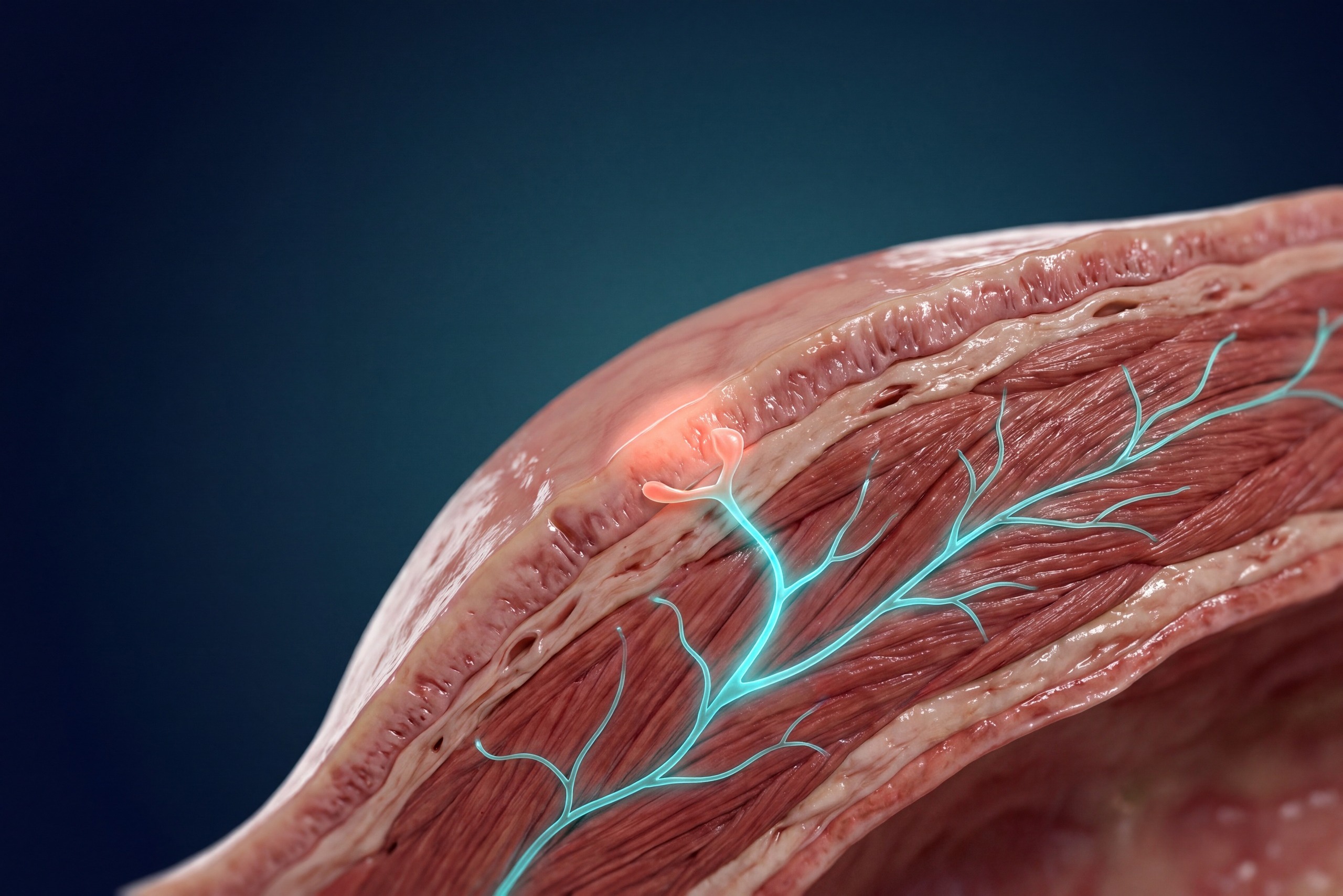
Marina is 32, and her history links anorexia nervosa and irritable bowel syndrome with bloating, major weight changes, and intense fullness after meals. She now weighs 49 kg, is 160 cm tall, and is at the lower end of the healthy weight range. Bloating after eating began in adolescence, long before the anorexia diagnosis, and became more intense while she was taking olanzapine. This is why we carefully look at gastrointestinal symptoms in anorexia alongside visceral hypersensitivity, the gut-brain axis, and intestinal motility. We also examine the link between low body weight and digestion, the possibility of delayed gastric emptying, and the potential role of gut dysbiosis. The initial plan combines testing with practical changes that maintain adequate energy intake.
The method behind the assessment
In IBSyncrasy, we explain how gut movement, food fermentation, and the way we feel signals from the body create a different pattern of symptoms for each person. Buy IBSyncrasyWhich details in her history shape the picture?
Bloating since secondary school
Marina remembers intense bloating from secondary school. The symptom was already present before the anorexia diagnosis. Later, it existed alongside lower food intake and major changes in weight.
From 45 to 62 and then to 49 kg
During university, her daily routine became irregular and she gradually stopped feeling hunger as she had before. Her weight reached 45 kg, or a BMI of 17.6. With olanzapine, it increased to 62 kg. It later fell to 55 kg with nutritional support, and today she weighs 49 kg.
Olanzapine and more intense bloating
She was diagnosed with anorexia nervosa in 2020 and started olanzapine. Her weight increased to 62 kg during treatment, while the bloating became more intense. This is why we examine whether the medication may also have affected gut movement.
BMI 19.1 with a history of low weight
She now weighs 49 kg, is 160 cm tall, and has a BMI of 19.1. This is at the lower end of the healthy range. The earlier drop to 45 kg and the changes that followed may still affect hunger, fullness, and digestive movement.
Grains every day and sweets up to five days a week
The numbers show how many days per week she eats each food group. She has grains on 7 days, dairy on 5, sweets on 3 to 5, eggs on 3, fish on 2, and pasta on 1 to 2. She eats poultry on 1 day, while red meat, rice, and potatoes appear on 0 to 1 day.
Three glasses of water and no exercise
Her day starts at 06:20 and ends around 23:00. Breakfast often includes bread, honey, cheese, egg, or pancakes. Rice cakes or biscuits follow, with a main meal at midday and something sweet in the afternoon. She drinks about three glasses of water and does no structured exercise.
Bad breath and episodes of intense appetite
She has also reported bad breath, fibrocystic breast changes, and episodes of very intense appetite. Each detail needs its own assessment. Here, we focus on the links between food intake, weight, digestive movement, and bloating.
How are anorexia nervosa and irritable bowel syndrome linked to bloating?
The bloating was present before the anorexia. Later, reduced hunger, a weight of 45 kg, and major weight changes added new factors that can affect digestive movement and how strongly she feels fullness. The gut-brain axis is the two-way communication between the digestive system and the brain. The review by Hanel and colleagues and the study by Wang and colleagues found that eating disorders often occur alongside IBS and discomfort after meals.[1][4]
How common are these digestive disorders?
In a study of 100 women admitted to hospital for an eating disorder, 83 had at least one functional digestive disorder. Postprandial distress affected 45%, and IBS affected 41%. Undernutrition had a stronger link with postprandial distress than age or current BMI.[1]
Frequency of gastrointestinal disorders in eating disorders
Wang X et al. World Journal of Gastroenterology. 2014, DOI 10.3748/wjg.v20.i43.16293
How can severe bloating occur after only a small amount of food?
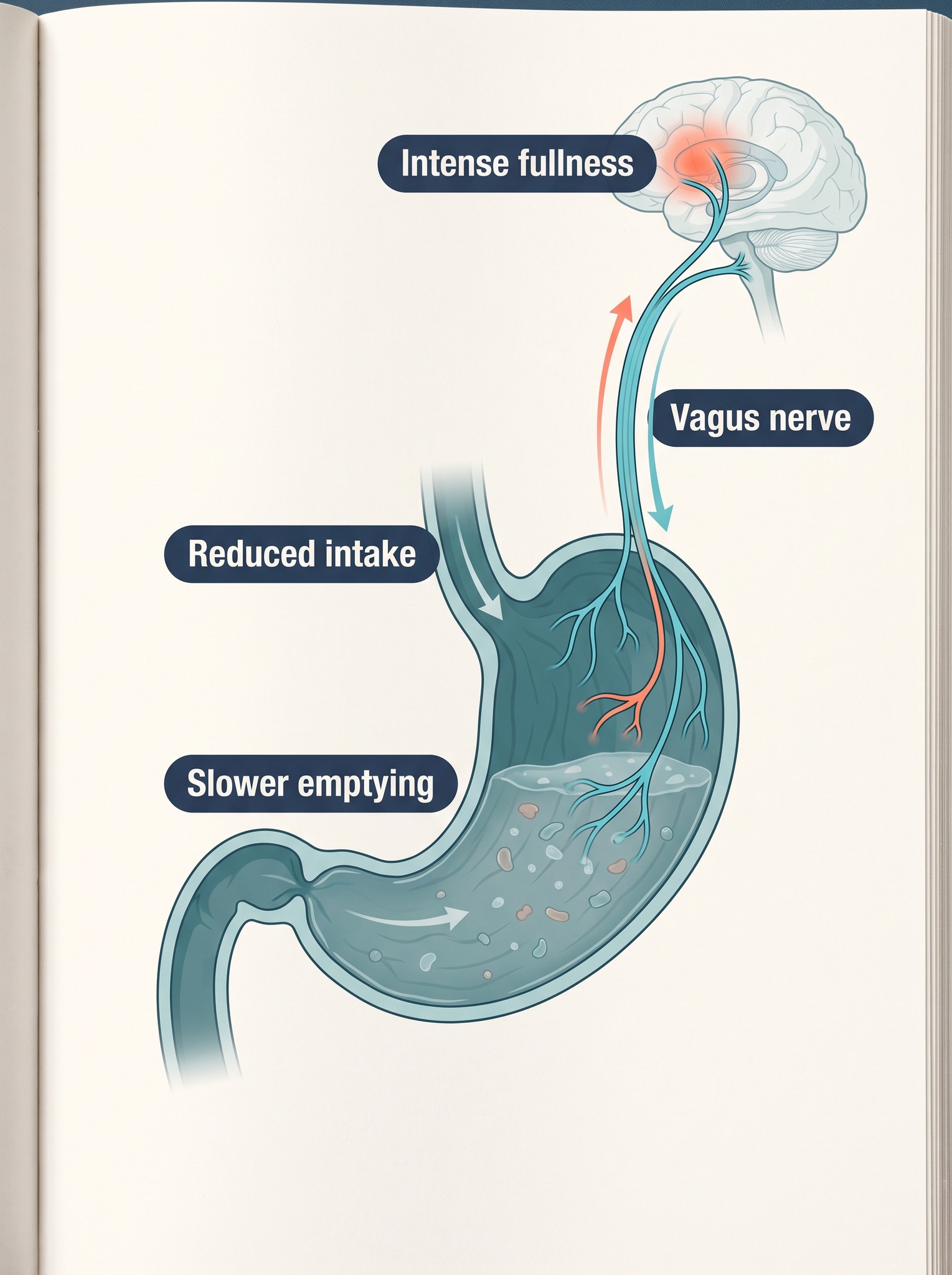
How strongly we feel fullness depends on the size of the meal, how quickly the stomach empties, and how the brain reads the stretch. In people with a history of anorexia, greater fullness has been measured after the same amount of food. This means even a moderate meal can cause intense bloating when the stomach empties more slowly and the body senses the stretch more strongly.[3]
What does low food intake do to gut movement?
When food intake stays low for a long time, the digestive system receives fewer signals to keep moving. In an older study, food took a total of 66.6 hours to pass through the digestive tract in the anorexia group, compared with 38.0 hours in the control group. This difference was statistically significant. The mouth-to-cecum comparison remained below statistical significance. The longer the contents stay in the gut, the more distension and bloating may increase.[2]
Gastrointestinal transit time in anorexia and bulimia
Kamal N et al. Gastroenterology. 1991, DOI 10.1016/0016-5085(91)90083-W
Which factors can make bloating more intense?
The amount of food explains only part of the discomfort. For Marina, we look at four factors together: how much she eats and how her weight changes, how quickly her digestive system moves, how strongly she feels distension, and which daily foods may increase fermentation. We also include low water intake and lack of movement.
Four layers that affect bloating
The same discomfort can come from a different mix of factors
Select a ring to see the connection
Intake and weight
Reduced hunger, the drop to 45 kg, and major weight changes affect when she feels full and how her digestive system works.
What did the gastric emptying measurements show?
In an MRI study, the stomach emptied more slowly in the anorexia group. Half of the meal had left the stomach after 138.7 minutes, compared with 110.0 minutes in people with a healthy weight and 105.5 minutes in people with obesity. GCSI was also higher. This score measures the severity of symptoms such as fullness and nausea. With the same amount of food, the anorexia group felt greater fullness. After about 112 days of weight restoration, fullness decreased. Gastric emptying time changed from 134.3 to 121.5 minutes. This showed a trend toward improvement, with p=0.087.[3]
Gastric emptying and symptom severity by weight group
Bluemel S et al. BMC Gastroenterology. 2017, DOI 10.1186/s12876-016-0560-y
What role might olanzapine play?
Olanzapine helped Marina gain weight. During the same period, however, the bloating became more intense. In a rat experiment, olanzapine reduced colon contractions as the dose increased. It also affected two mechanisms involved in gut movement. This offers a possible explanation, while the human case shows a timing link between the medication and the symptom.[6]
Can olanzapine increase bloating while also helping with weight gain?
Yes, this is possible because the two effects happen in different ways. Olanzapine can increase appetite and support weight gain. At the same time, it may affect serotonin signals and gut contractions, which can change how quickly the bowel moves. Most of the related experimental evidence comes from animals. In practice, we look at when the symptoms began, how they changed, and what the measurements show.[6]
What does the weekly eating pattern show?
Marina eats grains every day, dairy products on five days, and sweets on three to five days per week. Her usual foods also include bread, honey, pancakes, biscuits, and chocolate spread. Several of these foods contain carbohydrates that ferment in the gut and may increase gas. Gut dysbiosis remains one possible mechanism. At first, however, we track the specific foods, the symptoms, and the inflammation markers. We keep calorie intake stable so we can test tolerance without further weight loss. The article The microbiome and the modern lifestyle explains more about the link between lifestyle and the microbiome.
What do we expect the tests to show?
The tests have a clear goal: to see what may be behind the symptoms. Fecal calprotectin, CRP, and ESR check for inflammation in the gut or elsewhere in the body. Vitamins and trace elements show whether deficiencies developed during the period of low weight. The remaining tests complete the picture for hormones, metabolism, and blood health.
How will the results change the next steps?
A raised fecal calprotectin result would shift the investigation toward an inflammatory cause. If inflammation markers are normal but bloating continues, we would focus more on digestive motility, food fermentation, and visceral hypersensitivity. Deficiencies in vitamin D, B12, folate, zinc, magnesium, or phosphorus would create clear targets for replacement.
Which changes do we recommend first?
How does a short low-FODMAP trial work?
We recommend a trial lasting 4 to 6 weeks and no longer than two months. During this time, we reduce specific foods containing carbohydrates that ferment easily in the gut, known as FODMAPs. In Marina's food diary, these include honey, wheat, onion, garlic, legumes, apples, watermelon, and some dairy products. Every food that is removed is replaced with an option providing a similar amount of energy. We then test one category at a time. In a four-week study, the low-FODMAP group had a lower IBS symptom score than the sham-diet group, 173 ± 95 versus 224 ± 89 points.[5]
Why use a consistent breakfast with protein and tolerated fiber?
We keep breakfast daily and consistent. A source of protein, such as an egg or a tolerated yogurt option, is combined with bread or oats and a gentle source of fiber. We start with a comfortable amount and increase it gradually. This helps digestive movement, supports weight, and makes it easier to see when fullness appears.
How do we reduce sweets in the afternoon?
Marina eats sweets three to five days per week, often around 19:00. We reduce the frequency gradually. A biscuit or chocolate spread can be replaced with a snack that combines protein or fat with a carbohydrate she tolerates well. This reduces the amount of sugar in one meal and makes it easier to see whether the afternoon snack is linked to gas or bloating.
How do we move from three to eight glasses?
The first goal is to increase fluids gradually from about three to eight glasses per day. We spread them from morning to evening, for example one after waking and one between the main meals. The remaining glasses are added at times that already fit her routine. More water helps keep stools softer, especially as fiber increases.
Why do we recommend strength training twice a week?
Marina currently has no structured exercise routine, so she starts with two short strength-training sessions per week. Duration and intensity increase slowly. The goals are to strengthen muscle, add more movement to her day, and support bowel function. We adjust food intake at the same time to maintain or restore weight as exercise increases.
How can these changes help?
Each change targets a different part of the problem. The short low-FODMAP trial reduces foods that may create more fermentation and gas. A consistent breakfast and enough calories help food intake regain a steady rhythm. Fewer sweets, more water, and gentle strength training may reduce factors that keep bloating going or slow the bowel. In the study by Bluemel and colleagues, fullness decreased after weight restoration, and gastric emptying showed a trend toward improvement.[3][5]
How will we know whether the changes are helping?
We keep a simple diary. We note how long bloating lasts after each main meal, how intense the fullness feels, how often bowel movements occur, and what they look like. We also record hunger before eating and weight each week. This helps us see whether the problem is linked more closely to fermentation, gut movement, or the way stomach stretch is felt. Because there is a history of anorexia, the changes include enough calories and structured food reintroductions. This record helps avoid random food exclusions and leads to clearer decisions. A related case with measurable findings is Antibiotics, the microbiome, and ulcerative colitis.[4]
Bloating after major weight changes has measurable aspects
We organize the history, tests, and first changes around digestive movement, food intake, and the way bloating is felt.
Frequently asked questions
When someone eats very little for a long time, the stomach and bowel may move more slowly. The same amount of food may also cause stronger fullness. As a result, bloating can last longer after a meal.
The two conditions often appear together. The evidence shows an association and leaves open which condition has more influence on the other. The link involves digestive movement, hunger, fullness, visceral perception, and psychological factors. To diagnose IBS, we look at the type and duration of symptoms together with the appropriate tests.
The digestive system and the brain need time to adjust to regular meals again. Certain foods, constipation, low water intake, and medication may also keep some of the symptoms going.
Olanzapine affects signals involved in digestive movement. In animal experiments, it has reduced contractions of the colon. In people, we look at when symptoms started, how often bowel movements occur, and which other factors may be slowing the bowel.
It can be used for a short period with enough calories and a structured return of foods. We monitor weight, hunger, and dietary variety at the same time. The goal is to identify trigger foods while avoiding new long-term restrictions.
References
- Wang X, Luscombe GM, Boyd C, Kellow J, Abraham S (2014). Functional gastrointestinal disorders in eating disorder patients: altered distribution and predictors using ROME III compared to ROME II criteria. World Journal of Gastroenterology, 20(43), 16293-16299.
- Kamal N, Chami T, Andersen A, Rosell FA, Schuster MM, Whitehead WE (1991). Delayed gastrointestinal transit times in anorexia nervosa and bulimia nervosa. Gastroenterology, 101(5), 1320-1324.
- Bluemel S, Menne D, Milos G, Goetze O, Fried M, Schwizer W, Fox M, Steingoetter A (2017). Relationship of body weight with gastrointestinal motor and sensory function: studies in anorexia nervosa and obesity. BMC Gastroenterology, 17(1), 4.
- Hanel V, Schalla MA, Stengel A (2021). Irritable bowel syndrome and functional dyspepsia in patients with eating disorders - a systematic review. European Eating Disorders Review, 29(5), 692-719.
- Staudacher HM, Lomer MCE, Farquharson FM, et al. (2017). A Diet Low in FODMAPs Reduces Symptoms in Patients With Irritable Bowel Syndrome and A Probiotic Restores Bifidobacterium Species: A Randomized Controlled Trial. Gastroenterology, 153(4), 936-947.
- Zhang J, Qiao Y, Le J, Sun D, Guan Y, Li Z (2016). Olanzapine May Inhibit Colonic Motility Associated with the 5-HT Receptor and Myosin Light Chain Kinase. Psychiatry Investigation, 13(2), 232-238.