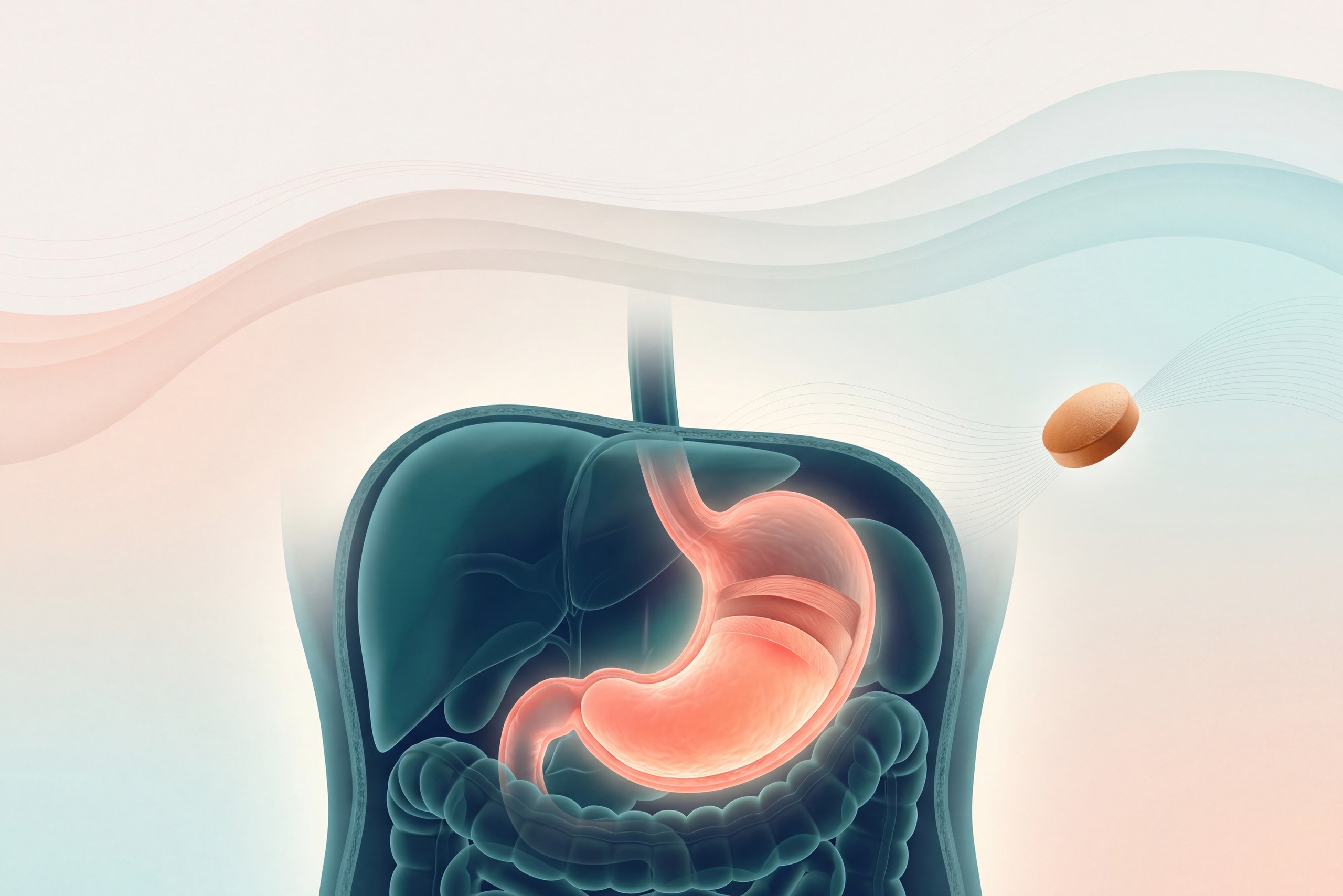
Antibiotics and stomach pain can appear together when a preventive prescription, meal timing and upper digestive sensitivity overlap. Maya, 41, had recurrent urinary tract infections from 2021 and used repeated antibiotic courses, followed by eight months of preventive nitrofurantoin and continued post-coital doses. By 2023, epigastric pain had become a separate problem. Probiotics never gave her stable relief. Her pattern also included frequent snacks, a main meal at 22:30 and sleep at 23:30. This case follows the stomach-level mechanisms first, then turns to the practical routine that makes another antibiotic course easier to tolerate.
The method behind the symptom pattern
IBSyncrasy explains how meal timing, digestive symptoms and the gut-brain axis shape a practical assessment when standard advice has stopped helping. Buy IBSyncrasyWhat changed before the epigastric pain began?
Recurrent UTIs from 2021
Maya, 41, had recurrent urinary tract infections from 2021. The pattern led to repeated antibiotic treatment, followed by eight months of preventive nitrofurantoin. She continued to use a preventive dose after sexual contact because symptoms returned when she tried to stop.
Epigastric pain from 2023
Epigastric pain entered the picture in 2023 and continued despite several probiotic trials. The symptom sat high in the abdomen, so the assessment starts with medication tolerance, dyspepsia and meal timing before it moves to lower-bowel mechanisms.
Late dinner and frequent snacks
Her main meal often came at 22:30 and sleep followed at 23:30. Frequent snacking, regular coffee, six weekly servings of red meat and a busy exercise routine added several daily triggers that could keep upper digestive symptoms active.
- 1
2021
Recurrent urinary tract infections begin and repeated antibiotic exposure becomes part of the history.
- 2
Eight-month preventive course
Nitrofurantoin becomes a preventive treatment, followed by continued post-coital use.
- 3
2023
Epigastric pain appears and stays present across probiotic trials.
- 4
Current routine
Frequent snacks, a 22:30 dinner and 23:30 bedtime create a repeatable upper-GI pattern.
Why can antibiotics and stomach pain appear together?
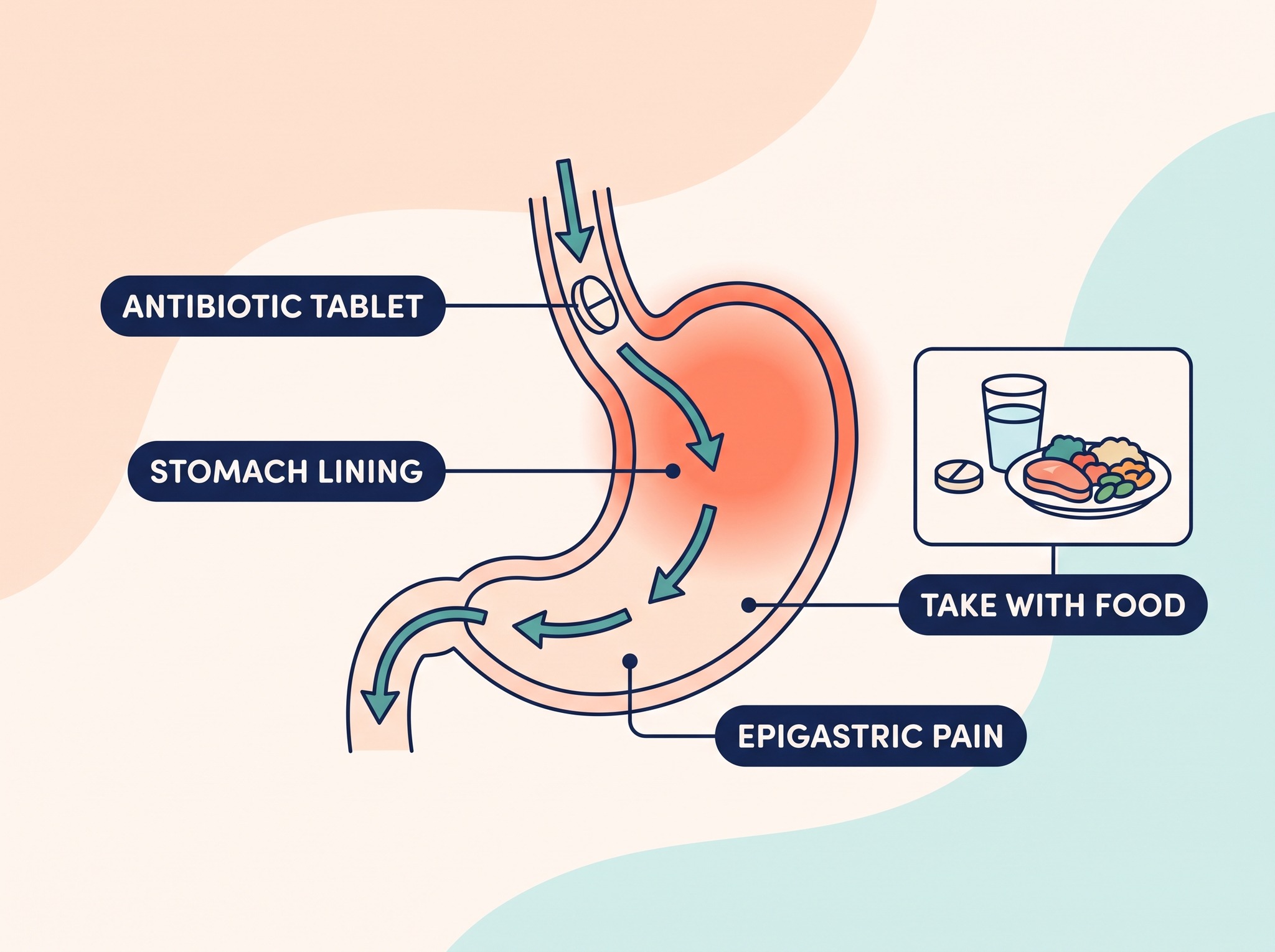
Nitrofurantoin is the first mechanism to examine in this case. Its label lists nausea as a frequent adverse reaction and also lists dyspepsia, abdominal pain and vomiting. That profile fits a stomach-focused conversation better than a generic message about restoring the gut.[1]
Three routes into epigastric symptoms
The case medicine comes first
Nitrofurantoin upper-GI events in the product label
Nitrofurantoin monohydrate/macrocrystals product label. Reported drug-related clinical events.[1]
I keep getting a pain high in my stomach after I take antibiotics, and diarrhea never appears. Could the preventive tablet for my UTI still be part of the problem?
Yes. Antibiotics and stomach pain can sit together when a medicine produces nausea, dyspepsia or upper-abdominal discomfort directly. In this case, nitrofurantoin is the first exposure to map because it appears repeatedly in the history and its product label includes those symptoms. The next useful details are the time of the tablet, food, coffee and the hours between dinner and bed. That pattern gives the stomach symptoms a practical structure.[1]
Which parts of the case point to a stomach mechanism?
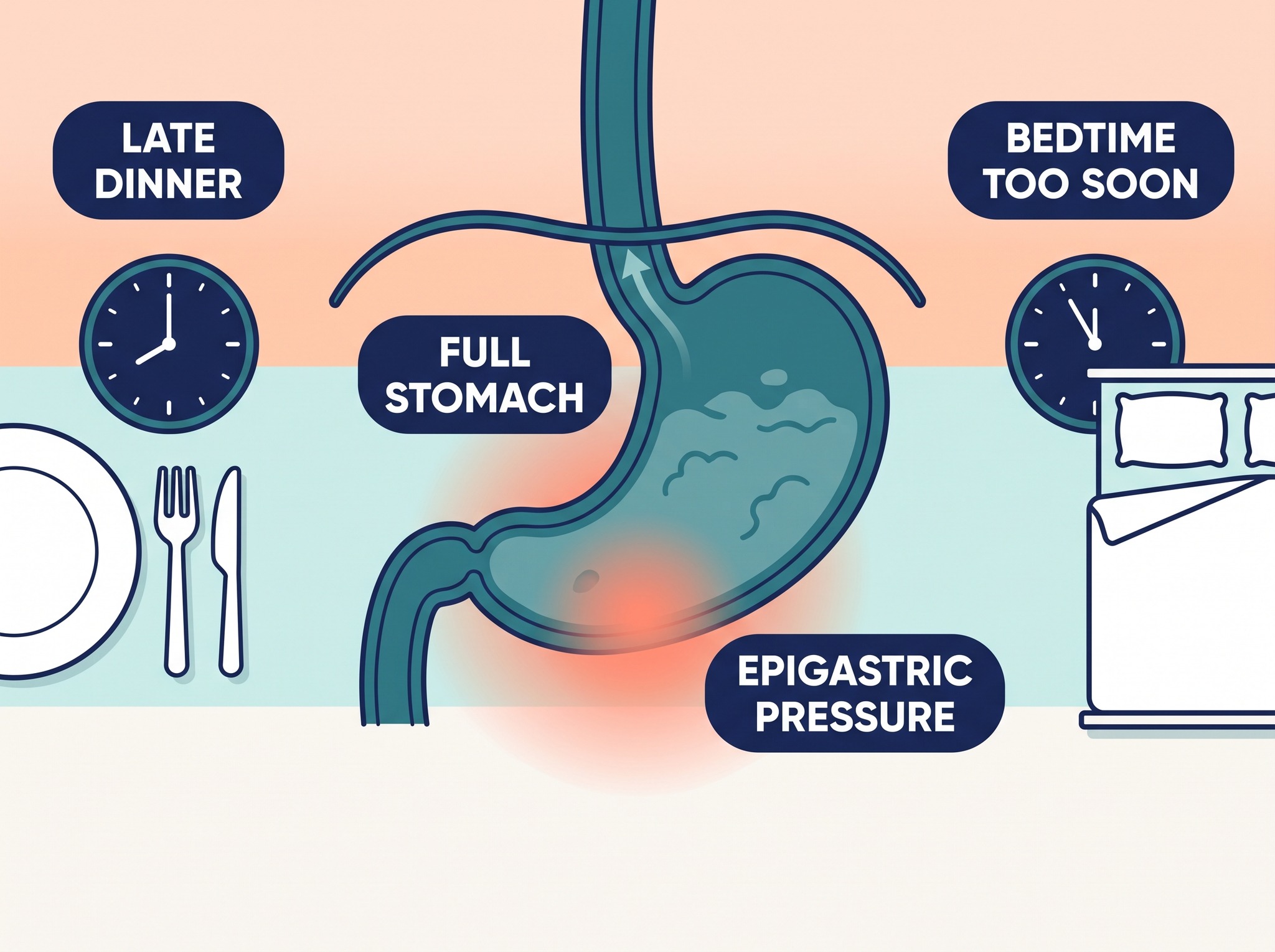
The late-dinner pattern is a second major mechanism. Maya often eats her main meal at 22:30 and sleeps at 23:30, leaving one hour between a substantial meal and lying down. That timing can sustain post-meal fullness, reflux-like pressure and epigastric discomfort.[5]
The current diagnostic picture
Upper-GI profiles differ between antibiotics
Doxycycline gives useful class context because its trial data include upper abdominal pain. The visual belongs here, after the diagnostic picture, because the medication history determines which symptom profile has relevance for Maya.[2]
Upper abdominal pain in a doxycycline trial
Doxycycline capsule clinical-trial table. This chart provides drug-class context. Maya’s recorded medicine is nitrofurantoin.[2]
| Active substance | Stomach-focused label association |
|---|---|
| Nitrofurantoin | Nausea, dyspepsia, abdominal pain and vomiting. The primary medicine in this case.[1] |
| Metronidazole | Nausea, epigastric distress and abdominal cramping.[6] |
| Clarithromycin | Abdominal pain and dyspepsia.[4] |
| Azithromycin | Abdominal pain, nausea and vomiting, with rates that shift by regimen.[3] |
| Doxycycline | Dyspepsia, upper abdominal pain and oesophageal irritation.[2] |
| Clindamycin | Abdominal pain and oesophagitis.[7] |
| Cephalexin | Dyspepsia, gastritis and abdominal pain.[8] |
The table turns a broad antibiotic category into specific stomach profiles. Azithromycin makes the point visually because nausea, diarrhea and abdominal pain change with the prescribed regimen.[3]
Azithromycin stomach symptoms change with the regimen
Azithromycin product label. Exact rates vary by prescribed regimen.[3]
How can the stomach be protected during another antibiotic course?
The protection plan starts by reducing the load placed on the stomach around a dose and around dinner. The routine uses the habits already identified in this case: thorough chewing, a shorter dinner-to-bed interval, frequent snacking and a main meal that arrives late.
Make dinner earlier and smaller
Finish dinner by 20:30 when bedtime is 23:30. Keep the evening meal smaller and lower in fat, then walk for 10 to 20 minutes. This gives the stomach time to empty before lying down and changes the part of the day where Maya’s epigastric symptoms have the strongest support.
Use a dose-and-symptom routine
A medication record also keeps the discussion specific. Clarithromycin trial data show a compact upper-GI symptom profile, so the active substance belongs beside the symptom diary as a named exposure.[4]
Clarithromycin trial reports of upper-GI symptoms
Clarithromycin product label, adult clinical-trial data.[4]
- Chew each mouthful thoroughly and eat at a slower pace.
- Use three main meals and no more than one simple snack.
- Leave three to four hours between caloric intakes.
- Avoid very large meals and heavy late-night meals.
- Walk for 10 to 20 minutes after meals.
- Take each tablet with a full glass of water.
- Keep the prescribed dose, meal, coffee, dinner and bedtime on one daily record.
- Keep the evening meal low in volume and fat.
- Use regular fluids across the day, especially when nausea reduces appetite.
- Follow the product-specific food instructions supplied with the prescription.
I tried probiotics and my stomach still hurt, so what am I supposed to change first? Do I need to focus on the microbiome, or should I start with the time I take the tablet and eat dinner?
Start with the pattern that repeats every day. In this case, the epigastric pattern sits beside a 22:30 dinner, 23:30 bedtime, frequent snacks and ongoing preventive nitrofurantoin use. A diary makes those exposures visible. It also shows whether the pain clusters after the tablet, after coffee, after the late meal or after lying down. Probiotics can stay in the background while the upper-GI pattern becomes clear, because the patient had already tried them without stable relief.
What is the working conclusion from this pattern?
Maya’s history gives the epigastric pain a clear structure. Recurrent urinary infections created repeated antibiotic exposure. Preventive nitrofurantoin became an ongoing part of life. The stomach symptoms then developed alongside a late dinner, short dinner-to-bed window and frequent snacking. The next phase is built around the existing diagnostic plan and a precise daily record of symptoms and exposures.
The practical takeaway
The useful first step is a stomach-focused routine that makes the medicine, the meal and bedtime visible on the same timeline. Severe or rapidly worsening abdominal pain, repeated vomiting, black stools, blood in stool, fever or trouble swallowing needs prompt medical assessment.
Give persistent stomach pain a clear pattern
We review medication exposure, meal timing and digestive symptoms together to build a practical next step.
Frequently asked questions
Yes. Nitrofurantoin product labels list nausea, dyspepsia, abdominal pain and vomiting. A person can therefore experience upper digestive symptoms even when diarrhea is absent. The medication time, food, coffee, dinner and bedtime help show whether the symptom pattern clusters around the dose.
A large meal close to bedtime leaves less time for gastric emptying before lying down. That pattern can amplify fullness, reflux-like pressure and upper-abdominal discomfort. Moving dinner earlier and walking briefly after the meal creates a more comfortable night-time window.
Probiotics support a different part of the digestive picture. When epigastric pain follows a preventive antibiotic, a late meal and a short dinner-to-bed window, the medication and upper-GI routine need direct attention. A daily timeline helps separate those drivers.
Severe or rapidly worsening abdominal pain, repeated vomiting, black stools, blood in stool, fever, dehydration, rash, breathing difficulty or pain when swallowing require prompt medical assessment. These symptoms change the urgency of the situation and deserve direct clinical review.
References
- DailyMed. Nitrofurantoin monohydrate/macrocrystals capsule. Adverse reactions and patient counselling information.
- DailyMed. Doxycycline capsules. Clinical trial adverse-reaction table.
- DailyMed. Azithromycin dihydrate tablets. Adverse reactions by regimen.
- DailyMed. Clarithromycin tablets. Adult clinical-trial adverse events.
- Fujiwara Y, Machida A, Watanabe Y, et al. Association between dinner-to-bed time and gastro-esophageal reflux disease. American Journal of Gastroenterology. 2005;100(12):2633-2636.
- DailyMed. Metronidazole tablets. Gastrointestinal adverse reactions.
- DailyMed. Clindamycin hydrochloride capsules. Gastrointestinal adverse reactions.
- DailyMed. Cephalexin capsules. Clinical-trial adverse reactions.